Harrisburg Bike Share ends as operating company calls it quits

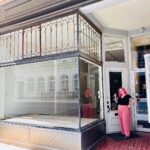
In the coming weeks, Zagster will remove all bike share stations, including this one at the Broad Street Market in Harrisburg.

Harrisburg’s bicycle sharing program is coming to an end, a victim of the coronavirus pandemic.

In a news release, Harrisburg Bike Share today said that it received notice that the operating company, Boston-based Zagster, is suspending all operations nationwide, citing the COVID-19 pandemic as the reason.

The Harrisburg program began in 2017, spearheaded by Communities in Schools Pennsylvania, a dropout prevention organization, and sponsored by Highmark Health and several other organizations.

In just three years, Harrisburg Bike Share stated that it gained more than 7,000 members, who paid an annual $25 membership fee to use bikes at 12 stations in the city. Before the pandemic hit, the program had expected to launch an expansion into Cumberland County this summer.

Nationally, Zagster operated about 200 bicycle-sharing programs, including in cities, on college campuses and for corporations.

According to Harrisburg Bike Share, Zagster plans to remove all stations and bikes over the coming weeks and stated that subscribers with questions should contact Zagster directly at [email protected].

Continue Reading

Home sales down, prices up for Harrisburg area in May

A sales sign in Midtown Harrisburg

The residential real estate market showed mix results in May amidst the height of the COVID-19 pandemic in Pennsylvania, according to new housing industry data.

The Greater Harrisburg Association of Realtors (GHAR) reported on Wednesday that, for May, sales fell by about half in the region, but the median price increased by 6.8 percent year-over-year to $205,000.

In Dauphin County, 173 houses sold compared to 355 in the year-ago period, while the median sales price rose to $176,300 from $172,000. In Cumberland County, sales totaled 152 units versus 326 in May 2019, while the median price increased to $233,950 compared to $215,000 a year ago.

Perry County had 21 sales for a median price of $157,000 versus 39 home sales for $150,900 in May 2019.

Average days on the market for listings were virtually unchanged—52 days versus 51 in the prior May.

Continue Reading

Data shows new COVID-19 cases continuing to decline across PA

An image from the Department of Health lab in Exton, Pa.

The state health department today reported just over 400 new COVID-19 cases, as new daily positives continue their long decline.

The Department of Health today said there were 410 additional positive cases for the period ending at midnight, among the lowest new daily diagnoses since the disease began to surge in late March.

With the additional cases, 76,846 Pennsylvanians have now been diagnosed with the coronavirus.

Cases peaked in early April at nearly 2,000 daily new cases. Since then, cases have shown a gradual decline, despite increasingly greater testing levels for the virus.

Locally, total diagnosed cases are as follows:

  • Adams County: 278 cases (yesterday, 275)
  • Cumberland County: 688 cases (yesterday, 683)
  • Dauphin County: 1,541 cases (yesterday, 1,525)
  • Franklin County: 807 cases (yesterday, 800)
  • Lancaster County: 3,600 cases (yesterday, 3,554)
  • Lebanon County: 1,091 cases (yesterday, 1,086)
  • Perry County: 68 cases (yesterday, 68)
  • York County: 1,102 cases (yesterday, 1,094)

Overall, 14.1 percent of PA residents tested have shown to be positive for the virus.

The department also reported an additional 48 deaths, meaning that 6,062 Pennsylvanians have died from the disease since March.

Around central PA, the COVID-19 fatality data now stands as follows:

  • Adams County: 9 deaths (yesterday, 9)
  • Cumberland County: 58 deaths (yesterday, 58)
  • Dauphin County: 101 deaths (yesterday, 96)
  • Franklin County: 39 deaths (yesterday, 39)
  • Lancaster County: 322 deaths (yesterday, 320)
  • Lebanon County: 38 deaths (yesterday, 38)
  • Perry County: 4 deaths (yesterday, 3)
  • York County: 30 deaths (yesterday, 30)

Statewide, Philadelphia County continues to have the most confirmed cases with 19,481 cases, followed by Montgomery County with 7,709 cases. The two counties also have reported the most deaths statewide from the disease: 1,454 and 740, respectively.

“With more than half of the state now in the green phase of the process to reopen, it is essential that we continue to take precautions to protect against COVID-19,” health Secretary Rachel Levine said.

Last week, the state moved the last of Pennsylvania’s “red” counties into the less restrictive yellow phase, including the entire Philadelphia metro area. On this coming Friday, three local counties—Cumberland, York and Adams—are slated to enter the “green” phase.

Nursing homes and personal care facilities have been particularly hard hit by the virus. Of total deaths, 4,199, or 69.2 percent, have occurred in residents from nursing or personal care facilities, according to the health department.

In nursing and personal care homes, there are 16,309 resident cases of COVID-19, and 2,845 cases among employees, for a total of 19,154 at 623 distinct facilities in 45 counties, according to the health department.

In addition, 5,837 of total cases in PA are in health care workers.

Statewide, 544,175 coronavirus tests have been performed, with 467,329 people testing negative, according to the state health department. Yesterday, the state reported that 535,684 people had been tested for the virus.

Of the patients who have tested positive to date, the age breakdown is as follows, according to the health department:

  • Nearly 1 percent are aged 0-4
  • Nearly 1 percent are aged 5-12
  • Nearly 2 percent are aged 13-18
  • 6 percent are aged 19-24
  • Nearly 37 percent are aged 25-49
  • 25 percent are aged 50-64
  • 28 percent are aged 65 or older.

Most of the patients hospitalized are 65 or older, as are most of the reported deaths, according to the state.

Levine continued to emphasize that Pennsylvanians should do the following:

  • Wash your hands with soap and water for at least 20 seconds or use hand sanitizer if soap and water are not available.
  • Cover any coughs or sneezes with your elbow, not your hands.
  • Clean surfaces frequently.
  • Stay home to avoid spreading COVID-19, especially if you are unwell.

“Each of us has a responsibility to protect ourselves, our loved ones and others by wearing a mask, maintaining social distancing and washing our hands frequently,” Levine said. “Together, we can protect our most vulnerable Pennsylvanians, our essential workers and our healthcare system.” 

For more information, visit the PA Department of Health’s COVID-19 website.

Continue Reading

Power Up: Harrisburg Council approves 1-day blitz to disassemble donated solar array

A screen shot from City Council’s virtual legislative session on Tuesday night

A small army of workers is expected to descend upon Uptown Harrisburg on Saturday in a rush to disassemble the vast solar array at the former headquarters of D&H Distributing.

City Council unanimously approved a resolution on Tuesday to enter into an agreement with Wildheart Ministries so that the Allison Hill-based nonprofit can provide labor in a one-day blitz to take apart thousands of solar panels on the sprawling property.

Eight years ago, D&H installed some 3,500 solar panels at its long-time headquarters on the 2500-block of N. 7th Street. Those panels conveyed with the sale of the property to the Hudson Companies, a Hermitage, Pa.-based developer that is constructing a three-story, brick-and-glass building for commonwealth employees. Hudson has no use for them, so is donating them to the city.

According to Mayor Eric Papenfuse, the city originally expected its Department of Public Works to do the job, which would have taken months with their limited manpower. However, D&H recently informed the city that it wants to break ground on the project next week, which means that the solar panels need to be moved immediately.

“We were quite frankly surprised a couple of weeks ago when we moved very quickly from the red to yellow (reopening phase),” Papenfuse said. “This began to accelerate construction projects like the Hudson project for the state office building on N. 7th Street at a faster rate than was anticipated.”

The public works department, he said, determined that disassembling the panels was not difficult, requiring brief training and simple tools. So, department Director Aaron Johnson and Deputy Director Dave West reached out to Wildheart Ministries, which, over the years, has deployed volunteers repeatedly for cleanup and improvement projects around Allison Hill.

“Working with Wildheart throughout the years, we know that they can assemble that type of group so that we can get it done in one day,” West said. “This is what we have to do in order to accomplish our goal.”

West told council that Wildheart is expected to deploy about 100 people to the effort. In return, the city will donate about $10,000 to Wildheart.

Once the panels are taken apart, the city will move them onto municipal land for storage until they can be redeployed starting next year.

Council members were told that the panels have 15 to 17 years of life in them and eventually should provide about 10 percent of the city’s power, saving it some $50,000 a year in electricity costs. The city also may make some money by selling power back on to the grid.

In other action, council approved a resolution confirming the resumption of street cleaning schedules and parking-related ordinances. In March, the city, Capital Region Water and parking manager SP+ suspended these operations as the COVID-19 pandemic took root. They will all now resume on June 15.

Continue Reading

COVID-19 fatalities exceed 6,000 in PA; new case numbers muted

New COVID-19 cases and deaths. Source: PA Health Department

COVID-19 fatalities surpassed 6,000 in Pennsylvania, though new cases continued a long-time downward slope.

The state Department of Health today reported an additional 61 deaths, meaning that 6,014 people have died from the disease since March.

Around central PA, the COVID-19 fatality data now stands as follows:

  • Adams County: 9 deaths
  • Cumberland County: 58 deaths
  • Dauphin County: 96 deaths
  • Franklin County: 39 deaths
  • Lancaster County: 320 deaths
  • Lebanon County: 38 deaths
  • Perry County: 3 deaths
  • York County: 30 deaths

The state today also reported 493 new COVID-19 diagnoses, among the lowest new daily diagnoses since the disease began to surge in late March.

With the additional cases, 76,436 Pennsylvanians have now been diagnosed with the coronavirus.

Cases peaked in early April at nearly 2,000 daily new cases. Since then, cases have shown a gradual decline, despite increasingly greater testing levels for the virus.

Locally, total diagnosed cases are as follows:

  • Adams County: 275 cases (yesterday, 275)
  • Cumberland County: 683 cases (yesterday, 672)
  • Dauphin County: 1,525 cases (yesterday, 1,499)
  • Franklin County: 800 cases (yesterday, 798)
  • Lancaster County: 3,554 cases (yesterday, 3,503)
  • Lebanon County: 1,086 cases (yesterday, 1,072)
  • Perry County: 68 cases (yesterday, 68)
  • York County: 1,094 cases (yesterday, 1,086)

Overall, 14.2 percent of PA residents tested have shown to be positive for the virus.

Statewide, Philadelphia County continues to have the most confirmed cases with 19,388 cases, followed by Montgomery County with 7,672 cases. The two counties also have reported the most deaths statewide from the disease: 1,436 and 734, respectively.

“With more than half of the state now in the green phase of the process to reopen, it is essential that we continue to take precautions to protect against COVID-19,” health Secretary Rachel Levine said.

Last week, the state moved the last of Pennsylvania’s “red” counties into the less restrictive yellow phase, including the entire Philadelphia metro area. On this coming Friday, three local counties—Cumberland, York and Adams—are slated to enter the “green” phase.

Nursing homes and personal care facilities have been particularly hard hit by the virus. Of total deaths, 4,117, or 68.4 percent, have occurred in residents from nursing or personal care facilities, according to the health department.

In nursing and personal care homes, there are 16,247 resident cases of COVID-19, and 2,824 cases among employees, for a total of 19,071 at 618 distinct facilities in 45 counties, according to the health department.

In addition, about 5,796 of total cases in PA are in health care workers.

Statewide, 535,684 coronavirus tests have been performed, with 459,248 people testing negative, according to the state health department. Yesterday, the state reported that 527,330 people had been tested for the virus.

Of the patients who have tested positive to date, the age breakdown is as follows, according to the health department:

  • Nearly 1 percent are aged 0-4
  • Nearly 1 percent are aged 5-12
  • Nearly 2 percent are aged 13-18
  • 6 percent are aged 19-24
  • Nearly 37 percent are aged 25-49
  • 25 percent are aged 50-64
  • 28 percent are aged 65 or older.

Most of the patients hospitalized are 65 or older, as are most of the reported deaths, according to the state.

Levine continued to emphasize that Pennsylvanians should do the following:

  • Wash your hands with soap and water for at least 20 seconds or use hand sanitizer if soap and water are not available.
  • Cover any coughs or sneezes with your elbow, not your hands.
  • Clean surfaces frequently.
  • Stay home to avoid spreading COVID-19, especially if you are unwell.

“Each of us has a responsibility to protect ourselves, our loved ones and others by wearing a mask, maintaining social distancing and washing our hands frequently,” Levine said. “Together, we can protect our most vulnerable Pennsylvanians, our essential workers and our healthcare system.”

 For more information, visit the PA Department of Health’s COVID-19 website.

Continue Reading

Landmark building in Camp Curtin has a new owner–and a new plan

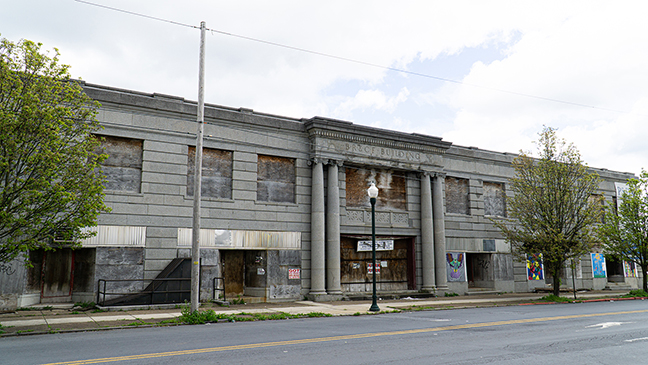
The Hudson building in Uptown Harrisburg

Originally, it was supposed to be a high-rise apartment building—with a huge convention hall, to boot. It was supposed to be 10 to 12 stories tall.

That never happened.

Instead, over the years, the cavernous Hudson building has been everything from a bank to a church to a series of small shops. And, for almost 20 years, it’s simply sat empty and falling apart.

Now, the building, at N. 6th and Maclay streets in Uptown Harrisburg, has a new owner and a new plan, one that includes something city residents have long said they wanted—a grocery store.

“Harrisburg is a food desert, so we plan to have a grocery component,” said new owner Adam Maust, who purchased the property through his company, Mighty Group Holdings LLC. “That’s one of the things that I’m most excited about.”
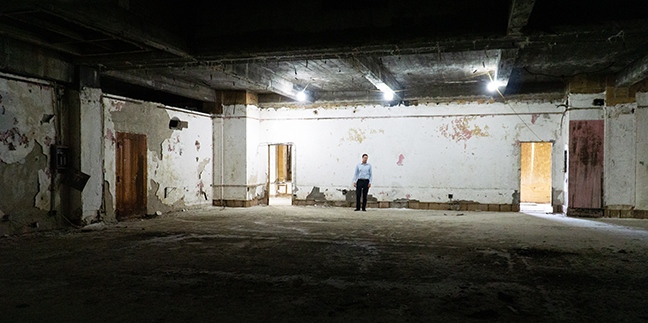
Owner Adam Maust stands in the huge, dilapidated interior of the building.

According to Dauphin County, Maust bought the 50,000-square-foot building and surrounding lots late last month for $425,000 from Philadelphia Suburban Development Corp., a King of Prussia-based commercial real estate development firm. That company bought it in 2004 and never redeveloped it.

The neglect is quite apparent, as the building has deteriorated significantly since that time.

Maust said that he’s putting together a plan for the complete rehabilitation of the structure, with architecture by Camp Hill-based By Design Consultants.

First off, the structure needs to be gutted, as little of the damaged interior is salvageable. He wants demolition to begin next month.

He then plans to ask the Camp Curtin community what it would like to see in the space. He wants to hold community meetings to get the feedback and buy-in of people who live in the neighborhood.

He’s pretty sure that the area needs a grocery store, so that’s high on his agenda. He also plans to move his own Harrisburg-based marketing company, A Mighty Group, into a small portion of the structure. He thinks that a brewery and art studios could be good fits, maybe a restaurant or a coffee shop.

The property includes a parking lot and several empty lots, which he wants to turn into community green space.

“I’m open to any idea,” he said. “It’s really talking to the community to see what makes sense.”

This image shows the interior’s extensive damage.

The building began to take shape in 1923 as the Brotherhood Relief & Compensation Fund Building, a railroad workers’ relief fund. It was to include a bank, a convention hall and numerous floors of apartments.

The project, though, soon halted mid-construction and didn’t restart until 1931, eventually finished in its current, two-story form, according to historian Ken Frew’s book, “Building Harrisburg.”

Through the years, the local Hudson family purchased the building, which was divided into a series of storefronts for small shops, all eventually closed. Maust is rebranding the building as “The Atlas.”

Maust said that he wanted to purchase the building for several reasons. First of all, he’s from the area and, he said, loves Harrisburg, so wanted to make a contribution. Secondly, he thinks that the 6th Street corridor is ripe for redevelopment with such projects as the new federal courthouse and the planned state archives up the street.

“I saw this as an exciting opportunity to change Harrisburg for the better,” he said. “I hope this will be an anchor that we can build on.”

He also likes the proximity to the state Farm Show Complex, which is just across the Maclay Street bridge. He said that he easily could see the building serving as an adjunct for large events there, with event and meeting space.

Since the building is so large, there are many possible uses, he said. And, if his project is successful, he might even consider building up, since the stone and steel bottom floors were built to support a 12-story structure.

“This building is an anchor for the entire corridor,” he said. “It will be one of the very best buildings in Harrisburg.”


Continue Reading

Street barriers come down in Harrisburg after small, peaceful gun rights rally

A small group of people rallied on the Capitol steps today in support in support of gun rights. Photo: Maddie Conley

The barricades have come down around downtown Harrisburg, after a brief rally in support of gun rights concluded on the Capitol steps.

Harrisburg placed barriers this morning preventing through access to residential streets in the Capitol area neighborhood.

Last night, Mayor Eric Papenfuse said the city was concerned that a “large number” of groups would rally today, some in opposition to one another. Some of this information was spread through social media. However, that never materialized.

Instead, the main group, Gun Owners of America, held a brief, peaceful rally in favor of gun rights, as it does each year. The event had been officially cancelled. However, a group of protesters still gathered to show support for their cause.

Continue Reading

Harrisburg plans street closures Monday, expects “a large number” of groups to rally at once

Harrisburg placed barricades blocking access through the Capitol area neighborhood during last month’s ReOpen PA demonstration.

Harrisburg plans to roll out the street barricades again tomorrow, in light of more planned protests at the state Capitol.

Late today, the city released a statement saying that it would deploy barricades “at various points” along Forster, 2nd and 3rd streets in the morning.

According to the statement, the city expects “a large number of outside advocacy groups to rally” at the Capitol complex.

Mayor Eric Papenfuse said that several groups “with different agendas” have said that they would  rally, though he declined to be specific over who might rally.

“I encourage Harrisburg residents to stay home and not go downtown tomorrow morning if possible,”  Papenfuse said. “While we are hoping for peaceful demonstrations, there will be an increased police presence to direct traffic and deter potentially volatile situations.”

The city has been the site of numerous protests over the past two months, including two ReOpen PA demonstrations and several protests and marches supporting the Black Lives Matter movement.

On May 15, the city blocked access from the Capitol complex to the surrounding residential streets for the second ReOpen PA protest. The city took that action after participants at the first protest on April 20 purposely gridlocked city streets with a loud, hours-long motorcade.

While some demonstrations have spilled into the Midtown and Capitol area neighborhoods, most have not and have been peaceful, including today’s rally.

Continue Reading

An appeal for unity, for action at Black Lives Matter rally in Harrisburg

Protesters march outside of the PA state Capitol on Sunday.

Unity. Peace. Justice.

Those words were heard over and over during Sunday’s rally at the PA Capitol, the latest in a weeklong series of protests following the death of George Floyd and demands for equal rights and fair justice.

Several hundred protestors gathered at the state Capitol and marched along downtown Harrisburg streets and over to City Island before returning to the Capitol steps to rally again.

Along the way, the diverse crowd held signs decrying police violence and engaged in chants such as “Say His Name: George Floyd” and “Hands Up, Don’t Shoot.”

“This march is one of solidarity,” said community activist Kevin Maxson, speaking to the crowd. “We demand change. That’s why we’re all here today.”

Maxson heads up the group, Voices 4 the Voiceless, which organized the event. He recently ran for state Assembly, losing to incumbent Patty Kim for the Democratic nomination for the 103rd legislative district.

As he spoke, Maxson repeatedly emphasized that the protest would be well organized, peaceful and respectful—and it was. Harrisburg police kept their distance, mostly blocking traffic for the marchers, and they were hardly visible during the four-hour event. During the day’s second march, protestors knelt in front of police headquarters on Walnut Street.

Protestors walk across the Walnut Street Bridge in Harrisburg.

At the Capitol, Maxson repeatedly urged people to unify and work together for change. This, he said, could take the form of organizing, voting and even running for office.

“Today, we make a change, a definitive change,” he said. “This is a peaceful rebellion for justice.”

After he spoke, Maxson handed the microphone over to anyone in the crowd who wished to speak, and several people did. These included a recent graduate who decried funding cuts that he said disproportionately affected minority organizations at his college, a young woman who apologized to the crowd for inflammatory social media posts she had made, and Jose Martinez of Harrisburg’s Capital Punishment Boxing Club, who spoke up in defense of law enforcement.

“Don’t blame every police officer,” he told the protesters, some of whom held large signs that read, “Blue Lives Murder” and “Abolish Police & Prisons.” “Every police officer isn’t bad.”

Rebecca Donovan said that she came into Harrisburg from Hershey after hearing about the rally. She said that she wanted to show her support for the Black Lives Matter movement and the cause of equal justice before the law.

“This is such an amazing movement for a just cause,” she said. “Everyone deserves to be treated equally and fairly.”

Speaker Cole Goodman, a Democratic state committeeman, said that the movement must endure past these initial protests, not dissipate as in past, nationally publicized cases of police brutality.

“The media talk about it for a few months, and then it fades away,” he said. “Not this time. Not this time.”

Maxson also emphasized that point. Ultimately, he wants the protestors, many young, to take what they’ve learned to make significant change in their communities.

“We can protest and march,” he said. “We can rally all we want. But need to have a plan afterwards.”

Continue Reading

New coronavirus cases dip again as state reports 506 initial diagnoses

An image from the PA Department of Health lab in Exton

New cases of COVID-19 continued to flatten across the commonwealth, as the state reported just above 500 new positives today.

The PA Department of Health reported 506 newly diagnosed cases for the period ending at midnight.

This marks 28 days straight with new case numbers below 1,000 in Pennsylvania.

With the additional cases, 75,592 Pennsylvanians have now been diagnosed with the coronavirus.

Cases peaked in early April at nearly 2,000 daily new cases. Since then, cases have shown a gradual decline, despite increasingly greater testing levels for the virus.

Locally, total diagnosed cases are as follows:

  • Adams County: 273 cases (yesterday, 269)
  • Cumberland County: 669 cases (yesterday, 665)
  • Dauphin County: 1,481 cases (yesterday, 1,451)
  • Franklin County: 795 cases (yesterday, 792)
  • Lancaster County: 3,461 cases (yesterday, 3,404)
  • Lebanon County: 1,062 cases (yesterday, 1,021)
  • Perry County: 68 cases (yesterday, 67)
  • York County: 1,082 cases (yesterday, 1,049)

Overall, 14.1 percent of PA residents tested have shown to be positive for the virus.

The health department also reported another 12 fatalities, meaning that 5,943 Pennsylvanians have died from the disease since March. Not all of these deaths necessarily occurred in the past 24 hours, as the health department constantly updates its data.

Around central PA, the COVID-19 fatality data now stands as follows:

  • Adams County: 8 deaths (yesterday, 8)
  • Cumberland County: 57 deaths (yesterday, 57)
  • Dauphin County: 91 deaths (yesterday, 90)
  • Franklin County: 39 deaths (yesterday, 39)
  • Lancaster County: 318 deaths (yesterday, 317)
  • Lebanon County: 37 deaths (yesterday, 37)
  • Perry County: 3 deaths (yesterday, 3)
  • York County: 29 deaths (yesterday, 29)

Statewide, Philadelphia County continues to have the most confirmed cases with 19,213 cases, followed by Montgomery County with 7,582 cases. The two counties also have reported the most deaths statewide from the disease: 1,420 and 725, respectively.

“As Pennsylvania continues to move forward in the process to reopen, we need to remember that the threat from COVID-19 has not gone away,” health Secretary Rachel Levine said.

Last week, the state moved the last of Pennsylvania’s “red” counties into the less restrictive yellow phase, including the entire Philadelphia metro area. On this coming Friday, three local counties—Cumberland, York and Adams—are slated to enter the “green” phase.

Nursing homes and personal care facilities have been particularly hard hit by the virus. Of total deaths, 4,094, or 69 percent, have occurred in residents from nursing or personal care facilities, according to the health department.

In nursing and personal care homes, there are 16,131 resident cases of COVID-19, and 2,804 cases among employees, for a total of 18,935 at 615 distinct facilities in 45 counties, according to the health department.

In addition, about 5,729 of total cases in PA are in health care workers.

Statewide, 519,765 coronavirus tests have been performed, with 444,173 people testing negative, according to the state health department. Yesterday, the state reported that 510,208 people had been tested for the virus.

Of the patients who have tested positive to date, the age breakdown is as follows, according to the health department:

  • Nearly 1 percent are aged 0-4
  • Nearly 1 percent are aged 5-12
  • Nearly 2 percent are aged 13-18
  • 6 percent are aged 19-24
  • Nearly 37 percent are aged 25-49
  • 25 percent are aged 50-64
  • 28 percent are aged 65 or older.

Most of the patients hospitalized are 65 or older, as are most of the reported deaths, according to the state.

Levine continued to emphasize that Pennsylvanians should do the following:

  • Wash your hands with soap and water for at least 20 seconds or use hand sanitizer if soap and water are not available.
  • Cover any coughs or sneezes with your elbow, not your hands.
  • Clean surfaces frequently.
  • Stay home to avoid spreading COVID-19, especially if you are unwell.

 “As counties move into the yellow and green phases, we must take personal responsibility to protect others,” Levine said. “Wearing a mask, continuing to maintain social distancing, and washing your hands frequently are all steps we can take to help protect others, including our most vulnerable Pennsylvanians, our essential workers and our healthcare system.”

For more information, visit the PA Department of Health’s COVID-19 website.

Continue Reading