Restaurant Reset: Harrisburg restaurateurs search for the right recipe to survive to better times

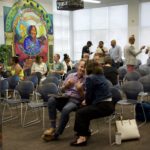
Scenes from Harrisburg’s Saturday Nights in the City outdoor dining event.

Their tacos would arrive soon—fish and el ranchero, served not in carryout containers but on real plates.

While Jerry Morris and Brian Dougherty waited, they recounted the restaurants they have patronized via takeout since March.

“We’ve done Dodge City steakhouse multiple times,” said Morris.

“Freshido,” added Dougherty. “Subway Café. Café Fresco. We’ve done Alvaro’s, because that’s right by our house. The Speakeasy.”

On this pleasant Saturday night, Morris and Dougherty, who live in Midtown Harrisburg, were dining al fresco at the eatery trilogy of Mangia Qui, Rubicon and Suba on North Street.

“So many restaurants are such an asset to the city that, if they close, they’re probably gone for at least several years before somebody comes in to take their place,” Dougherty said. “So, we know that we have to do our part.”

In the secret sauce keeping Harrisburg restaurants afloat during the age of COVID, loyal customers are key ingredients. So are financial reserves, government help and creative ideas connecting food and beverages to hungry patrons.

 Adapting

In this atmosphere, agility is gold.

Steve Weinstock, owner of Stock’s on 2nd, credits a seasoned management team with bright ideas that bring in revenue: add-your-own-liquor signature cocktail cubes; Easter and Passover meals to-go that morphed into kosher Shabbat dinners; a food truck trundling into Harrisburg neighborhoods, so successful that a second is contemplated.

“I never thought in a million years I’d be running a food truck,” Weinstock said.

He admits to skepticism over the chef’s idea for livestreamed cooking demos, using ingredients packaged down to the tablespoon of salt. Now, the sessions have “a huge following” and could continue, post-pandemic, as quarterly events.

Mangia Qui’s partners had little time to “flip the script,” maneuvering through such technicalities as finding eco-friendly takeout containers, combining three restaurants’ menus into one, and developing sanitization procedures, said partner and chef Qui Qui Musarra.

How are they managing?

“We pray a lot,” Musarra said. “We’ve all become avid smokers. You just hope that somehow it all balances out.”

In mid-June, hallelujahs rang out as Dauphin County restaurants reopened at 50-percent capacity. In mid-July, hallelujahs turned to howls when Gov. Tom Wolf’s administration dialed back to 25 percent and required food purchases with alcohol sales.

Weinstock, like restaurateurs and journalists statewide, wants to see the data justifying such restrictions.

“I feel like our industry is getting singled out,” he said. “I don’t think it’s fair.”

Musarra believes that Wolf and Health Secretary Rachel Levine are doing “a tremendous job.” It’s America’s resistance to precautions such as masks that are slowing reopening, she believes.

“Everybody could have been at 50 percent had everybody abided by the rules,” she said.

Up on Allison Hill, it’s a Wednesday at lunchtime, and socially distanced customers wait to order their Caribbean-themed comfort food at Rice & Beans Diner on 17th Street.

Business seems steady, in contrast to the pandemic’s first month, which “was horrible,” said Starlyn Rivera, co-owner with husband Jose Pichardo.

With only five employees, the restaurant’s minuscule federal Paycheck Protection Plan (PPP) loan didn’t go far. And by the time Rivera applied for a city small business grant, the fund had emptied.

The restaurant, which the New Yorkers opened in early 2019, stayed open by trimming hours but not eliminating jobs.

“Our employees, they understand,” said Rivera. “We were open more for them than for even us. We’ll keep trying.”

PPP loans helped restaurants get over the initial plunge in business, but layoffs and hourly cuts remained on the menu. At Stock’s on 2nd, “staying afloat” means limiting hours, said Weinstock.

“Everyone wants us to get through it, so the staff is very understanding,” he said. “Some people are happy to have a few days a week versus six days, just to have something in their pocket.”

 Street Food

Todd and Kathy Vander Woude, having dinner on a Saturday night, discovered a new perspective on 2nd Street’s eclectic architecture. That’s what happens when you’re sitting in the center lane of a street that normally carries thousands of vehicles a day.

The Vander Woudes were enjoying Saturday Nights in the City, when the city barricades streets, and diners order from servers or carry takeout food to tables set up by participating restaurants. Vander Woude, executive director of the Downtown Improvement District, and Harrisburg Mayor Eric Papenfuse came up with the idea, launched in early June.

Saturday Nights in the City helped restaurants close revenue gaps caused by emptied downtown offices during the day and diminished crowds in the evenings. An extra 22 tables outside help Stock’s make up—somewhat—for the diminished capacity inside.

“It’s the one night we can shine and do the amount of sales that we used to do when we were open 100 percent,” said Weinstock.

The Mangia Qui group turned its North Street block into a dream of Paris or Miami, complete with white tablecloths, red patio umbrellas and lights strung overhead. Customers love the getaway and the tableside service.

“It’s a reprieve,” Musarra said. “Even though we are in the street, people feel they’ve been transported someplace else.”

Restaurant owners know that Saturday Nights in the City is weather-dependent. Heat and summer storms dampen turnout. Even if it’s extended into the fall, as some hope, winter is coming.

 Different Paths

Remember date night? Have dinner. Attend a show. Have drinks afterwards.

All a distant memory.

“That’s a hurt,” said Weinstock. “We have a large symphony crowd.”

Restaurants also took a big hit in crowd-based bookings—weddings, political and nonprofit fundraisers, catering. Mangia Qui’s clients are managing work-arounds, perhaps finding larger spaces for socially distanced catered events, or flipping weddings to their own homes.

Delivery services have also become a mainstay.

“If you can’t come to us, we’ll come to you,” said Musarra. “We had people getting takeout and delivery who had never been to the restaurant. They’ve become converts.”

A few restaurateurs have decided to wait it out a bit longer.

Originally, The Millworks reopened in June. Then an employee tested positive for COVID, and owner Josh Kesler announced a temporary shutdown. When test results for other staff were slow to arrive, he suspended operations at The Millworks and his new Watershed Pub in Camp Hill until further notice—not a closure, but a hold.

“The bottom line for me is, I couldn’t ensure my staff’s safety, and if I can’t do that, I’ve got to put the brakes on it,” said Kesler. “We’re just going to take a little time off and get ahead of this experience.”

Fiscal reserves help Kesler pay those bills that keep coming. The Millworks complex of restaurant, brewery and artists’ studios will stay closed until multiple factors—negative test results among staff, sustained low virus numbers in the community, perhaps reliable treatments and vaccines—combine to assure “a more certain environment, health-wise.”

Veteran restaurateurs are survivors. Optimists, too. Kesler, a longtime booster of Midtown Harrisburg as a destination, sees The Millworks and its neighbors bustling again.

“I can’t wait for that to happen,” he said. “Eventually, it’ll be back to what it was before.”

Musarra and her partners don’t fret over how long they can sustain business.

“You have to concentrate on the positive side, because if you predict your own demise, then that’s what you work towards,” she said.

At Rice & Beans Diner, the pandemic has apparently slowed approval of a liquor license, but the hopeful orange notice beckons in the window. Rivera can’t say that business is okay, but she can say with a laugh, “We’re doing better.”

“We’re doing better because our customers, they are great,” she said. “They’re supporting us a lot. They understand. They can go in the restaurant, and if they like our food, then we’re glad the neighborhood is helping us.”

For more information on the restaurants in this story, please visit their websites and social media pages.

Support quality local journalism. Become a Friend of TheBurg!
 

Continue Reading

Art and a Cup: Young owner Makayla Burton has combined her favorite things at The Tiger Eye Coffee Shop

Coffee shops often look as dark as their freshly roasted stock-in-trade. Brown. Bleak. Minimalist. Industrial-looking.

A new café is breaking that mold, blending color and caffeine into a delicious, coffee-scented concoction.

The fledgling Tiger Eye Coffee Shop in Paxtang is as bold and bright as the rides on the Wildwood boardwalk, exuding homey charm and originality with its eclectic menu and decor.

The sign outside the pastel purple building, adorned with strings of white lights and the American flag, lists the three primary loves of 19-year-old owner Makayla Burton: Coffee. Art. Ice cream.

Chairs and tables are artfully arranged along Derry Street, with seats hand-painted purple, red and black with polka dots. Her father Robert, who is a co-owner, as well as her siblings, contributed their talents to the effort. Brother Jadon works with Makayla part-time.

Inside, Tiger Eye is part coffee shop, part art gallery, part ice cream parlor and all candy for the eyes. Even better, it’s bathed in the aroma of coffee beans and baked goods.

The laid-back hipster vibe is exactly the feel that Burton wanted to create in a site that was once the home of Giordano’s Pastries.

Paintings on the sponge-painted walls are the handiwork of former classmates at the Capital Area School for the Arts (CASA) in Strawberry Square and other local artists. Chic throw rugs hug hardwood floors, and vibrant throw pillows spice up furniture. Each table is a glossy finished tree slab holding a unique lamp.

Glass display cases along the walls hold pottery, unique wooden mugs, craft jewelry and three-dimensional art for sale. A print camelback couch, game table and children’s table are stationed toward the back, and a book, “The Ruminative Soul,” by Drew Dick, is on sale for poetry fans.

The shop has already attracted a loyal following. Parents taking their children to nearby Harrisburg Gymnastics stroll over. Patrons of the nearby Harrisburg Framing and the beach-themed Sea Shop —her dad’s shop—drop by for a jolt of java. Walkers, joggers and cyclists from the nearby Capital Area Greenbelt enter in Lycra, in search of smoothies and cold drinks. Music lovers can try their hand at the acoustic guitar propped up in the front window.

Makayla said that the shop’s specialty is avocado coffee, which is a cup of joe mixed with half an avocado, which takes the place of cream. Tiger Eye is the only place serving that healthy mash-up in the area.

Fit the Feeling

Burton admits that it’s not easy launching a business at 19, especially when you open in December 2019 and a global pandemic pulls the plug on your dreams three months later.

The shop was forced to close for a time then reopened with numerous precautions, including socially distanced tables, plexiglass at the counter, face masks, enhanced cleaning and hand sanitizer. Plans for live entertainment have been put on hold for now.

Through it all, Burton remains optimistic, kind and eager to please her customers. As a film and video major at CASA, she also has an eye for style and a passion for helping her fellow art lovers.

She said that the name of the shop has nothing to do with a boxer named Rocky and the familiar “Eye of the Tiger” theme song.

“I thought it just fit the feeling here,” she said.

She loves the rare tiger eye gemstone, which is the color of coffee, with a silky, yellow-and-brown luster and a reputation for bringing good luck.

After visitors secure their espresso, gluten-free muffin or Hershey’s ice cream, they can stay to sip, spoon, study, socialize and shop.

Burton can’t remember exactly when she decided to open up a coffee and ice cream shop, but she admits she has always loved coffee. She is in good company.

“I love the addition of the Tiger Eye Coffee Shop in the Borough of Paxtang,” said former mayor and current borough manager Keldeen Stambaugh. “It has enhanced our downtown area and is a community favorite, adding to our popular eateries within a few blocks.”

Stambaugh said that, because the municipality is small, most residents walk to downtown hot spots. For those who drive, a municipal parking lot across the street behind the municipal building/firehouse offers free parking.

“The Tiger Eye focuses on creating a warm, friendly environment and a great place to gather with friends and family,” Stambaugh said.  “They offer something for everyone. They sell coffee, tea and ice cream, but also have a big ‘little free library,’ in addition to displaying and selling artwork from a variety of artists.”

Paxtang, so close to splendid Victorian homes, the Harrisburg Mall and the car dealerships on Paxton Street, needed to stir up some creative juices.

“The artist atmosphere that is growing here in Paxtang is a big focus at the Tiger Eye,” Stambaugh said. “We hope this will encourage more artists to move into our borough.”

As a young, new business owner struggling to survive in a world transformed by a single-stranded virus, an art lover, and a coffee aficionado, Burton’s offering of cappuccino crunch ice cream seems especially fitting. Blending coffee and ice cream in artistic swirls, it is, like Tiger Eye, the best of all worlds.

The Tiger Eye Coffee Shop is located at 3418 Derry St., Paxtang. For more information, call 717-853-0974 or visit their Facebook page.

Continue Reading

Band Barn: The Englewood was built for music, but includes food, brews, views

The Englewood

Jeff Sharp and Rick Russell are band members and music fans. They’d been on the lookout for about 10 years for a great community hangout—from a music standpoint.

When Sharp, now co-owner of The Englewood in Hershey, met me in the new lobby, the first question I asked him was, “So, how’d you discover this place?”

Their band, The Hockersville Station, played Americana/alternative country on Thursday nights at the nearby farmers market.

“We’d be jamming with a good view of the farm and the dilapidated barn, look at it and think, ‘Huh,’” Sharp said.

As music fans themselves, they didn’t believe there were enough good places in the Hershey area for music.

“There is so much talent in this area,” Sharp said. “We wanted a listening room as opposed to some club or theater. No dive bar. And if we were gonna have something like that, we wanted a great brewery to go along with it.”

Enter The Englewood.

Dating as far back as 1861, The Englewood was once a strawberry farm, then a dairy farm that provided milk to Milton Hershey for his chocolate. The main building is the old barn, a gloriously red-roofed structure now completely transformed from its origins as a cavernous cattle barn.

The massive renovation project entailed removing cattle shoots, taking down cement walls and generally removing over a century of cow. To preserve as much of the barn as possible, the contractors cob-blasted wood beams, cleaned limestone walls, repurposed barn wood for the bar counters, and installed new windows that mimicked the old ones.

They were three weeks away from finishing construction on the barn when COVID-19 hit. Sharp gave a smile with a shrug.

“The delay allowed us to do a slow rollout,” he said. “The silver lining here is that we got to ease into it without changing the experience for our guests.”

All the Senses

Managed by Tom Scott, former owner of McGrath’s Pub and Scott’s Grille in Harrisburg, The Englewood’s main entrance boasts a welcoming hallway. From there, I entered a cozy tavern on the main level and was told it will serve Pennsylvania wines and spirits. I then stepped onto the outdoor deck, which overlooks the grounds, a patio space with a fire pit, and the lower level brewery.

The Englewood is music-focused, so the two-tier, 650-person event space is the wow factor. It hosts the main level area, including the stage and movie screen, and a mezzanine with couches and plush seating. Lancaster-based Clair Brothers installed the sound systems.

“They’ve got the best performance sound system in the industry, as far as world tours,” said Sharp.

In addition to the sound system, the venue has a spacious green room and plenty of parking.

Chef Matt Miller runs the lower level restaurant’s state-of-the-art kitchen, which brings to life a casual menu. Sharp talked up Miller’s pizzas and the “Barn Burger,” a seasoned short rib, brisket, chuck and bacon combo with cheddar cheese. Housed in what used to be the milking parlor, the restaurant has a brick fireplace and a wood-fire oven with counter seating. Doors lead to the outdoor patio. And let’s not forget the brewery, also on the lower level.

For that, the owners sought out Rubber Soul Brewing co-founder Jesse Prall, who will run the brewery on a seven-barrel system. I asked Prall about the beers he likes and what he plans to offer.

“I get this question a lot, and it’s hard for me to put my finger on the exact beers I like,” he said. “I do prefer to brew more traditional styles and leave out the ‘off the wall’ stuff.”

Prall describes himself as a “seasonal-style drinker.”

“I like the wheat and Belgian beers during the summer, but then in the fall/winter, I get more into the darker beers, like stouts, porters and dubbels,” he said. “And don’t get me wrong—I dig a good IPA. All that being said, I will offer the gambit depending on the season.”

Six core brands are on tap all the time: session IPA, IPA, DIPA, lager, amber and chocolate milk stout. Six other taps will be in rotation.

This is Prall’s 20th year brewing. He got his start cleaning kegs on Sunday evenings at Appalachian Brewing Co. in Harrisburg.

“The electric steam boiler was cheaper to run on Sundays,” Prall said.

He met his brewing mentor at ABC and then eventually took over the position of head brewer. After spending around five years there, he ended up in Delaware, working at Dogfish Head for 10 years as a head cellarman, production planner and brewing manager.

“There is where I learned even more and was ready to take on something of my own,” he said. “Here’s where Rubber Soul happened. Even though it didn’t last long, I still gained something from it. I want to grow The Englewood brand both in-house and outside to the public.”

At that point, my tour was complete, with all bases covered—the music, the food, the beer.

“We wanted a vibe that tapped into all the senses,” Sharp said.

He ticked off all five on his fingers.

“The sound of the music, the smell and taste of the food, the comfortable décor and the scenery,” he said.

Angela Moramarco, marketing and creative director, summed it up with a snappy catchphrase.

“Eats, brews and beats,” she said.

The Englewood is located at 1219 Research Rd., Hummelstown. For more information, visit www.englewoodhershey.com.


Continue Reading

Energy & Intimacy: Black musicians find a home at La Cultura

Abanti Shelby.
Photo courtesy of Jess Hoffman Photography.

Around 2016, I became obsessed with Harrisburg’s underground music scene.

I loved seeing performers turn regular coffee and bike shops into concert venues, the thump of music spanning for blocks.

But, despite a few shows here and here, the majority of artists that took up these spaces were white.

That was until La Cultura came around. Black musicians quickly found a home in the two-year-old venue. Aside from hosting Black-owned shops and food vendors, La Cultura holds open mics and gives a space for local artists to perform.

“I feel like I’m doing its purpose. I feel so much aligned with my purpose and my vision on why I created this space originally,” said Elyse Irvis, owner of La Cultura. “But, I can’t take credit for the idea, just part of the execution.”

The performances are curated by Raeshell “Shelly” Thompson, a local artist with too many talents to list. She started hosting the open mics in La Cultura last year and has since fallen in love with it.

“People pull up for this, people get excited for it,” she said. “It’s something that people can commit to, and it’s something that people want to do, which also makes me happy.”

Down for It

Thompson was familiar with hosting performers before it became her regular at La Cultura. Two years ago, she hosted an event at Little Amps with her crew of musicians. The event was so packed that people were spilling out on to State Street.

“Because there’s not a lot of space for us, it almost seems like when we do these events, it gets packed like that, because it’s like ‘Whoa, like, what’s going on?’” she said.

For Thompson, it felt like there was a shortage of spaces for these musicians, and she wanted to help fix that.

Her first order of business when she returned from Howard University was to host an open mic.

She got her chance when a friend who worked at H*MAC came up to her and said, “Hey, we got a show coming up, and we just lost a host. Would you be down to do that?”

She was, of course, down for it, and loved the event. She loved hosting so much that, shortly after, she reached out to La Cultura to hold her own event.

Now, Thompson has a full cast of regular performers. Some of the frequent artists include her best friend singer Monica Cooper, Nick Bryd, Chewdo Ju, Andu “Geniuz” Desbele and his group Naomi17, among others.

Even though the energy in the space is large, the performers still feel a level of intimacy in La Cultura.

When Desbele is on stage, the rapper looks into a crowd of familiar faces, all within an arm’s length, as they rap along with him. It feels like home.

“When you go there,  it feels as if these are all your people,” Desbele said.

Connections

There are three rules of Thompson’s open mics. All artists need to introduce themselves, everyone shows respect, and lastly, make a friend.

Not only does Thompson want to give opportunities for these musicians, she wants to help build connections and friendships between them.

Building connections is especially important for Thompson. In January, a friend of hers who came to her open mics was killed during a string of shootings in Harrisburg. He was at her event right before he died.

“When I think about that situation, I mean, it’s a far reach, but he could have met somebody at this open mic that maybe he was out at lunch with instead of where he was when that happened, you know what I mean?” Thompson said.

So, bringing people together is especially important for her. The first 45 minutes of each event are carved out so people can get to know one another.

And it works.

“There’s a lot of people I’ve met there that, now, when I see them out or on Instagram… my mind connects them to [La Cultura],” Desbele said.

Despite being in the midst of a pandemic, Thompson is still working to connect Harrisburg Black artists—just virtually. At least once a month, Thompson opens up La Cultura just for the artists and livestreams their performances for viewers.

While it’s not quite the same as the live shows, Thompson and these artists are still bringing more recognition to Harrisburg’s Black art and business scene.

“[La Cultura] allows us to be the face of the operation, as a Black-owned business,” Desbele said. “Our face will be associated with this because we’re here, and they won’t take it. They won’t ride us out this time.”

For updates on La Cultura’s open mic events, follow them on Facebook and Instagram @LaCultura717. You can also find Thompson on Instagram @Shellyifyanasty. La Cultura is located on 214 Verbeke St., Harrisburg.


Continue Reading

No Meat, No Problem: Black-owned vegan restaurant breaks barriers and promotes health through soul food

Laquana Barber and Stefan Hawkins

On opening day, the House of Vegans restaurant had a line down N. 3rd Street. At times, it wrapped around the corner.

Customers posted about it on social media, taking pictures of the food and the line they gladly waited on to get it. Inching closer to the door, they endured the July heat.

“What are we in line for?” one lady even asked after stumbling upon it and blindly jumping in.

Owners Laquana Barber and Stefan Hawkins were feeling the love.

Not only was this their first experience running a restaurant, but they were accomplishing something unprecedented.

“We are the first black-owned vegan restaurant in Harrisburg,” Barber said. “We are making history.”

On top of that, House of Vegans is one of only a few vegan restaurants in the metro area.

If you had asked Barber a year ago, she wouldn’t have even thought about opening a restaurant. Over three years ago, she wasn’t even a vegan. But since then, the couple’s lives have changed dramatically, and now they’re breaking barriers and cooking good food along the way.

Bringing It Home

Barber had always been an athlete. She participated in sports in high school and ran track in college, but, over the years, her asthma was a barrier. She used at least two different inhalers every day.

“I could never perform to the best of my ability,” she said.

At 20, Barber started reading about health and natural remedies. She went as far as fasting for 40 days. After that, she found herself not needing her inhalers and concluded that her health had to be tied to what she was eating. And so, she went vegan.

Not long after, Hawkins had a similar realization. He was working full-time at McDonald’s, getting a behind-the-scenes look and becoming less and less interested in being a carnivore.

“American culture views that every meal has to have meat with it when it does not,” he said. “Since I’ve been vegan, it’s been the best part of my life.”

The couple grew closer over their shared interest in health and added a son, Ke’Or, to the family in 2019.

Barber and Hawkins frequently took trips out of Harrisburg for date nights, visiting as many vegan restaurants as they could find. Still, they couldn’t help but wish their hometown had more options for them. Hawkins thought, “Why can’t we do it?”

After a lot of trial and error in their kitchen, the couple started cooking vegan food for family, friends and neighbors in Allison Hill. Around 90% of the people they served weren’t vegan, they said, but everyone loved the food.

“Vegan isn’t a big word in the African American community,” Hawkins said. “We want to educate the culture and the people. We can be vegan and still eat good and hearty.”

Health, Flavor

After finding a location in Midtown, the couple opened House of Vegans in July and started cooking for the masses. Their food combines the health of vegan food with the flavor of soul food.

Hawkins’ creation, the “Slap Burger,” has become a crowd favorite. It has the juicy, drippy, sauciness of a beef burger so that you can hardly tell the difference.

Otherwise, Barber does much of the cooking. She makes fried cauliflower, soy “chick’n drums,” barbecue jackfruit, yams, baked mac and cheese and collard greens, to name a few offerings. None of their food contains animal products or byproducts, but is completely plant-based. They also hand press their own juices.

“I always had the mindset that it’s vegan food, and it would be bland,” said Yodit Kidane, a friend of Barber’s and possibly House of Vegan’s biggest fan. “[Barber] always spoke of her vegan lifestyle, but I was always like, eh, that’s not for me. I finally tried it, and I was hooked.”

Kidane has been eating the couple’s food since they were making it out of their house. The “Slap Burger” has become her “go-to.”

Even before they opened on N. 3rd Street, Kidane was telling friends and co-workers about the vegan food she fell in love with and the fresh juices that were healthy yet delicious.

“It’s so good that I want the next person to have the opportunity to try it,” she said.

Barber and Hawkins appreciated her support so much they named a juice after her nickname—the “Yo-Yo Drank.”

Of course, Kidane was there to support her friends on opening day for lunch and dinner.

Seeing friends, family, community members and even people who drove hours lined up at House of Vegans had Barber in tears that first day.

“Being Black and opening a business is not easy,” Barber said. “It was a humbling moment [opening day] because we had so much support.”

House of Vegans is located at 1426 N. 3rd St., Harrisburg. For more information, visit their Facebook page.

Support quality local journalism. Become a Friend of TheBurg!

 

Continue Reading

Serenity Granted: Maryland’s historic Eastern Shore offers a quick escape into nature

Ward Museum of Wildfowl Art

I used to look forward to summer as a time to travel and explore the country. Often, I’d find the time to create a blog post on places of interest.

Most years, I manage to enjoy three or four summer trips, but COVID-19 has changed all that. This summer, my “outings” are generally relegated to grocery stores and my “trips” to the rooms of my house.

By August, I realized that this just wasn’t cutting it. I was determined to escape house arrest at least once this summer, and my requirements were simple: visit an area less than four hours away (by car) and rural enough to attract more wildlife than people.

This thought was in the back of my mind as I browsed pictures on Instagram and stumbled on the Ward Museum of Wildfowl Art in Salisbury, Md. I researched the region and recognized that it checked all my boxes. It may also check yours, especially if you’re seeking a peaceful getaway to relax and unwind.

On the Wing

Watching wildlife is always enjoyable from a kayak, and paddling through the calm, brackish waters of the Blackwater River is an easy way to take in the beauty of the Blackwater Wildlife Refuge. Matt Meredith’s family has been in the area since the mid-1600s and has been conducting tours for years.

If you’re a birdwatcher, this is where you’ll want to be. If you’re lucky, you’ll spot eagles, ospreys and heron, or have the opportunity to take a photo of an eagle’s nest like I did.

A word of warning: Be sure to take a map along because your cell phone may as well be a brick in this neck of the woods, and you’re likely to get lost on the way to meet Matt at BlackWater Adventures. Don’t ask me how I know.

Afterwards, you may want to see depicted in art what you just saw on the water by visiting the Ward Museum of Wildfowl Art.

Located at Salisbury University, the waterfront museum is comprised of six galleries, two of which rotate periodically.

Uniquely, most every piece of wildfowl art is crafted of wood, from majestic owls to ducks to other impressive creatures. A particularly detailed piece depicts a hawk, wings akimbo, striving to snatch a fleeing pheasant.

These representations are so stunning that visitors often marvel at the talent of the carver behind them. Wooden “feathers,” in particular, tend to elicit exclamations of awe for their realism.

Many of the wildfowl appear to be in mid-flight, thanks to one well-placed rod—a limitation required to compete in the Ward World Championship held in nearby Ocean City. That competition draws more than 1,000 artists annually, with many of the award-winning pieces gaining a temporary home at the museum.

Staying, Eating

Located along the Wicomico River is the Whitehaven Hotel, built in 1810 as a private home. A ferry adjacent to the hotel dates back to 1685 and is known as the oldest publicly operated ferry in the country.

In the late 1800s, the village of Whitehaven was a bustling, vibrant community with shipyards, a canning factory, a school, a church and retail stores. The demand for lodging necessitated the transformation of the private home into a hotel in 1877. The hotel was host to steamship passengers, which included salesmen who traveled among the farming communities. It also drew guests who arrived by horse, and it now continues to connect the public to places like Quantico and Princess Anne.

Today, the hotel features eight guest rooms, with nary a television to be found. As for the internet, let’s just say that if you recall “dial up,” you can relate. Your time will be better spent gliding through the water in a kayak on the Wicomico River or relaxing on the spacious porch with a good book.

A 15-minute drive takes visitors to a longstanding casual joint called “The Red Roost Crabhouse and Restaurant,” which was established in the 1970s. With trashcans at the end of tables for guests to sweep away their shells and goo, you could say that the décor is more conducive to chowing down than ambiance. That matters not to diners who come from miles around to belly up to the picnic tables and eat their fill of shellfish and fried chicken.

Another area favorite is a newer establishment, the Evolution Craft Brewing Co. Public House in Salisbury. The microbrewery and restaurant once housed an ice plant and, since opening, has won a number of awards for excellence.

Located about an hour’s drive from Whitehaven are Assateague and Chincoteague islands, both of which are known for wild horses that roam free on the beaches.

Those who wish to stay closer can take the free ferry to Princess Anne in Somerset County. There, they can tour the 200-year-old Teackle Mansion or take the historic walking tour of the town (the innkeeper can provide you with the pamphlet). Also notable is an antique shop that benefits the historical society in the area.

Getting away and unplugging from the bad news delivery system is sometimes good for what ails you, especially these days. I know that I returned much more relaxed and better able to take on life’s challenges, thanks to a change of scenery and the simple serenity of a life unplugged.

For more information on the places featured in this story, visit their websites.

Continue Reading

A Java Well Done: Peter Leonard steps into new leadership role, shares his vision for Little Amps

Peter Leonard.
Photo by Dani Fresh.

If you’ve visited a Little Amps location, you know the vibe.

It’s modern and hip, with exposed brick walls, yet quirky, as you might just find a plastic dinosaur on a windowsill. The brand is somewhere between trendy and a trendsetter.

Peter Leonard is a visionary behind Little Amps—the products, the brand and the in-store atmosphere. Now, he’s also the chief executive officer.

“I think my personality and presence have shaped a lot of what we’ve become,” Leonard said. “I try to keep thinking about what’s the next best thing. We don’t like to be boring.”

For eight years, Leonard has worked at Little Amps, starting out as a barista and working his way up to part owner and now majority owner.

He was born and raised in Harrisburg before attending Temple University in Philadelphia, but eventually found himself back in his home city. When he walked into Little Amps only a couple of years after its opening, he was surprised.

“I didn’t think I’d walk into a place in my hometown that felt like it could be in a big city like Houston or New York,” he said. “I was like, oh, Harrisburg can have something cool.”

Not only did the atmosphere in Little Amps draw Leonard in, but the coffee hooked him. When he started pouring and brewing in his early days, he wasn’t necessarily a coffee connoisseur, but working with a bunch of java-loving hipsters, he became one himself.

“Anything I’ve learned about coffee is because I’ve worked here,” he said. “Little Amps’ coffee standards help push the standard for coffee in Harrisburg.”

Hard Pressed

Any good coffee shop thrives on its ability to host the community.

Some people want a quick in-and-out pit stop on their way to work in the morning, but, for many, it’s about the space. It’s a hangout spot for friends, a freelance worker’s office, or a businessperson’s escape. It’s about the coffee, but it’s also about the people—the barista you know on a first-name basis.

That’s Leonard’s favorite part.

“That’s always going to be the best for me—working with great people and serving great people,” he said.

Then a few months ago, Leonard found himself needing to lay off almost his entire staff and close Little Amps’ doors to the public.

“To have to face the group and say we are closing, that was really, really hard,” he said.

Like many in the food industry during the pandemic, Little Amps switched its focus to online sales and limited takeout options. Their online sales quadrupled in the first month, and they expanded mobile ordering options, opening their doors for takeout with shortened hours.

The hardest part has been losing the sense of community they had become accustomed to, Leonard said.

“Not having that community space moving forward, we aren’t sure what will happen,” he said. “We hope and believe someday we will be back to having a coffee shop full of people.”

Although it wasn’t the ideal way to start his position as Little Amps’ CEO, Leonard is grateful he was there to lead the team through it.

“He really made me feel like he cared what everyone is going through,” said barista Kelsey Parsons.

Parsons is also in charge of human resources for Little Amps, which has allowed her to work more closely with Leonard. Formerly a Starbucks barista, she appreciates the community-based approach of leadership that Leonard takes.

“I’ve been able to sit down with him and hear his heart,” she said. “He genuinely cares about the staff.”

Although Parsons misses former owner and founder Aaron Carlson, she was happy to see Leonard step up.

“I felt at ease through the transition even though it was so sad,” she said.

A Latte to Come

Leonard had big plans for Little Amps in 2020.

A few years prior, the business had felt somewhat stagnant, he said, but 2019 was pivotal.

“Last year, it became really clear what we are capable of,” he said.

Growth plans for the company were progressing smoothly. But then COVID hit, and things were put on hold. But there’s no bitter cup that a little creamer can’t fix.

For Leonard, that was the support he felt from his team, and so, he kept dreaming. Big things are still coming for Little Amps.

Leonard wants to see the business grow to include more of a hospitality aspect. The biggest plan is adding a restaurant with in-house food and alcoholic beverages.

He also plans to expand the store’s retail side.

“We are done saying, ‘I wish we had this thing in Harrisburg,’” Leonard said. “We are just going to create that thing.”

Leonard sees himself staying with Little Amps for the foreseeable future—there’s just something about making good coffee and making people happy. He plans to keep Little Amps growing and pushing the limits of the coffee scene in Harrisburg.

“I think Little Amps brings a fresh energy even at 10 years old,” he said. “As long as I can keep pursuing my vision and being challenged, I can’t see why I would leave.”

Little Amps Coffee Roasters has three locations in Harrisburg at 1836 Green St., 133 State St. and a kiosk in Strawberry Square at 320 Market St. For more information, visit www.littleampscoffee.com.


Continue Reading

Waste Not: Lee Casher helps connect those who have food with those who need it

Lee Casher

It all started around three years ago with a handshake and a load of day-old bananas.

Today, the Save The Bananas project is a local enterprise that collects unprocessed, day-old produce, along with boxed and canned goods for widespread distribution to neighbors in need throughout the Harrisburg area.

The catalyst that sparked the organization was a personal chef’s quest for overripe bananas.

For Lee Casher, proprietor of Lee’s Good Eats, the mottled fruit wasn’t easy to find. Markets usually remove bananas that over-ripen from sale shelves and mark them off for compost or waste. Overripe bananas weren’t waste to Lee Casher, however. The soft fruit gave a perfect texture to her healthy breakfast cookie recipe favored by clients.

To maintain an ample supply, Casher coordinated a deal with a major supermarket to pick up regular donations of day-old bananas withdrawn from store display. Before long, however, she had more free bananas than she possibly could use. That, in turn, gave her a new idea that turned out to be very, um, fruitful.

“The Save The Bananas project name came about because that was my mission when I knew the ripened bananas were being discarded,” Casher said. “I knew they were an all-in-one healthy food and better they were donated to a place of need than be composted or thrown away.”

As a 2012 graduate of Leadership Harrisburg Area, Casher was ready to put her management training and experience to work by distributing day-old produce to community members in need.

“I realized, when I was going through a divorce and volunteering at the Salvation Army and Downtown Daily Bread, that this could be me,” she said. “I realized during this difficult time that we are all only one step away from being in need. All it can take is divorce, a medical issue, a job loss, an unfortunate family situation, and any one of us can see our lives change in a heartbeat.”

Soon, Casher’s initial effort to assist hungry locals expanded to include a wider network of contributors of not only day-old bananas, but a variety of in-season produce that vendors considered past shelf life. Current contributors include the PA Open Air Farmers Market, Dobbs Produce and River Road Produce & Garden Center.

“Lee has various vegetables at the edge of expiration, but they’re still good quality,” said volunteer Bridget Abbott. “We sort and deliver them. She’s very meticulous about what goes out.”

Abbott is part of a small team of volunteers who regularly assist Casher with picking up, sorting and distributing produce and other goods for Save The Bananas. Also working the team are Joe Dux, Kathy Bronstein and Larry Spitz. Friend Janet Foreman fills in when needed.

“I love giving back,” volunteer Spitz said. “The main thing I like is knowing that people who don’t have fresh produce and don’t have the money for it are receiving it so they can have a healthy diet.”

Casher and her team regularly deliver produce donations to several community distribution sites throughout the area, including Epiphany Lutheran Church, Gospel Fellowship Church, Christ Lutheran Church, Shalom House, Susquehanna Harbor Safe Haven, Market Square Friends and the Giving Pantry projects of Grace Lutheran Church.

Other recipients are the Elder Initiative at Paxton Place and Presbyterian Apartments, Bridge of Hope Harrisburg Area, Bethesda Mission and St. Stephen’s Episcopal School. Save The Bananas volunteers fill Youth 10X Better Ministries mini pantries at three locations in Harrisburg.

Recently, the organization has begun accepting cash donations for the purchase of fresh dairy products and boxed/canned food items to distribute to families in need. Casher initiated that effort earlier this year.

“I saw all the lines of people waiting for food (donations), and they ran out of food during the (COVID-19) virus,” she said. “When I saw all that, I thought, ‘this should not be.’”

To volunteer or donate produce, boxed and canned goods or funds to the Save The Bananas Project, contact Lee Casher through Facebook private messenger via Lee’s Good Eats.


Continue Reading

The Painted Word: On the hunt for art at Gallery Walk

Mars #3 by Bryan Thomas Molloy at Old City Hall

Harrisburg’s annual art showcase, Gallery Walk, is nearly upon on us. The 32nd edition features a number of special treasures, so be sure to check them off the list as you search.

Greeting visitors at the Art Association of Harrisburg is an eight-foot zebra grinning from ear to ear and balanced on one hoof. Made of papier-mâché by Harrisburg artist Charlie Feathers, “Jumper” is the unofficial mascot for Gallery Walk. Meanwhile, good things also come in much smaller packages, like the member’s show at AAH, “La Petite Exhibition.”

Chances are you won’t need roadside assistance from AAA, but it does represent “Art, Artifacts and Architecture” at the Historic Society of Dauphin County at the John Harris-Simon Cameron Mansion. Up the street, look for a breath of fresh air from Jonathan Frazier’s plein air paintings in the Riverfront Gallery at St. Stephen’s Cathedral.

Up on Allison Hill, Gloria Merrick, executive director at the Latino Hispanic American Community Center on Derry Street, has assembled a quartet of artists near and far. Legendary Lucy Giboyeaux’s award-winning art is a highlight, as is Peruvian painter Claudia Salazar’s tribute to Frida Kahlo. Raul Cruz’s recycled materials turn into magic. Nora Carreras creates art from found objects and paints with artistic abandon in what may be a one-day show at LHACC.

“Liminality” is the “Twilight Zone” episode you don’t want to miss at Capital Area School for the Arts in Strawberry Square. It is an experimental exhibition and explores transition from “What has Been to What Will Be,” as the liminal space is the crossing-over space. Both students and alumni create this world, which may change your view of the transition from student to graduate. The mood is heightened, as all visitors will be wearing masks.

That exhibit provides the perfect segue to Old City Hall‘s exhibit of stunning proportion from Harrisburg/Boston impressionist painter, Bryan Thomas Molloy, who takes us to Mars in his oil studies. Is there life on Mars? You might find a clue.

Is a church a gallery or a place of worship? In the case of St. Michael’s Lutheran Church, it is both. Its magnificent sanctuary with marble carvings is a work of art, as are the stained glass windows from Germany. Look for art from Sylvia Hepler and photography by John Robinson, Barry Ridge and Eric Smith. And, speaking of churches, don’t miss Barbara James’ art, which mixes mediums with manual dexterity at Salem United Church of Christ.

The State Museum of Pennsylvania unveils its annual blockbuster, “Art of the State,” which runs through Jan. 3. Pre-registration is required and free timed tickets will be issued for viewing due to limited access.

Be sure not to “Overlook” the Civic Club of Harrisburg, which dates back to 1898. Within the landmark riverfront mansion, enjoy the art of Dave Lenker and Stacy Brown with multimedia presentations of “Oneness” and “Blue.” Consider it your civic duty to pay a visit to the organization that was founded to benefit those in need.

And you thought City House Bed and Breakfast was just a place to hang your hat? Anything but as the art showcased by art impresario Robert Armetta of New York and Harrisburg is world-class on all levels. If this is your last stop, make reservations to spend the night.

Up on 3rd Street, stop into the magnificent Historic Harrisburg Resource Center, as there is much under one roof. If it’s a resource pertinent to Harrisburg, you’ll find it here. This includes an incredible exhibit, “With Open Heart and Open Arms: LGBTQ Cuban Refugees and the LGBTQ Community’s Response to the Mariel Boatlift.”

Across the street, Vivi on Verbeke is always full of vitality and variety as Vivi Sterste and Jeb Boyd roll out their vision for the upcoming fall season. The new interior layout features amber inlaid candlesticks, floral acrylic paintings and photography highlighting significant Harrisburg architecture.

Around the corner, raise a glass and toast “Here’s to you Mrs. Robinson,” sung by Paul Simon and Art Garfunkel. Today, she may “Graduate” to more meaningful pursuits at Midtown Scholar Bookstore’s Robinson Gallery, where something is “bound” to grab your attention.

The symbiotic relationship between art and music is amplified to perfection in the groundbreaking exhibit, “Creating Joy: Art Inspired by Music,” which may be viewed at the Susquehanna Art Museum at the Marty. Right next door, the other standalone gallery in Midtown is turning 1 year old. Join us in wishing Michael Hertrich Fine Art a happy anniversary in his upper-level gallery. Award-winning artist Adelaide LaFond pays tribute in pastel paintings with ethereal scenes of our city.

Finally, this veteran gallery-walker offers some tips for the day. Major museums and galleries may be busier than usual with the day’s special events, so perhaps plan on visiting some of the venues on the roads less traveled. Map out your route and call ahead with a planned time of arrival for optimal viewing. Mask up and maintain that safe space of social distancing. Everyone will appreciate your consideration, and it will make for an all-around positive experience. Art lovers care; it is in our very nature.

The unique umbrella of museums, galleries and merchants participating is a testament to Carrie Wissler-Thomas and her inventiveness. One needs to appreciate the scope and work involved by the AAH CEO. The team of art coordinators, as well as the aggregate artists at each venue, is to be commended. A special thanks to Ted and Linda Walke of Gallery@Second for maps designed and distributed for this event. The Walkes create this annually to guide us safely on the path to great art.

Gallery Walk takes place on Sunday, Sept. 13, noon to 5 p.m., at 17 venues throughout Harrisburg. For more information, visit www.artassocofhbg.com/events.

Continue Reading

Vampire Logic: What I learned about COVID by starring in a horror movie

Illustration by Rich Hauck.

About eight years ago, I was in a weird, and admittedly, terrible movie.

Although I wasn’t a lead, I played the character who drove the action—a modern-day vampire by the name of “Dragar.”

Now, I’m no one’s thespian. I hadn’t acted since the dreaded senior class play (“Fiddler on the Roof”) at my New Jersey high school—and let’s just say that was eons ago.

But an old friend roped me into his little horror flick after his “professional” actor flaked at the last minute, leaving him with a shooting schedule and no time to find a real substitute.

So, I became Dragar.

I mention this episode because my moviemaking friend recently uploaded his film (“The Temperature of Darkness”) to Amazon’s streaming service. So, some family and friends watched it for the first time—despite my warning that I couldn’t give them back that hour and 15 minutes of their lives.

Afterwards, a few diplomatically said nothing. A few said the equivalent of “WTF.” And a few others actually wanted to know more—like why I played the role in what seemed like a semi-comatose state.

“I felt that the character was caught between two worlds—this life and the afterlife,” I explained. “He’s confused. He only half understands where he is and what’s happening around him.”

Based on the quality of my performance, they may have been surprised that I actually gave the role this much thought.

But I had and, maybe around the third or fourth time that I explained my “motivation,” I realized something. These days, I actually feel like Dragar.

For over five decades, I’ve lived my life in certain ways based on fairly predictable assumptions.

In April, baseball season starts. In August, the school year begins. Over the course of the year, there are summer vacations and waterfront festivals and trick or treating. There are regular restaurant outings and gym workouts and drinks with friends. There are workdays, and there are weekends. Year in and year out, life breezes by in a rather regular, knowable pattern.

But not this year.

This year, there was school, then there wasn’t school and then there was sort of school, depending.

There were sports, then there weren’t sports, then there were sports again, but who really knows?

There were restaurants and shops and places to visit, then there weren’t, and then there were again, kind of, but maybe not.

Since March, I’ve spent my year in a state of constant confusion—much like how I imagined my Dragar character felt—and perhaps you have, too.

Our lives have been tossed about, new rules adopted and changed again. The only certainty has been uncertainty, as we’ve tried to determine, individually and collectively, from week to week and month to month, what the heck is happening and how we should respond.

If you’re an office worker, should you commute to your job or should you continue working from home? If you’re a business owner, should you be open or closed? What rules should apply for customers? Is it safe to return to school and, if not, how does that impact your home life?

Our patterns have been disrupted and disturbed. The way we’ve structured our lives, the very fabric of our realities, has been riddled with many questions and few answers. Yes, the change has been that profound.

As we go about our newly surreal lives, I believe that it’s useful to understand that this disorder is a shared experience. Everyone is affected locally, statewide, nationwide and even internationally, like few other historical experiences outside of all-out mobilization for war.

I would hope that we, as a people, would understand and appreciate this, that we would respect the gravity, complexity and historical uniqueness of this confounding situation—and respect each other’s individual struggles. Unfortunately, I find that’s often not the case.

So, I wish to conclude this column with an appeal for civility and understanding in our community. These are confusing times, and, on some level, everyone is struggling—some health-wise, others psychologically and many financially. Most of us have never endured anything comparable, a total disruption to our lives at best, a threat to our lives at worst.

Like my character, Dragar, we’re trapped in a grim, hazy reality that, despite our best efforts, we don’t understand and can’t escape. Dragar did not choose kindness to try to make sense of his strange, baffling life. But we can.

Lawrance Binda is co-publisher and editor-in-chief of TheBurg.

Continue Reading