History Assignment: As it enters its third decade, the National Civil War Museum has a new leader, with a fresh perspective

Jeff Nichols

Jeff Nichols tells this story about the impact that a museum can have in tumultuous times.

It was 2017, shortly after the infamous “Unite The Right” rally in Charlottesville, Va. Thomas Jefferson’s Poplar Forest, where Nichols was executive director, was holding an event on the meaning of monuments, focusing on Richmond where statues still stood honoring Confederate generals Stonewall Jackson and Robert E. Lee.

Some wanted the statues preserved; others wanted them taken down. It was a civil discussion, recalled Nichols, who became CEO of the National Civil War Museum in Harrisburg in September.

At the end of the event, a woman approached Nichols. She told him her grandfather fought in the war for the Confederacy.

She still revered his service, but told Nichols this was the first time she had ever thought about the other person’s side in any real way. She thanked Nichols for it.

“Whether you change their mind or anything—who knows—but it’s that kind of thing,” he said. “We can’t change the world, but maybe we can change a couple of minds and get people thinking, just to be critical thinkers.”

That Imagination

A Connecticut native, Nichols was a history major on his way to becoming a schoolteacher when he started volunteering at a local museum.

He immersed himself in cataloging and preserving artifacts for the historical society in New Haven. He enjoyed interacting with the public, giving walking tours and programs. From that, he realized he had found a new calling.

Nichols moved on to positions with the Barnum Museum in Bridgeport and the Mark Twain House & Museum in Hartford, eventually finding himself in charge of Poplar Forest, the site of Jefferson’s plantation and personal retreat.

His last job before coming to Harrisburg was with Georgetown Heritage, a group devoted to fundraising and advocating for national parks. It was behind-the-scenes work, he said.

Nichols said that he missed working in museums and being with visitors on a regular basis. So, when the National Civil War Museum position opened up, he saw it as a chance to get back into that world.

The museum also rekindled memories of his first exposure to history. He was a boy of about 6 years old when his parents took him on vacation to Hersheypark—and then to Gettysburg.

The battlefield and re-enactors “triggered that imagination for me,” he said.

“It’s almost like a gateway drug for historians,” Nichols said of the Civil War. “You enter the field in a lot of ways by studying the Civil War. I think the fascination is that old adage of brother against brother, how a nation could turn against itself and really slug it out the way they did.”

Visiting the museum in Harrisburg for the first time with his wife, Nichols was impressed that the exhibit in place since the museum’s founding twice mentions the year 1619—the first written record of Africans being transported to the New World to be enslaved.

“It wasn’t as common 20 years ago to really say, the cause of the war was slavery,” Nichols said. “This museum, to its great credit, did that, and I think it carries through to this day.”


Coming Back

Sitting atop a hill overlooking a majority minority city, it is important for the museum to engage with the surrounding local community, such as Allison Hill, Nichols said.

“We want to make sure we are telling stories and doing programs and events that are appealing to a wide range of people,” he said.

The museum closed for much of February in order to install technology upgrades that will enhance the visitor experience.

“The museum has continued to upgrade its technology under Jeffrey’s leadership and is committed to presentations in its galleries which maintain our balanced approach while evolving its technology to today’s standards,” said museum board chairman J. Randall Grespin.

Grespin added that the board has “been impressed” with Nichols’ focus on fundraising, as well as a commitment to history education and to programming for an “ever broader and diverse citizenry.”

Upon arriving in Harrisburg, Nichols faced the task of rebuilding attendance that had dropped sharply due to the area’s COVID-19 shutdown and slow, uneven recovery.

Lately, activity at the museum has been picking back up. Attendance began rising last fall to where the December numbers were off only by about 6% compared to pre-pandemic levels, Nichols said.

Before the pandemic, the museum attracted about 45,000 visitors a year, on average.

Attendance is always low in the first quarter of the year, but the museum hopes to have a great summer, Nichols said. “It’s still coming back.”

Grespin noted that Nichols has the museum on track to fulfill terms of a 2017 deal giving it five years to raise $5.25 million to buy the portion of its collection that is owned by the city. Grespin added the city plans to apply the repaid funds towards improving Reservoir Park.

David Morrison, executive director of Historic Harrisburg Association, met with Nichols shortly after his arrival here. Morrison was impressed with Nichols’ communication skills and his knowledge of history.

A self-described “big fan” and advocate of the National Civil War Museum since its inception, Morrison said the museum has “untapped potential” and that Nichols is “the right leader” to achieve that potential.

For his part, Nichols sees himself building on the progress of his predecessor, Wayne Motts, whom Nichols credits with doing much to increase activity at the National Civil War Museum during his 10 years as CEO.

“The best way we can do that is through public programs, lectures, different talks, different panel discussions, different student programming that can bring in diverse audiences but also expand how we tell the story,” Nichols said. “It’s important, I think, for historic sites like this to show the importance of the historic era to today.”

The National Civil War Museum is located at 1 Lincoln Circle, Reservoir Park, Harrisburg. For more information, visit www.nationalcivilwarmuseum.org.

If you like what we do, please support our work. Become a Friend of TheBurg!

Continue Reading

A Straight Fight: How the organization Hero in the Fight, and founder Dan Albert, reverse the stigma of addiction, from zero to hero

Dan Albert at Negley Park

If you’ve ever been to Lemoyne’s Negley Park, chances are, you remember the view. The park offers a stunning, eagle’s eye view that overlooks the city of Harrisburg and the Susquehanna River.

Dan Albert was in active recovery from substance abuse when he visited Negley Park nearly five years ago. And it was there, gazing at the view, that he gained a new perspective on life—one that led him to found the organization Hero in the Fight.

“I wanted to be proud of what I was doing, and I didn’t want anyone else to go through what I was going through,” said Albert, 36, of Camp Hill. “I was going from nothing, breaking down the stigma and shame of speaking openly about addiction.”

With his new perspective, he saw a new word. There, within his former drug of choice, heroin, was the word “hero.”

Just 90 days into recovery, he did three things that are still going strong today, nearly five years later.

First, he created shirts emblazoned with “Hero in the Fight,” which he began selling to fund scholarships for others who, like him, couldn’t really afford to live at a recovery house—but realized it was the key to a clean future.

The shirts are also conversation starters. Albert envisioned a world where society could talk openly about treatment and drug abuse prevention, rather than focusing on overdoses, deaths and statistics. Identifying those in active recovery as “heroes” acknowledges they are fighting for their lives.

Secondly, he created a Facebook page that operates as a judgment-free community supporting those in active recovery. Today, that community regularly reaches as many as 26,000 people around the country and the world fighting similar fights.

Third, Hero in the Fight started planning events.

“All my life, I thought I couldn’t have fun without a substance,” Albert said. “We started doing events in the community to prove that we can be productive members of society—there are a lot of stigmas placed on us that aren’t true.”

Today, those events—ranging from Sunday hikes to spoken word events, running and volunteering at the Bethesda Mission on Christmas—also help those in active recovery realize they’re not alone.

Somehow, Albert juggles Hero in the Fight with a full-time job, plus being a dad. He cherishes these things now, he said, because he’s learned to appreciate every moment, substance-free.


Rock Bottom

Growing up in Steelton, “I put expectations on myself that I had to be an amazing athlete, and I wasn’t,” Albert said.

Still, he did something that sports legends are made of. He hit a grand slam as a freshman baseball player that put him in a “very egotistical” mindset. Drinking became normalized in his family, and the perfect storm for substance abuse began.

He points to a number of rock-bottom situations, starting with a DUI, driving home from his first college visit (he’d gotten a full-ride scholarship—which he later lost). A few years later, driving his then-girlfriend to the hospital to give birth to their daughter, Albert made her withdraw cash from an ATM along the way, because he “couldn’t comprehend being there two days without substances. This moment that was supposed to be beautiful—I ruined it for her,” he said.

By then, addiction spiraled into heroin, deepening those rock-bottom moments. He almost died on his bathroom floor, before his mother’s eyes. Homeless, he lived in his vehicle. Then he spent a few days in prison.

“I didn’t want to live, but I was caring about being high too much to die,” Albert said.

Throughout his addiction, he held a string of jobs in Harrisburg’s restaurant industry—where he credits several pivotal people for his eventual recovery.

The Melting Pot owner Brian Sikorski “had a hard conversation with me. He said I had two choices—one, to go into treatment, or two—you’re fired.”

Albert’s first treatment wasn’t successful, but his second attempt was.

“Nick Laus, late owner of Cork & Fork—I told him I needed to go to treatment, and he said he’d keep my job open for me,” Albert said. “I was allowed one phone call a week. My daughter, who was 5 at the time, called and said, ‘Daddy, I just don’t want you to be sick anymore.’ And in that moment, I said, ‘All right, I’m going to do this.’”

Following treatment, he transitioned to the recovery house in Lemoyne and had that lightbulb moment at Negley Park. Hero in the Fight was born.

“Nick was pivotal,” Albert said. “I went on to become general manager for both Cork & Fork restaurants. These are places where I was once doing substances in the bathrooms.”


Recovery, Community

“At Cork & Fork, we created an atmosphere of recovery within the restaurant industry,” Albert said. “We had six people in recovery working there, including Ashlei.”

An active Hero in the Fight, Ashlei Gingrich, 41, of Harrisburg leads free Yoga of 12 Steps of Recovery classes (Y12SR) to her fellow heroes.

“I was inspired by Hero in the Fight to give back,” Gingrich said. “They opened the door for me and put me on this path.”

That’s because Hero in the Fight underwrote her Y12SR certification’s 200 training hours, propelling her to become only the third certified instructor in central Pennsylvania. The program offers healing through yoga.

What Albert has created through Hero in the Fight is “amazing,” said Dr. Weston Kensinger, director of the Douglas W. Pollock Center for Addiction Outreach and Research at Penn State Harrisburg.

“He’s living proof that recovery is not only possible, but it’s probable,” Kensinger said. “To start something like this from scratch, and grow it, is a testament to how much passion he has, especially in the context that recovery is an ongoing process, and it’s not easy.”

Recently, Albert took a new position that allows him more time with his daughter, now 10. It’s a job that takes him full circle, back to Sikorski and The Melting Pot, where he’s now general manager.

And April 30 marks a milestone for Albert—five years, clean.

“It’s more important to me than my birthday,” Albert said. “And no substance will ever be able to give me the life I have today.”

For more information on Hero in the Fight, see herointhefight.org. And to hear more about Dan Albert’s story, tune into the March episode of TheBurg Podcast, which drops March 11.

If you like what we do, please support our work. Become a Friend of TheBurg!

Continue Reading

Life in the Fast Lane: Find out what drives central PA’s traffic guy, John Wilsbach

John Wilsbach assists student JJ Molina at the Middletown High School operated broadcast station WMSS 91.1FM

Where there are roads, there are going to be vehicles.

Where there’s commuting, there’s going to be traffic.

And where there are bottlenecks, slowing and outright jams, there is going to be John Wilsbach.

In our chaotic, fast-paced world, Wilsbach is the voice of reason. He may peddle in traffic updates, but the true service he provides is sanity.

“I’m with you on the roads,” he said. “I hate sitting in traffic jams—that’s what drives me. I want people to get where they need to go, quickly, safely, on time. They rely on me to get to work on time. I’m here for them, because they’ve always been there for me.”

Wilsbach updates central Pennsylvania commuters on traffic conditions multiple times each workday, mainly during rush hours, 52 weeks of the year. His quick, to-the-point reports can be heard on numerous radio stations across the region.

He positively impacts the lives of hundreds of thousands of commuters each day, with a delivery honed by experience and intelligence, featuring just a hint of his mischievous personality.

“People have a goal, they have a mission, to get from point A to point B—damn other people,” said Wilsbach, a 56-year-old resident of Londonderry Township. “That’s why we have aggressive driving. You’re going to have bad drivers, you’re going to have good drivers, but what we need is safe drivers. We’ve all got to share the road.”

The majority of Wilsbach’s professional life has been spent on the radio. He started at WINK 104 as a backup sports and news guy in 1989, but then saw an opportunity to fill the need for a local traffic reporter.

Twenty-five years later, he’s still doing traffic, which he never imagined would become a lifetime career. But the need for a traffic guy on local radio hasn’t diminished during that time—in fact, it’s only grown.

“Since I started doing it, there’s more traffic on the roads, and we’ve got more lanes,” he said. “But what gets me is that it’s still local. It’s still radio.”

Contrary to popular belief, Wilsbach does not monitor traffic conditions by flying over the Harrisburg region by helicopter, even though much of his first 12 years of information-gathering was performed in the passenger seat of a Cessna. Now, his gathering techniques are much more sophisticated and intricate.

In his relentless search for trouble spots, Wilsbach relies heavily on the internet, including local counties’ 911 websites, Pennsylvania’s 511 website and the mobile application, Waze. But he’s also old school in his reliance on emergency radio monitors or scanners, the telephone and even tips from loyal listeners, including the occasional ones from police.

“I’m continually monitoring the traffic in central Pennsylvania,” Wilsbach said. “I get information out four minutes after an incident happens. So, you’re being updated when you’re driving, and it changes every five minutes.”

But, to Wilsbach, it’s not only about communicating traffic facts.

“Yes, I will try to entertain sometimes,” he said. “I try to be informal.”

Wilsbach covers a lot of territory for one man, as his reports span some 10 counties. He concentrates on all the major highways, but also knows the back roads like the back of his hand.

His main goal, he said, is to get people to drive safely.

“People who are driving crazy and driving over the speed limit aren’t listening to me,” he said.

If traffic reporting is the career path that Wilsbach has been led down, then his other interests help him remain true to his roots.

He is also the operations manager of Middletown High School’s instructional radio station, WMSS 91.1 FM, a play-by-play and color commentator for broadcasts of Lebanon Valley College football and men’s and women’s basketball, as well as the one-time owner and current voice of the Harrisburg Heat indoor soccer franchise.

“My wife would tell you that she never sees me,” Wilsbach said. “I’m at school seven days a week, so it’s a delicate balance.”

It’s hard to say what the future holds for Wilsbach. But, for right now, commuters shouldn’t worry. For the foreseeable future, they’ll be able to continue depending on him for their vital traffic information.

“I’m just going to keep doing what I’m doing,” he said.

If you like what we do, please support our work. Become a Friend of TheBurg!
Continue Reading

Community Corner: Notable Events in March


Maple Sugar Festival
March 3: Enjoy the annual Maple Sugar Festival at Fort Hunter Park, 5300 N. Front St., Harrisburg, 12 to 4 p.m. Learn the mysteries of maple syrup making and have fun with tree tapping and children’s activities. Taste syrup and shop for Pennsylvania maple products. www.forthunter.org


Pitties and Pints
March 4: Join Harrisburg Young Professionals at Midstate Distillery, 1817 N. Cameron St., Harrisburg, 6 to 8 p.m., for “Pitties and Pints,” benefiting Pitties.Love.Peace, which will bring several pit bull puppies in search of their forever homes. HYP will also accept supply and monetary donations. www.hyp.org


Get That Job

March 4-27: Attend Get that Job! workshops virtually or in-person at Fredericksen Library, 100 N. 19th St., Camp Hill, on Fridays, 10:30 a.m. and 4:30 p.m. Learn how to present your best self with a strong resume, concise cover letter, targeted interview, good communication and more. www.fredricksenlibrary.org


Kids Discover

March 5: Kids are invited to Wildwood Park, 100 Wildwood Way, Harrisburg, to learn about woodpeckers and their adaptations. Make a craft and take a walk to look for signs of woodpeckers. Cost is $5 per child; chaperones are free. Two sessions will be held: 10 to 11:30 a.m., ages 4 to 6, and 1:30 to 3 p.m., ages 7 to 10. www.explorewildwoodpark.org


Seed Swap
March 5: Winters Heritage House Museum, 47 E. High St., Elizabethtown, hosts its Heirloom Seed Swap & Garden Workshop, 10 a.m. to 12 p.m. Lay out a great garden for spring and learn how to minimize work and maximize produce. Bring seeds to swap or make a donation.  www.elizabethtownhistory.org


HBG Flea
March 5: Shop the HBG Flea for local art, vintage treasures, curated curios and unique gifts, 10 a.m. to 4 p.m. in Strawberry Square, Harrisburg. The mission of the HBG Flea is to create a platform for growth in the community by bringing artists, small businesses and patrons together in one place. www.hbgflea.com

Ice & Fire
March 5: Harrisburg’s annual Ice & Fire Festival returns with ice sculptures, fire dancers, a street festival, food trucks, kids’ activities and more. This year, the festival takes place on Front Street downtown, 11 a.m. to 9 p.m., with ice sculptures located throughout the city. www.harrisburgpa.gov


Peaceful Poses

March 9, 11: Kids ages 3 and older are invited to a yoga adventure with Ann Fields, founder of Peaceful Poses Kids Yoga, Fredricksen Library, 100 N. 19th St., Camp Hill. On March 9 at 7:30 p.m., kids can wind down with PJ Yoga on Zoom and, on March 11, they can do virtual or in-person yoga at 10 a.m. www.fredricksenlibrary.org


Curious Kids
March 10: State Museum of PA, 300 North St., Harrisburg, invites kids ages 3 to 6 and their families to “Curiosity Kids” at 11:30 a.m. to learn about the various types of bird beaks and their specialized functions. Kids can make their own bird feeder to take home to observe birds feeding. www.statemuseumpa.org


Food Rally

March 10: Enjoy fresh, savory foods at the New Cumberland Food Truck & Restaurant Rally every second Thursday of the month, from March to December, 5 to 8 p.m. Grab dinner from area food trucks or New Cumberland restaurants, and cap off the evening with shopping and special promotions at local businesses. www.newcumberlandpa.org


PA Charter

March 11: Join the State Museum of Pennsylvania and Josh Stahlman, archivist from the Pennsylvania State Archives, for Virtual Learn at Lunchtime to study the William Penn 1681 Pennsylvania Charter, 12:15 to 12:45 p.m. A question-and-answer session follows. www.statemuseumpa.org


Film Fridays
March 11: Head to Fredricksen Library, 100 N. 19th St., Camp Hill, for a special Film Friday of 2022 Oscar-nominated short films. View documentary short films from 2 to 5 p.m. and take in live action short films from 7 to 9 p.m. www.fredricksenlibrary.org


Spring Wreath
March 12: Decorate a wreath with natural materials at Wildwood Park, 100 Wildwood Way, Harrisburg, 8:30 a.m. to 3:30 p.m. Cones, nuts and seed pods will be supplied. Participants may bring additional items and ribbon. Sip tea or coffee while adding finishing touches. Workshop fee is $25 per wreath. www.explorewildwoodpark.org


Volunteer Day 
March 12: Enjoy the outdoors and help with continuing park and habitat enhancement projects at Wildwood Park, 100 Wildwood Way, Harrisburg, 10 a.m. to 1 p.m. Tools and work gloves provided, and refreshments will be available.

www.explorewildwoodpark.org


Author Weekend

March 12-13: Join Cupboard Maker Books, 157 N. Enola Rd., Enola, for “Local Author Weekend,” March 12, 10 a.m. to 6 p.m., and March 13, 11 a.m. to 3 p.m. Authors from fiction, romance, mystery, fantasy, horror and thriller genres will sign their books throughout the weekend. Find a full schedule online. www.cupboardmaker.com


Spring Gardening

March 12, 19, 26: Penn State Extension Master Gardeners presents its Spring Gardening Symposium at Wildwood Park, 100 Wildwood Way, Harrisburg, 9:30 to 11 a.m. Join Dauphin County Master Gardener Kevin Kelly, virtually or in-person, for “A Four-Season Garden–Secrets of Success.” Cost is $5. www.explorewildwoodpark.org


Book Signing

March 13: Scott L. Mingus, Sr. will discuss and sign his book, “A Carnival of Grief: The Lincoln Funeral Train in Pennsylvania,” at John Harris-Simon Cameron Mansion, 219 S. Front St., Harrisburg, 1 p.m. Artifacts from the train’s stop will be on display, and copies of the book will be available for purchase.  www.dauphincountyhistory.org


3rd in The Burg
March 18: Explore the best of Harrisburg during 3rd in the Burg, the monthly arts and culture event, where you can visit and enjoy galleries, restaurants and art spaces throughout downtown and Midtown, 6 to 9 p.m. www.thirdintheburg.org


Campfire Stories

March 18: Experience the magic of Wildwood Park, 100 Wildwood Way, Harrisburg, at night. Make s’mores and listen to stories while cozied up around a campfire, 7:30 to 9 p.m. As a group, attendees will build their own round robin story. Dress for the weather and bring something to sit on. www.explorewildwoodpark.org


St. Patty’s Parade
March 19: Harrisburg Downtown Improvement District hosts the annual St. Patrick’s Day Parade starting at 2 p.m. with Irish dance groups, pipe and drum bands, festive floats, famous characters, cool cars, marching bands and more. The “Lucky Charm” 5K/10K precedes the parade at 12 p.m. www.harrisburgstpatricksdayparade.com


Flower Walk

March 20: Take a walk at Wildwood Park, 100 Wildwood Way, Harrisburg, 1:30 to 3 p.m., to seek out skunk cabbage, other cold tolerant plants, and anything left over from winter. You may even spot a few flowering trees. www.explorewildwoodpark.org


Archeology Talk

March 20: Dr. Andrew Wyatt, principal investigator of excavations at Lemoyne Borough Park’s Susquehannock Village, will discuss archeology at New Cumberland Library’s Foundation House, 1 Benjamin Plaza, 3 p.m. He will present local findings and how they advance knowledge of central PA’s Native people. www,newcumberlandlibrary.org


Empty Bowls

March 21: Fight hunger one bowl at a time at Carlisle Arts Learning Center’s Empty Bowls, 6 to 7:30 p.m., at Dickinson College’s Holland Union Building. All proceeds benefit Project SHARE. Tickets are $25. www.carlislearts.org


Music Awards

March 24: Save the date for the Central Pennsylvania Music Awards (CPMAs) and its Hall of Fame induction ceremony at the Hershey Theatre, 15 E. Caracas Ave., Hershey, 7 to 9:30 p.m. Doors open at 5 p.m. for the red-carpet pre-show. The Englewood, 1219 Research Blvd., Hummelstown, will host the after-party. www.cpmhof.com


Women of Excellence
March 24: YWCA Greater Harrisburg presents its annual “Tribute to Women of Excellence” awards dinner at the Hershey Lodge, 325 University Dr., Hershey, 5:30 to 8:30 p.m. The tribute will honor 25 outstanding women who dedicate time and talent to making a difference in central PA. Cost is $100 per seat. www.ywcahbg.org


Nature Lab
March 25: State Museum of Pennsylvania, 300 North St., Harrisburg, hosts a talk with Nevin Welte, mussel biologist for the Pennsylvania Fish and Boat Commission, 12:15 to 12:45 p.m. Welte will discuss the importance of freshwater mussels and the efforts being made to restore populations to rivers and streams. www.statemuseumpa.org


Film Friday
March 25: Fredricksen Library, 100 N. 19th St., Camp Hill, will show “Crip Camp” on Film Friday. The film takes place in 1971 at Camp Jened, a summer camp in New York for teens with disabilities who became activists for disability rights. Showings are at 2 and 7 p.m. www.fredricksenlibrary.org


Art Auction
March 25: Join Harrisburg Habitat for Humanity for its 17th annual “Art Builds Homes” art auction at the Hershey Country Club, 1000 E. Derry Rd., starting at 6 p.m. with an artist reception with hors d’oeuvres, tastings, raffle tickets, a cash bar, a silent auction, a dessert bar and more. The live art auction begins at 7:30 p.m. www.harrisburghabitat.org


Exhibit Opportunity

March 25-26: The PA Dance Sport Ballroom, Hummelstown, welcomes a limited number of artists to exhibit during its weekend Spring Fling Dance. The event will begin with an artist reception on March 25 at 8 p.m. and will continue during the March 26 dance event. www.padancesport.com


Kids to School

March 26: Keystone Rotary hosts the 3rd Annual Capital City Corn Hole Challenge at Appalachian Brewing Co., 50 N. Cameron St., Harrisburg, 11 a.m. to 4 p.m. The event supports Yes Liberia’s Hop on the Bus campaign, which helps get kids to school safely and quickly, while also providing jobs. www.hbgkeystonerotary.org


Beautiful Burg

March 28: Janice Lynx, founder of Friends of Sheepford Road Bridge and executive director of the West Shore Historical Society, and Veronica Martin, historic bridge program manager for PennDOT, will present “The Bridges She Built: Women’s Role in Creating and Restoring Historic Bridges” in a virtual discussion, 6 to 7:30 p.m. www.historicharrisburg.org

If you like what we do, please support our work. Become a Friend of TheBurg!

Continue Reading

Home Away from Home: Ronald McDonald House offers respite for families with sick children

Every year, more than 100,000 children are treated at Penn State Health Children’s Hospital.

Though many of these patients are local, there are countless families who travel far from home to seek the critical care provided in Hershey.

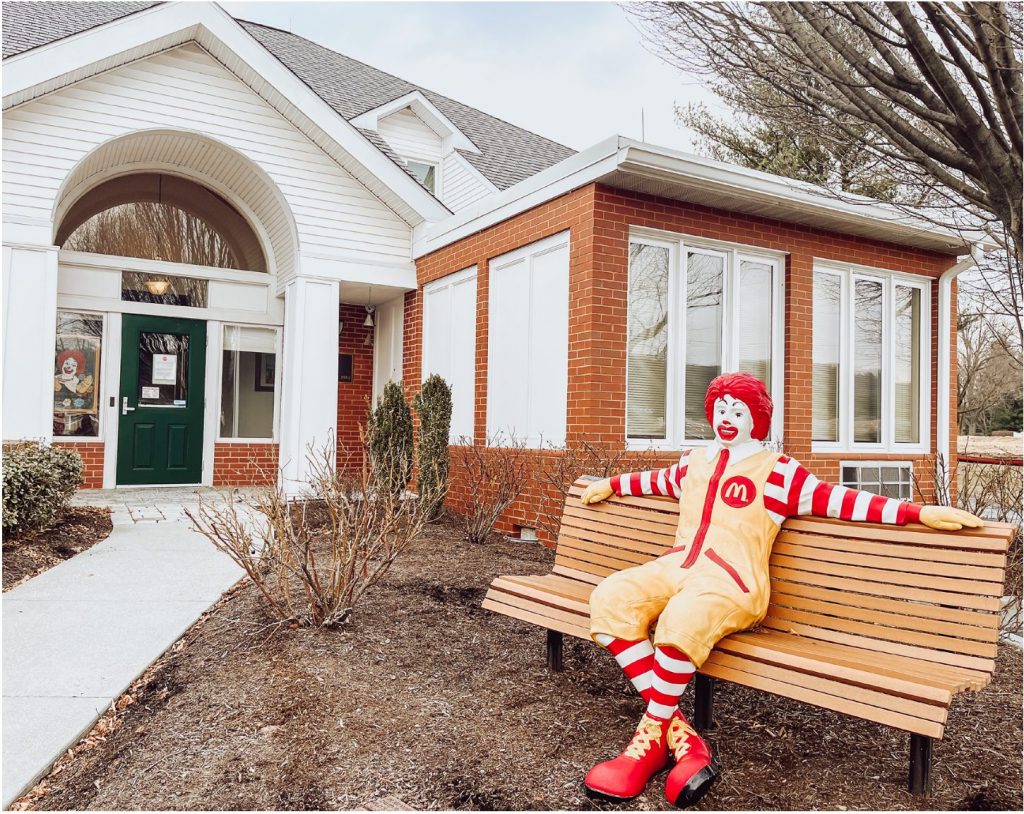
Located across the street is Ronald McDonald House—a home that lessens the burdens associated with caring for a sick child. Their mascot, Ronald McDonald, sits outside the front door, quietly welcoming families as they seek a safe haven near the hospital.

“We are a place of respite for an average of 1,000 families annually,” said Karla Mitchell, executive director of Ronald McDonald House Charities of Central PA (RMHC-CP). “We take care of a family’s essential needs so they can focus on what’s important—their child.”


A Lifeline

When operating at full capacity, the charity can serve up to 35 families at one time. Out-of-town guests can use—free of charge—house amenities such as a private bedroom, fully equipped kitchens, common room areas, washers/dryers, computers and a playroom for siblings and patients.

Since March 2020, Mitchell and her team have had to shift their model of programming to accommodate global Ronald McDonald House Charities recommendations and Centers for Disease Control and Prevention requirements. These have been put in place to keep guests safe who have immunocompromised family members receiving treatment.

“The pandemic has halted us from being able to use our facilities at full capacity, but it has not altered our mission or stopped us from serving families,” Mitchell said. “Pediatric illness does not stop for a pandemic and neither do we.”

In 2021, RMHC-CP provided 817 family stays for a total of 4,587 overnight visits. This sum combines house stays and partnerships with local hotels to house families when the house is full. On a local level, 81 families from Lancaster, Lebanon, Dauphin and York counties resided for a total of 846 overnight accommodations.

During the uncertainty of the pandemic, the Brum-Lyford family traveled more than 2,600 miles to meet their adopted twin daughters. The girls were born eight weeks early and were transported to Penn State Health Children’s Hospital’s Neonatal Intensive Care Unit.

To be closer to their daughters while they grew stronger, Chris Brum and Hugh Lyford stayed at the Ronald McDonald House for a total of 28 days.

The couple described the organization as a “lifeline in a sea of uncertainty.”

“At a time in our lives when everything was uncertain and we were in crisis mode, having the support and assistance of the staff and volunteers and having a place to call home was crucial,” Lyford said. “RMHC-CP will always have such a special place in our hearts.”


Community Support

 To operate free of charge, the organization relies heavily on volunteers and donations. Looking to get involved? There are several ways that the community can step up to support this nonprofit.

The charity offers numerous individual and group volunteer opportunities, such as “guest chef” and baking programs, which both allow people to use their cooking skills to contribute. The house also is accepting house volunteers to help greet and check in guests, give a tour of the facilities, change over rooms and follow strict cleaning protocols.

All volunteers must adhere to the organization’s policies, which currently include a limit on participants and proof of vaccination.

Are you a member on Facebook? Many followers donate to RMHC-CP by hosting a Facebook Fundraiser for birthdays and celebrations. This little fundraiser can have a large impact. Last year, more than $17,000 was raised from this effort alone. Visit the Facebook page, @RMHCofCentralPA, to learn more.

If you’re a McDonald’s restaurant patron, you also can easily contribute. Customers can round up their purchase to support services at the Ronald McDonald House. Ask at the register or drive-thru to “round up” for RMHC.

“Without our community’s support, we wouldn’t be able to do what we do,” said Amy Leonard, director of development. “We rely solely on donations so we can provide our services free of charge, and events are a large piece of that puzzle.”

With changing health and safety protocols, RMHC-CP has transformed its special events schedule to include Ladies Night Out (May 12), Golf Classic (Aug. 1) and Sporting Clays Tournament (Sept. 9). Event details, ticket information and sponsorship forms can be found on their website.

“We have pivoted to be able to host our participants in a safe environment while following regulations and raising money for the organization to keep the lights on,” Leonard said.

Mitchell and Leonard both understand the great importance of their services and want to thank the central Pennsylvania community for helping them fulfill their mission for over 38 years.

“We are grateful to all of our community champions and those who didn’t forget about us during the pandemic,” Mitchell said. “All of the supporters and volunteers who rallied behind us are amazing, and we are truly humbled by your ongoing support. Thank you!”


For more information on
Ronald McDonald House Charities of Central PA, including volunteer opportunities, event tickets, sponsorships and donation programs, visit www.rmhc-centralpa.org

If you like what we do, please support our work. Become a Friend of TheBurg!

Continue Reading

Bad Neighbor Policy: Pennsylvania, don’t be like Bob

Illustration by Rich Hauck

I once had a bad neighbor named Bob.

Bob kept his house meticulous but only because, I became convinced, all of his waste and unwanted whatever ended up on my property.

Gunk from his gutter-cleaning, clippings from his grass mowing, leaves from his raking, loose papers from his trash regularly found their way into my backyard.

One time, after a blizzard, he shoveled snow off his roof—directly onto mine. Often, his dog pooped on the walk in front of my house, and he just left it there.

When I confronted Bob about his bad behavior, his response was, “I’ve lived on this block for 30 years!”

As if a person could be grandfathered in to being a jerk.

Unfortunately, I thought about Bob recently as I watched a state Senate hearing on the commonwealth’s refusal to pay a stormwater fee that all other residents, businesses and organizations in Harrisburg have to pay.

As Bob was a bad neighbor to me, I thought, so is the commonwealth of Pennsylvania to the city of Harrisburg.

“Almost immediately after we rolled out our stormwater plan, the commonwealth issued notices to us, Capital Region Water, that it would not pay the user fee on any of its properties in Harrisburg,” CRW board Chair Marc Kurowski told members of the Senate’s Environmental Resources & Energy Committee.

The state government, Kurowski testified, is shirking its responsibility to the tune of $32,246 per month or $386,956 per year.

Who suffers? As usual, the people of Harrisburg do.

“The absence of that fee forces that to be covered by other members of the community, including residential ratepayers and commercial businesses,” Kurowski said. “The financial burden just doesn’t hit our residents. It also clearly inhibits our ability to make upgrades to meet clean water requirements and puts tremendous strain on our operations.”

Surprised? Not me. The state’s bad neighbor policy is longstanding and legendary, dating way, way back.

In the early 20th century, the commonwealth condemned and then demolished one of Harrisburg’s oldest, most densely populated neighborhoods, displacing thousands, to build a few office buildings and a large, sparsely used park.

Then, in the 1950s and ‘60s, road expansion and highway projects destroyed more of the city, shredding apart neighborhoods to benefit state workers who had moved to the suburbs.

Today, I think there’s a general consensus that what happened in that distant past was wrong, or at least wrong-headed. But, bizarrely, the state never seems to learn, as recent events have shown.

The commonwealth could be, and should be, a partner with its host city, conferring regularly with city stakeholders and agreeing to policies that are mutually beneficial.

Instead, we get preposterous proposals like doubling the size of I-83 through the city—destroying yet more homes and businesses and more of the city’s tax base—and tolling the South Bridge, which is almost certain to gridlock city streets as drivers opt for toll-free spans like the Market Street and Harvey Taylor bridges.

I find the case of the stormwater fee particularly galling.

For years, CRW has been making improvements to its antiquated, combined sewer system to try to meet state and federal clean-water rules. The stormwater fee is an essential part of paying for this wildly expensive endeavor.

The commonwealth, meanwhile, is one of the greatest contributors to the problem. Each year, millions of gallons of filthy, oily water flow off its 5.4 million square feet of impervious surface, much of it directly into Paxton Creek and the Susquehanna River.

When it rains, all of this polluted runoff finds its way, untreated, into our waterways, often mixed with human waste, which is the very problem that CRW is trying to fix.

But instead of meeting its obligation to its own capital city and our shared environment, the commonwealth hides behind small-minded rationales, claiming the fee is a tax—which it isn’t. In fact, before CRW separated it out, the stormwater expense was wrapped up in the sewer bill, which the state regularly paid.

You know, it’s bizarre.

When the Wolf administration took office seven years ago, city officials welcomed the change with open arms, hoping for good things from their fellow Democrats. But it hasn’t turned out that way at all. Instead, we got a massive highway expansion, proposed bridge tolling, environmental negligence and irresponsible foot-dragging as the city tries to improve safety on dangerous, state-owned roads like Forster and State streets.

Meanwhile, one can argue that the best thing to come out of the commonwealth recently has been letting Harrisburg extend its extra taxing authority. And that was approved by the Republican-controlled legislature. Go figure.

This may come as news to the commonwealth, but it does not live in a self-contained bubble. It is embedded within a city, and it shares services, roads, sidewalks, sewers, etc. It’s way past time for the state government, finally, after all these decades, to own up to the responsibility it has to this community.

In a way, I was lucky. After a few years of living next to Bob, I sold my house, moved away and mostly forgot about him. But the city of Harrisburg can’t move away. It can’t escape, like I could, from a thoughtless, badly behaved bully of a neighbor.

Lawrance Binda is co-publisher/editor-in-chief of TheBurg.


If you like what we do, please support our work. Become a Friend of TheBurg!

Continue Reading

Clean Start: Business is bubbling for Mechanicsburg’s Glitz Soap Co.

She hasn’t been in business long, but you might say that Alicia Miller is already enjoying the sweet smell of success.

Miller, the proprietor of Glitz Soap Co., took on the art of soap making only about four years ago while expecting her youngest of three children. Until then, she had a home-based sewing pattern business but had become “burned out” and bored, she said.

That’s when she decided to pursue making soap as a hobby.

“I always liked homemade soaps,” she said. “So, I first tried it out for making Christmas presents.”

From there, her hobby evolved into a successful, one-of-a-kind local business.

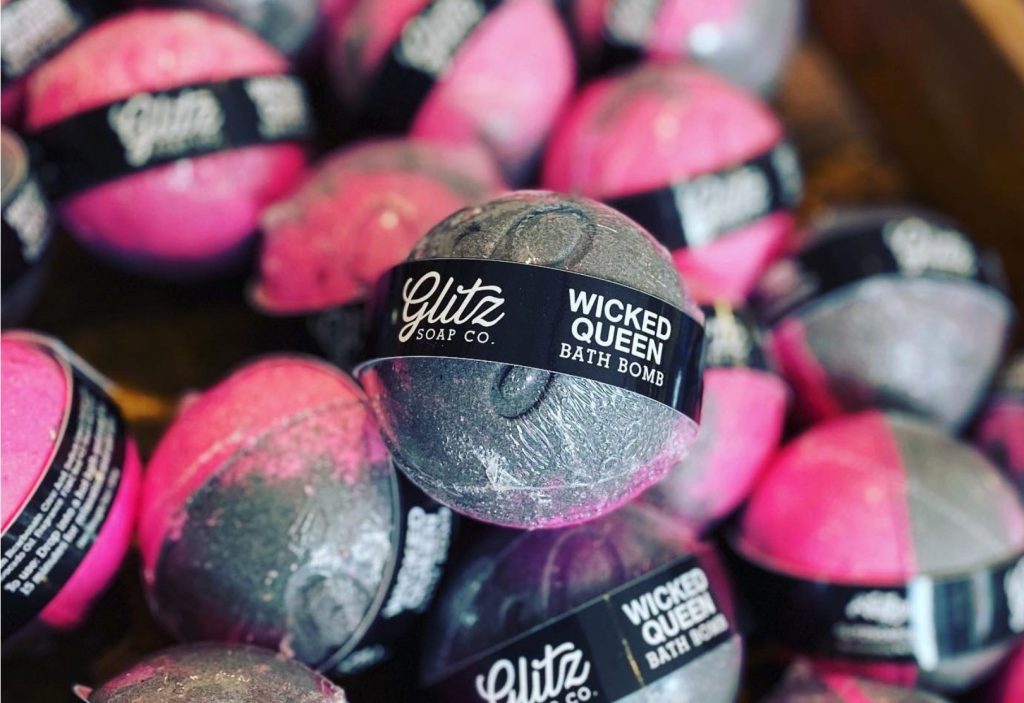
Today, Glitz Soap Co., located on Mechanicsburg’s historic town square, offers a fragrant abundance of unique, handmade vegan products ranging from soap and shampoo bars to soothing lotions and shampoo—and even paw butter for Fido.

Miller started her business in 2018 with online sales, making soap in her backyard shed. As sales increased, it became difficult to manufacture these products in a residential outbuilding with no running water. With that, Glitz Soap re-located to a retail site and production lab just a block away from its current location on E. Main Street.

The first Glitz Soap Co. shop opened on Feb. 1, 2020, only to close six weeks later when the pandemic lockdown went into effect. Fortunately, the business kept afloat through steady online orders until the store was permitted to reopen that May.

“People like to support their local businesses,” noted Miller, whose shoppers mostly visit from area communities.

In August 2020, Glitz Soap relocated to its current location in the borough’s downtown, and sales soon doubled. Today, Miller no longer runs the business alone, as she has three part-time employees and a full-time store manager, Makenna Burlison. She also is considering opening a second location in Carlisle.

As manager, Burlison, of Mechanicsburg, manufactures soap in the store’s basement while Miller produces lotions and other products upstairs. Burlison began her job at Glitz a year or so ago after making an inquiry while shopping there, despite having no prior experience with the craft.

“I love taking self care, so I went into the shop to check it out and saw that Alicia was there by herself,” Burlison recalled. “So, I asked her if she was hiring. It was meant to be.”

Glitz Soap produces several batches at a time using a heated tank and a precise blend of seven natural oils, Miller said. In total, batches take around 30 minutes to produce but require an additional four weeks to cure into bars. Burlison said that she’s allowed free rein to conjure up any product scent that she imagines.

“I have the best job in the world,” Burlison said. “Alicia is awesome. She lets me make whatever I want. I love being creative.”

Current Glitz scents include, but aren’t limited to, vanilla clementine, blue lagoon, beach daisies, lavender coconut and margarita. Glitz also sells a colorful Renaissance soap bar scented as popcorn, apples and cotton candy to mimic aromas of Mechanicsburg’s annual Jubilee Day street fair.

Glitz donates $3 from each Renaissance bar sale to the Downtown Mechanicsburg Partnership’s Renaissance Revitalization Program, part of Glitz’s ongoing charitable giving program. Other recipients include Lancaster Farm Sanctuary, West Shore Wildlife Center, Homeward Bound Animal Rescue and Ecologi, the latter of which has planted 1,903 trees using Glitz proceeds. Miller said that recipients are selected based on her own personal causes.

Glitz regular Colleen Chadwick, of Lower Allen Township, said that hers is a “Glitz family.” She and husband Hayden both vouch for Glitz’s fragrant line of soaps and shampoos, while daughter Lillie, 7, has dedicated an entire shelf in the family’s linen closet for her own array of Glitz toiletries.

“My values align with the values at Glitz,” Chadwick said. “They’re always trying to come up with new natural products. We’ve tried to convert as much as possible in our home to use natural products without harsh products.”

Chadwick said that she not only likes Glitz products, but also enjoys the people behind the products whenever she goes in to stock up.

“It’s nice to know there are such nice, genuine people running such a genuine business,” she said.

Glitz Soap Co. is located at 1. E. Main St., Mechanicsburg. For more information, visit www.glitzsoap.com.

If you like what we do, please support our work. Become a Friend of TheBurg!

 

Continue Reading

Beer in the Burg: With this month’s beer-drinking holiday on tap, we down a pint of Harrisburg brewing history

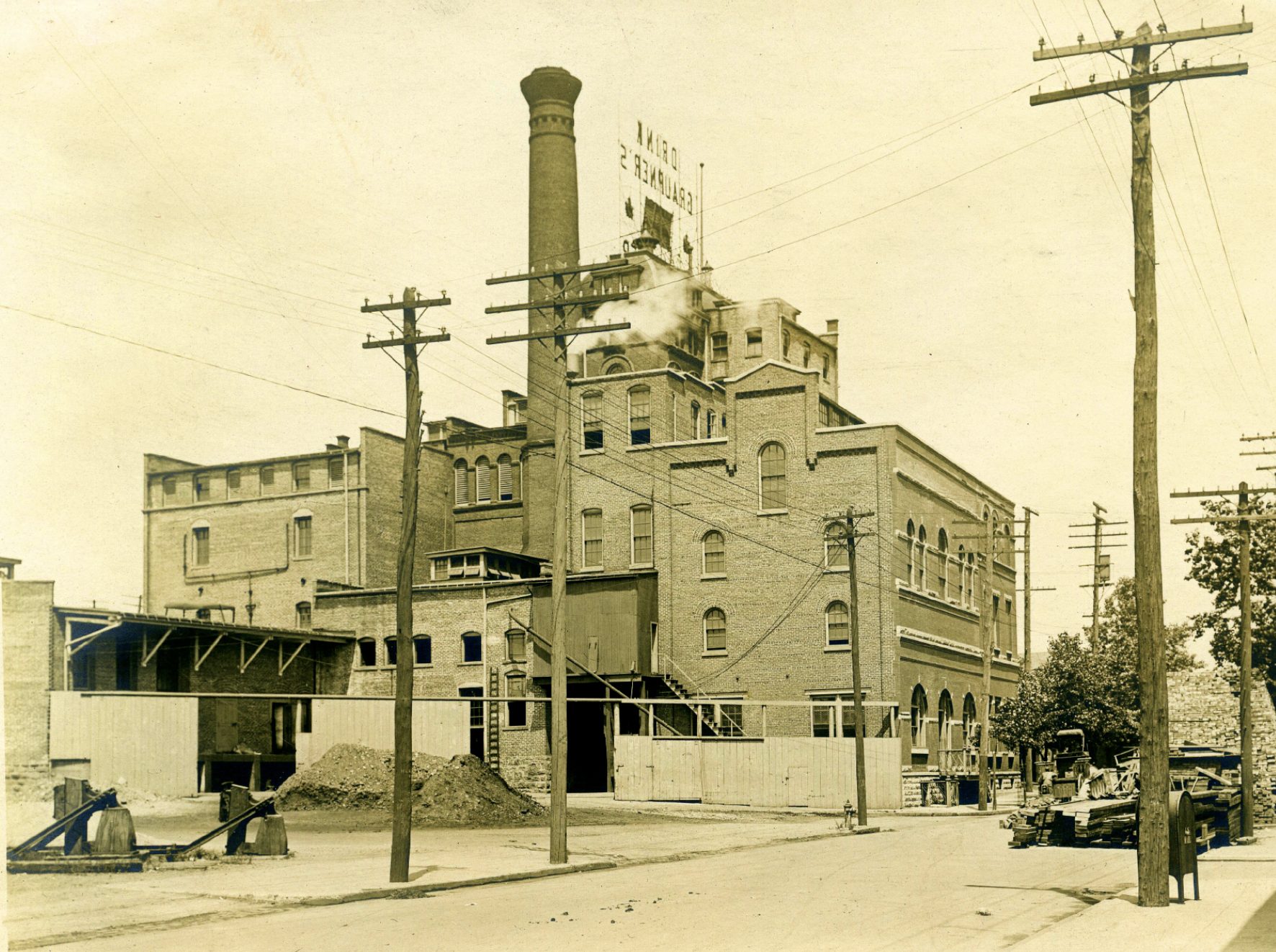
Graupner’s Brewery. Photo courtesy of the Historical Society of Dauphin County, Harrisburg


“Why can this woman be allowed to continue this iniquitous system that has grounded down all the poor men that she has got within her grasp?”

Let’s hear it for Harrisburg’s historic breweries. It wasn’t all oompah music and saloons decorated in trays depicting winsome women. Here, you’ll find cutthroat competition, caves and tunnels, and a savvy businesswoman thriving in a man’s world.


Beer Begins

Colonial Americans drank British-style unfiltered ales, so let’s presume that’s what ferryman John Harris and a neighbor, John Heis, had cooking in their breweries along the Susquehanna River, across from today’s Simon Cameron mansion.

In early America, brewers “tend to have a tavern of their own, or they sell their beer in kegs to hotels and saloons,” said Rick Hartman of Harrisburg, author of an upcoming book on the city’s bottling heritage.

Around 1840, Philadelphia brewer John Wagner’s refreshing German-style lager became all the rage among thirsty factory workers. Soon, Germans fleeing their roiling continent brought their lager-brewing skills. Local brewers proliferated because the preservative-free concoctions couldn’t be transported far. About 2,000 breweries popped up in American cities.

In 1843, Harrisburg’s breweries produced 465,000 gallons of beer and ale a year, in a town of 7,800 citizens. Historian Michael Barton breaks down the drinking population to about 975 adult males sauntering into saloons to put two-thirds a gallon of beer a day into their bellies.

In Harrisburg, three 19th-century breweries lasted into the 20th. They went by various names over the years but are recalled as Fink’s, Doehne’s (pronounced “Dean’s”) and Graupner’s.

Henry Fink hailed from Hesse-Cassel, Germany. As a young man in 1854, he went to work for Harrisburg’s Barnitz Brewery. By 1875, he was sole owner. In 1881, he built a plant at 312-320 Forster St. (remember that address). The small-ish plant would produce 3,000 barrels a year and grow to producing 18,000 barrels by 1902.

George Doehne, also from Hesse-Cassel, founded a 300-barrel-a-year brewery downtown at 322 Chestnut St. in 1865. By the 1890s, Doehne was brewing 12,000 barrels and investing in a 20-ton refrigeration machine and a “handsome” brick cold-storage building.

Graupner’s originated in 1876 as the appropriately named Centennial Brewery. Robert H. Graupner, immigrant from Saxony, practiced his craft in Philadelphia and Lancaster (a brewing hub nicknamed the “Munich of America”) before joining Centennial and eventually co-owning it.

After the 1894 death of his partner, Graupner “decides to go big,” said Hartman.

So, Graupner built a marvel of a modern brick brewery at 10th and Market streets—up to seven stories of three-foot-thick walls and a 130-foot smokestack twice the size of Fink’s.

“Graupner was marking his territory,” Hartman said. “He’s going to be the big-dog brewery.”

Graupner also built the Allison Bar across the street and a substantial home nearby. Brewery, bar and mansion, it’s said, were connected by tunnels. Maybe they came in handy during Prohibition?

Breweries of the day were self-sufficient complexes—“mind-blowing,” said Chad Campbell of Reading, keeper of the Breweriana Aficionado website (www.brewaf.com).

“They were the size of small colleges,” he said. “There were loading areas with trains, a cooperage shop that made the kegs, washhouses for the bottles, hops storage, boiler room, lagering brewery, ale brewery, malthouse. There would usually be a house on the property for the brewmaster and his family.”

Times were good. In 1911, Dauphin County brewers produced 82,949 barrels of beer—enough for about 149 bottles of beer for each of the county’s 120,000 residents. Break that down by Barton’s math, and it’s more like 15,000 men each downing 1,858 bottles a year.


The Underbelly

Depending on whom you ask, Graupner’s, Fink’s and Doehne’s engaged in “friendly competition”—or Graupner’s steamrolled its rivals.

Well, heck. Let’s explore the cutthroat legends.

“Every brewery in any of your towns was always clamoring to be at the top,” said Campbell. “Graupner had bars they owned in order to sell strictly their product. That was one way to get ahead of the advertising funnel.”

In 1905, the suicide of the hard-charging Robert Graupner sent shock waves through the city. His widow, Marie L. Graupner, took over, and business took off. She built a bakery across the street. Like other brewers of the day, she oversaw a network of taverns.

“I think she was a very successful businesswoman, one of the top businesswomen this town ever saw,” Robert R. Long of Susquehanna Township once said of his hard-working grandmother.

Hartman agreed that her 20 years of ownership saw growth.

“She really ran with it,” he said. “She was believed to be the one who oversaw the finances even when her husband was around.”

She would also face accusations of running that “iniquitous system” of tied saloons—bars pressured into carrying one brewery’s beer, usually at inflated prices. The charges came out in 1912, when aggrieved saloonkeeper John Wall claimed in court that Graupner charged him $7.50 a barrel, compared to the $6.75 paid by independent saloonkeepers. The pair also disagreed over terms of the rent.

Other tenants among her 18 saloonkeepers said they “felt compelled” to buy her beer, but Graupner testified that they “have the liberty of buying whatever beer they want.” In Wall’s case, she conceded, “I wanted him to sell my beer because I was losing money on the investment.”

She would have a partial victory. Wall withdrew a liquor license transfer application that he claimed Graupner was stonewalling, but the judge wagged a finger, ordering her to write leases—not a part of her repertoire—so her tenants could renew their liquor licenses.

Were Graupner’s the only tied saloons? Maybe not. In those same court proceedings, Mrs. Frederick L. Heist received a license for her Race Street saloon. Heist was, according to a news report, “a tenant of Mrs. George Doehne of the Doehne Brewery.”

What did the brews taste like? Among Doehne’s menu was a flat, dry-hopped, alcohol-rich stock ale. A few sips, wrote Harrisburg Patriot-News columnist Paul Beers, “and a railroader forgot all about the Pennsy.”

Most old-timey brews were bubbly and “sudsy to the bottom of the glass,” Beers added. An unwashed glass left to sit overnight would leave “a scum of sticky suds with a sour odor.”

Graupner’s, renowned for its quality, drew mixed feelings. Tipplers either loved it or hated it. And then there’s this.

“Our Elfenweiss Beer is clear, pure and wholesome,” boasted a 1912 Graupner’s ad. “It’s more nutritious than a health food, and as palatable as honey, and as low priced as common beer. Pure ingredients and brewing know how, then the fermenting and aging have much to do with the healthfulness of our beer. We have ample room for storing it. We keep it until it is well aged. It positively will not cause biliousness.”

Thick, sticky, sudsy, healthy beer, with no biliousness? Prost!


The Last Batch

After decades of prosperity, Harrisburg’s homegrown breweries succumbed to Prohibition and then to the national mega-brewers. Fink’s converted to ice-making during Prohibition and reopened after repeal in 1933, only to close permanently in 1934. Doehne’s closed in 1939, its site destined to be a parking lot.

“When legal drinking returned in 1934 (sic), the Harrisburg breweries were obsolete, too small for regional trade, too poor to do much advertising, and not solvent enough to make a great batch of beer,” wrote Beers.

But remember Fink’s Forster Street address? Fink’s shared a block with Central High School, the still-standing Messiah Lutheran Church and a fashionable brothel. In 1936, the state bought and demolished the shuttered property, making way for the new Pennsylvania Liquor Control Board.

The art deco LCB building remains. Teetotaler Gov. Gifford Pinchot, the father of Pennsylvania’s state-store system, must have wanted to dance on the grave of the brewery that once bellied up to the Capitol.

Graupner’s limped through Prohibition by making low-alcohol “near beer,” although it seems that its production required making the real thing, “so some of the regular stuff that the liquor agents didn’t catch did slip out,” Beers wrote. Fink’s also “ran into trouble when a truckload with 10 half-kegs of full-strength beer was caught,” said Hartman.

Graupner’s resumed operations in 1933. In 1951, the last batch was brewed. In 1961, the brewery came down, but not without a fight from the behemoth smokestack, which baffled demolition crews for days.

The exit of Harrisburg’s breweries tolled the bells on a way of life, Beers noted.

“Before refrigeration, they stored their beer in cave vaults off S. Cameron St. or in the Bellevue Park cave,” he wrote.

Um, caves?

Little remains of Harrisburg’s historic breweries. Collectors seek out the bottles and ubiquitous advertising items. Appalachian Brewing Co., which, in 1997, revived Harrisburg’s beer-making tradition, named its Jolly Scot Ale after Graupner’s Jolly Scot. Marie Graupner certainly made her mark, outmaneuvering competitors in an age when women rarely engaged in any business, let alone brewing.

And perhaps the memory of sticky beers is fading as the last of the Graupner’s drinkers head off to that smelly saloon in the sky. But I gotta find those caves.

If you like what we do, please support our work. Become a Friend of TheBurg!

Continue Reading

Sunny Sweets: New restaurant specializes in Mexican-inspired treats

Guadalupe Islas, proprietor of Yum Yum Mini Pancake Bar & More, says the Mexican restaurant she opened recently on the west shore is like none around.

She doesn’t focus on serving dinner fare already available at many others. Instead, she offers a unique menu of sunny sweets and treats from her native land, such as spiced abuelita hot chocolate, waffles and concha tres leches—Mexican sweet bread topped with customers’ choices of whipped cream, strawberries, chocolate syrup and more.

“When I came here from Houston three years ago, there was nothing else like this here,” she said. “When every one of my customers comes here, they say they’ve never seen anything like this.”

Yum Yum’s innovative fare includes sweet or savory mini pancakes, Mexican hot dogs, topped nachos, street corn, plus several other authentic foods.

“I love the mini pancakes, corn on the cob and street corn,” noted Islas’ husband, Antonio Hernandez.

In many ways, Yum Yum Mini Pancake Bar is a family affair.

Islas’ family emigrated from Mexico to “this beautiful country” when she was 11, settling in New Jersey. Her mother’s busy kitchen inspired not only Islas’ culinary passion but that of her brother, who today runs three Mexican restaurants in New Jersey.

Islas, in turn, said that she always dreamed of opening a restaurant of her own, but as John Lennon once sang, “life is what happens while you’re busy making other plans.” She married and moved to Texas, where her husband opened an auto repair business. The couple also became parents to daughters Sheena, now 15, Camilla, 11, and Suri, 9, before relocating near Hernandez’s parents in Wormleysburg.

Prior to opening her restaurant, Islas worked eight years as a dental assistant but remained “always baking and cooking” at home while nurturing her dream of becoming a restaurateur. Finally, her long-held vision came true last year, when she signed a lease on a storefront at Capital City Plaza.

“Now, it was time for me to be in a business,” she recalled with a grin.

Her sister and brother-in-law came from New Jersey to help construct the restaurant’s roomy counter, coat new wooden tables and chairs, and paint cheerful, colorful stripes throughout the dining room. One wall features an enlargement of Yum Yum’s logo designed by daughter Sheena, using a depiction of the family’s chow chow, Mochi.

“I feel really blessed for my family,” Islas said.

Initially, Hernandez said that he “felt surprised” when his wife became the sole owner of a Mexican snack eatery.

“We never had any sort of food business before, but I was really happy that we could be in the food business now,” he said.

Yum Yum’s soft opening took place on Dec. 6, followed by a grand opening celebration that commemorated daughter Suri’s birthday on Dec. 18. Of course, all of Islas’ extended family was on hand to join in the celebration that day, too.

For now, her daughters come to the restaurant after school to help out, joined by Hernandez after the auto repair shop he runs with his father closes for the day. Hernandez said that he helps out with the venue’s ordering, replenishes stock areas, and makes early morning runs to suppliers.

As a new business owner, Islas that said her biggest challenge is “letting people know we’re here.” She hopes that customers’ word of mouth will help “spread the word,” and social media reviews so far are promising.

“Great experience! The food was AMAZING and the customer service was great as well,” said one Facebook comment.

Another complimented “the welcoming and friendly” service, as well as the tasty food and “colorful” environment.

Future plans include an oven installation to introduce such menu items as churros and chocoflan, a chocolate sponge cake topped with crème caramel. For summer, Islas hopes to sell slushies in Mexican flavors like piña colada and sweet-and-salty mangonada.

Another goal, Islas said, is to get more help, which would take some of the burden off of her and her family.

“Hopefully, this coming year, we will hire employees,” Islas said


Yum Yum Mini Pancake Bar & More is located at 3401 Hartzdale Dr., Suite 131, Camp Hill (Lower Allen Township). For more information, call 717-831-3932 or visit their Facebook page.

If you like what we do, please support our work. Become a Friend of TheBurg!

Continue Reading

Natural Expressions: Breathtaking landscapes, focused on America, highlight new SAM exhibit

Frederic Edwin Church and DeWitt Clinton Boutelle, “Cotopaxi,” 1862, oil on canvas, 34.5” x 56”

“Oh, beautiful for spacious skies, for amber waves of grain.”

The current exhibit at Susquehanna Art Museum—“In Nature’s Studio: Two Centuries of American Landscape”—is like the opening sentences of “America the Beautiful” come visually alive. The exhibit zeroes in on the rich bounty of American landscapes from the early-19th century through the late-20th century.

“In Nature’s Studio” encompasses early depictions of bucolic American vistas—intimate forest interiors, sweeping panoramic views of natural wonders and dramatic images of the untamed land and sea—with scenes of Europe, western Asia and South America, said Lauren Nye, director of exhibitions at SAM.

The exhibit, consisting of 43 works, begins by exploring how the Hudson River School of painting—a leading voice in American art until 1900 and the first uniquely American artistic movement—emerged. Founded in the mid-1800s by Thomas Cole, the movement grew out of the determination of American artists to become independent from the traditional European schools of painting and set off on their own.

Another new style embraced by artists in the 19th century was “tonalism.”

“It was inspired by the tone and rhythm of musical compositions and utilized a carefully chosen palette of colors,” Nye added. “It adapted a theatrical form of expression while working within the subject of landscapes.”

Another trend emerged at the turn of the century, when some artists delved into the popular European impressionist style. They used unique color combinations to capture the fleeting qualities of light by adapting French painting techniques to the American countryside.

One striking painting in the exhibit is Jasper Francis Cropsey’s 1846 “Passing Shower on a Spring Afternoon.” Perhaps due to his early career as an architect, Cropsey became a successful landscape painter known for sophisticated precision in rendering nature and capturing changeable, dramatic weather conditions.

George Wesley Bellows, represented in the exhibit by “The Launching,” was known for action paintings that depicted figures in motion. He was one of the organizers of the “Armory Show” of 1913, which introduced European modernist art to American artists and critics.

Although he remained a painter of realism, Bellows later demonstrated interest in modernist abstraction. He incorporated a greater range of color, experimented with composition and became increasingly taken by seascapes, Nye said.

Frederic Edwin Church sketched his first view of “Cotopaxi” in 1853 while on a tour of Colombia and Ecuador. He described the volcano as “one of the most majestic and awe-inspiring views I ever beheld in either hemisphere.”

Perhaps the best-known representative of the Hudson River School, Church studied with founder Cole. The two regularly toured the Catskill Mountains and the Berkshires of Massachusetts to create drawings and paintings.

According to SAM’s winter 2022 intern, Sylvia Menci, historic factors played a part in art. When the Americans defeated the British in the War of 1812, it brought about the end of British rule and the start of autonomy.

“This period was marked by economic growth, booming industry, and a growing middle class becoming more interested in art,” she said.

The exhibit underscored the belief that artists of the period had in such concepts as “natural religion,” “the magnificence of nature,” and “the significance of the fresh, untamed American scenery reflecting our national character, as opposed to the civilized European landscape,” she said.

Throw in the concept of Manifest Destiny, a phrase coined in 1845, the idea that the United States is destined—by God, its advocates believed—to expand its dominion and spread democracy and capitalism across the entire North American continent.

Native Americans often occupied the land featured in the exhibit’s paintings, but they themselves were largely absent from the works of the Hudson River School. When they did appear, they seemed to represent “primitiveness, a group of people from a bygone era, and something as old and wild as the landscape itself, “ Menci said.

“But artists generally preferred to portray the land as empty and ready for exploration,” she said.


“In Nature’s Studio,” organized by the Reading Public Museum, runs through May 22 in the Beverlee and Bill Lehr Gallery of the Susquehanna Art Museum, 1401 N. 3rd St., Harrisburg. For more information, visit
www.susquehannaartmuseum.org.

If you like what we do, please support our work. Become a Friend of TheBurg!

 

Continue Reading