William Penn High School
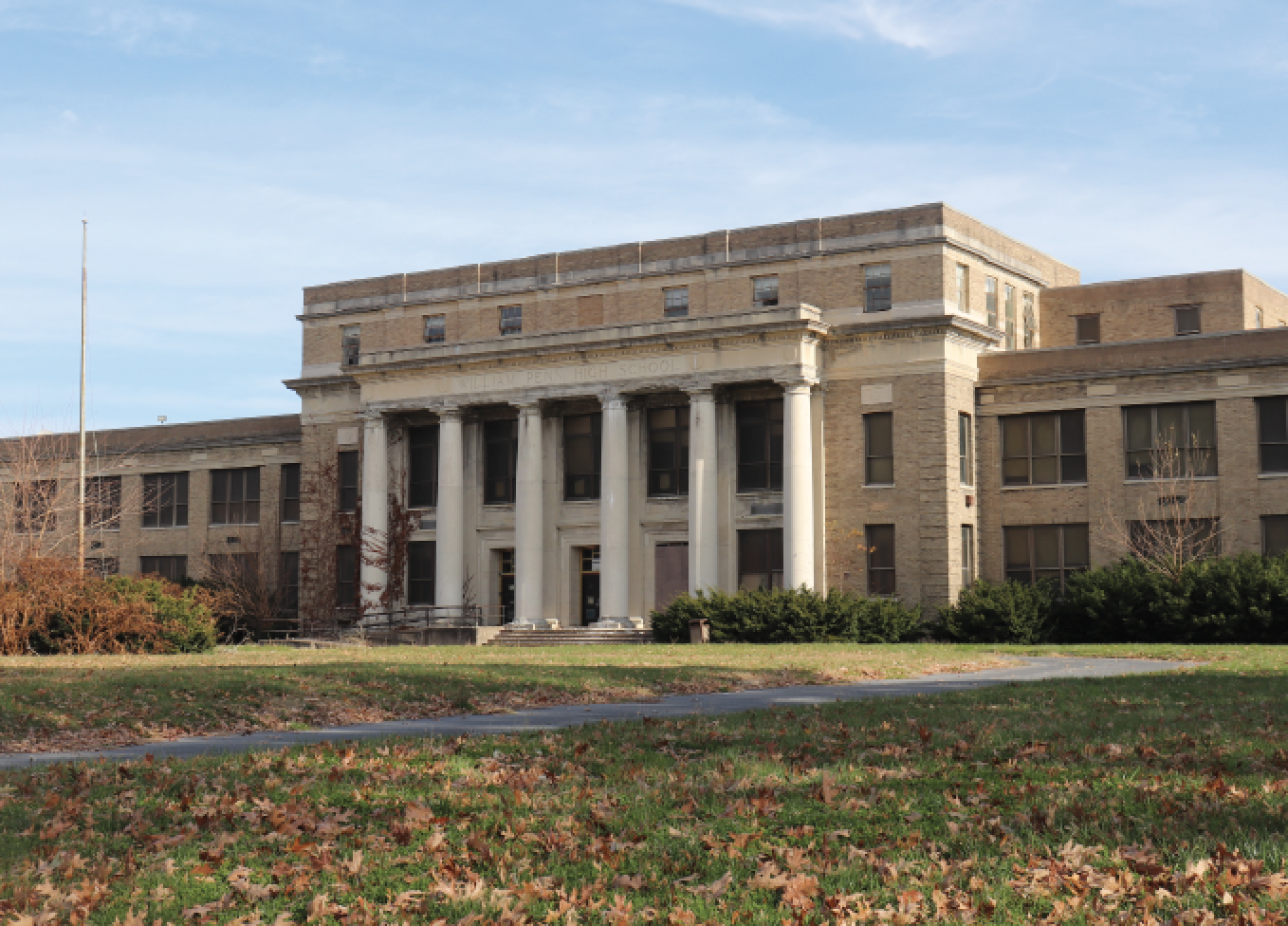
Top Harrisburg school officials are recommending demolishing the century-old William Penn High School and using the property for athletic fields.
After reviewing a slate of options for the district’s long-vacant William Penn building, Superintendent Benjamin Henry on Tuesday presented the administration’s assessment of each possibility to the school board.
Considering all the options’ levels of risk for the district and levels of benefit for Harrisburg students, Henry said that the administration feels that the “best” path for the district would be demolishing the building and constructing athletic fields on the former vocational school’s land.
Athletic fields would be a positive, student-focused move that would help the district expand girls’ athletics, per the administration’s analysis.
“We are growing athletic programs in middle school and especially in our girls’ sports,” Henry explained.
The sprawling 100-year-old building, last in use 15 years ago, sits on an adjoining 27 acres of land, overlooking Italian Lake. Officials have weighed what to do with the property since it was vacated.
“I want to make sure everyone understands that this meeting is for the board to understand all the pros and cons over all the proposals, all the options that we’ve been reviewing,” Henry said.
He clarified that the presentation was meant to provide school board members with a comprehensive analysis for informed decision-making in the future.
“This is not just about a building. This is about student safety, fiscal responsibility and educational equality, and again, how we move the district forward,” he added.
School administrators previously expressed that they would like to create a new soccer field for the varsity girls soccer team, who are currently practicing in the outfield of a boys’ baseball field.
In addition to girls’ soccer, the district wants to pilot flag football for middle school girls next year, he noted. He said the administration was recommending the option, above others, because it aligned with the district’s K-12 mission and because of its moderately low risk.
“One of the biggest things: it provides flexibility as we continue to grow and continue to look at programming needs,” Henry said.
The project, which would include a multi-year capital commitment, according to the presentation, would also align with the district’s recovery plan. Installing a new soccer field on the property was quoted at $896,000, according to a years-long comprehensive plan for infrastructure upgrades that was reviewed by board members earlier this year.
Other possible futures
Seven additional options, all presented in November to the board at a special meeting, were also reviewed in the presentation.
Among them, three public-private partnership options that proposed various commercial adaptive reuse projects for the historic building. Henry noted district concerns that these options were high-risk, lacked guaranteed funding streams, and out of alignment with the district’s K-12 educational mission.
He added that, if the private partners could not complete the projects, the district could be held liable for the completion of the building.
Another option included repairing the building into a career technical education center—an idea born out of the William Penn Task Force, which was created by the district in 2023 to generate ideas for the use of the property. It previously recommended retaining the building’s vocational roots, providing options for partial and full restoration.
Henry said William Penn’s retransformation into a such a center could cost anywhere from $13 to $93 million, a high-risk price tag for the district, which exited state receivership in June, and will operate under an existing debt burden of $19 million per year through 2036.
Keeping the vacant building ‘as is’ was another option presented.
In its current state, William Penn costs the district $566,000 per year, requires high-level security (as it often attracts trespassers) and liability insurance and offers no benefit to students. Keeping the building ‘as is’ doesn’t align with the district’s K-12 mission, Henry noted.
“We’re spending $1,000 every day on this building,” Henry said of the cost of security.
Another possibility, the flat-out demolition of the building, estimated at $5.3 million, would eliminate the high cost of building security, Henry said, but “not add any student benefit.”
Finally, while subdividing the land and selling William Penn would narrow the district’s responsibilities, Henry said, it would require court approval, could cost the district up to $200,000 to do and would result in the loss of a valuable district asset.
“Harrisburg is landlocked,” the superintendent said. “They don’t have new land coming on the market and so, for us, we have to understand that the flexibility of having this land is very important.”
Following the superintendent’s presentation, several school board members made comments.
Member Brian Carter asked if the district had exhausted every option, including grants to save the building, to which Henry responded that grant opportunities have become harder to come by over the last few years.
As someone who previously went through William Penn’s co-op program, board president Roslyn Copeland indicated that, while she has memories of the building, this decision is about the district’s children.
“Their education is important,” she said.
If you like what we do, please support our work. Become a Friend of TheBurg!