The Stroad to Success: The remarkable transformation of 2nd Street should serve as an example for other Harrisburg roads

Illustration by Rich Hauck

It’s nine o’clock on a Wednesday.

No, I’m not messing up the lyrics to that old earworm, “Piano Man,” but I am standing at the corner of 2nd and Verbeke streets on a recent mid-week morning, watching the traffic roll by.

What there is of traffic, that is.

Harrisburg has seen lots of changes to its roads in recent years, but none more profound than on 2nd Street, much of which is being transformed from a high-speed, three-lane mini-highway back to a two-way, two-lane neighborhood road.

Standing at the intersection, I’m floored by the difference.

Two or 10 or 50 years ago, I wouldn’t have been able to hear myself think here, with cars and trucks roaring by at 50 mph or more. Today, however, a small line of vehicles trickles up the street, doing 20 mph tops. There’s little noise, little road blight and little danger to pedestrians.

N. 2nd Street has been returned to its neighborhood, fitting snugly into the urban fabric as it was designed to do—before the 1950s convinced everyone that we had to sacrifice our cities to the car and suburbs.

You might say that, after 60-plus years, 2nd Street has been “de-stroaded.”

About a decade ago, urban planner Charles Marohn coined the word, “stroad,” to describe dangerous, multi-lane thoroughfares that can be found throughout the United States.

A stroad is not exactly a city street, nor is it a purpose-built road for fast travel. It’s the worst of both worlds—a high-volume, high-speed motorway that, somehow, is also supposed to serve bicyclists and pedestrians; through traffic and local traffic; the straight and the turning.

Harrisburg is full of stroads: State Street, Front Street, Forster Street. But thankfully, we can remove 2nd Street—well, most of it anyway—from that list.

Standing at that intersection, I was struck by the pointless destruction that these stroads have wrought. Judging by the lack of traffic, I felt certain that three high-speed, one-way lanes were never needed on 2nd Street. Meanwhile, I haven’t noticed a major increase in traffic on alternative routes in the city.

Harrisburg has suffered greatly since these streets were turned into stroads during the 1950s. I can’t blame the city’s post-industrial funk solely on its urban highways, but they certainly contributed—making Harrisburg a place to drive through, not live in.

N. 2nd Street itself serves as a perfect case study.

In 1956, after little debate, Harrisburg turned most of the street into a three-lane stroad. Almost immediately, residents were up in arms over speeding and drag racing along their once-quiet street.

“We have a new club,” then-Mayor Nolan Ziegler told the Harrisburg Patriot soon after the change. “It’s called the ‘Second Street Speeding and Reckless Driving Club.’”

Over time, 2nd Stroad became increasingly unlivable, then increasingly blighted. After all, who wants to live on a noisy, dangerous highway?

In contrast, north of Division Street, 2nd Street remained two-way, quiet, leafy. Today, it anchors one of the most desirable neighborhoods in the city. The difference within a single block—by simply crossing the intersection from three-lane stroad to two-way city street—could not be starker.

Recently, an acquaintance asked me why I write about infrastructure so often, as opposed to the many challenges facing Harrisburg.

The reason, I responded, is because it’s fixable. I don’t know how to solve deep social ills like crime or poverty, but I do know how to fix Harrisburg’s overbuilt road system—it simply takes will and money.

As for will—I think Harrisburg has it. But, unfortunately, the city will have to drag the commonwealth into the project, as most of the roads in question are owned by the state.

As for money—these days, Pennsylvania is flush with cash. It easily could allocate a small portion to righting a historic wrong that it suckered its capital city into so many years ago, nearly destroying it in the process.

I almost wrote that it also takes “vision.” But it really doesn’t. In recent years, many cities have undone the damage wrought during the 1950s-era stroad-building frenzy. They’ve slimmed down thoroughfares, reduced speeds, converted back to two-way, returned streets to the urban fabric—and have benefitted greatly with more residents, more visitors and more businesses.

We know what needs to be done.

Over the past 60-plus years, Harrisburg has run an unintentional experiment along one of its most important arteries—N. 2nd Street.

North of Division Street, we have an area that has remained two-way, a neighborhood that is beautiful, livable and desirable.

South of Division Street, we have an area now in transition, where the switch to two-way is just being made, with very promising early signs.

Then, south of Forster Street, we have an area—downtown—where the 2nd Street mini-highway remains. The stroad is fast, harsh, noisy, ugly, unwelcoming and dangerous, and the area is struggling.

To me, the case is clear.

Lawrance Binda is co-publisher and editor-in-chief of TheBurg.

If you like what we do, please support our work. Become a Friend of TheBurg!

Continue Reading

Mini But Mighty: Community members find a tiny way to combat food insecurity in their neighborhoods

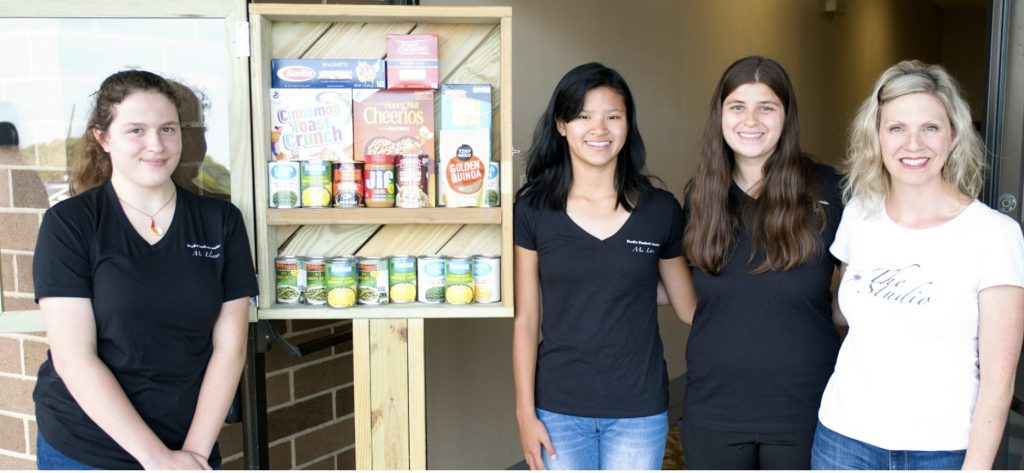
From left, Eliana Roof, Olivia Long, Kara Bidgood Enders and Jennifer Turner Long.
Photo courtesy of Long Shots Photography

They’re popping up outside businesses, churches and on street corners.

Newspaper street boxes, metal lockers and even large mailboxes have been converted into cupboards. Tucked inside are granola bars, cereal boxes and cans of fruit. You might have missed these tiny food pantries or passed one on the street without noticing. But for those who need them, they find them.

For the past few years, local community members have opened these little community pantries. They serve as drop boxes, where people who have extra can leave a little something for those in need to pick up. In and around the Harrisburg area, the pantries have become an innovative way for neighbors to get food into hungry hands.

Peter Leonard, the CEO of Little Amps Coffee Roasters in Harrisburg, is used to feeding people. But last year, he wanted to find another way to do that and help those who couldn’t afford to purchase food. Inspired by coffee shops he saw in cities like Philadelphia and New York, Leonard set up the “Green Street Community Pantry” outside Little Amps’ Midtown location.

“It’s truly intended to be a community pantry,” he said. “Anyone should be able to use it, whether that’s to stock it or to take from it.”

Little Amps relies on the neighboring Midtown community to fill the metal locker with food. While the coffee shop set up the cupboard, it’s meant to be the community’s, Leonard explained, and residents have stepped up to the plate. He knows of several people who will regularly fill the pantry.

“It’s fulfilling to see the community engaging in it,” he said.


Innovative Aid

You may say the mini food pantry is the cousin of the little free library. James Lyles, president of Youth 10x Better Ministries, had several little libraries located throughout Harrisburg’s Allison Hill, Uptown and Midtown neighborhoods, as well as in Steelton.

When the pandemic hit, Lyles decided to swap the books for food. He now has over 10 mini pantries throughout the city.

“Everybody was on lockdown,” he said. “For people that couldn’t get out to get food, they could go there.”

During the height of COVID, he included items like masks and hand sanitizer alongside the food. Even with the most dangerous days of the pandemic behind us, Lyles and volunteer community members still fill the pantries regularly. The need hasn’t stopped, he said.

Lyles remembers a man telling him that he and his wife took food from the pantry during a time of need. Stories like that are what keep him going.

“That lets me know that it’s worth it,” he said.

Across the Susquehanna River, several high school students saw the same need for food in their community. Students at The Studio dance school in Enola recently planned for and constructed a mini food pantry.

As part of The Studio’s student leaders program, dancers are encouraged to find ways to serve. In the past, they’ve participated in trash cleanups, collected winter clothing for people in need and assisted with local parades. While discussing new ways to conduct outreach at a meeting, students decided on a food pantry.

“Food insecurity is a big issue,” said Kara Bidgood Enders, a high school senior. “I see it within my own school.”

Eleventh-grader Eliana Roof, who attends Dauphin County Technical School for its construction program, took the lead on the pantry.

“I saw it as an opportunity to be a part of that project,” she said.

For the next few weeks, Roof built the pantry during shop class at school with the help of her teacher, Robert Brightbill. This summer, they set it up outside The Studio and filled it with nonperishables.

Since then, the students have already seen the difference it’s made. Items have already emptied out, and community members have refilled the box. With classes restarting at The Studio for the fall, owner Jennifer Turner Long expects lots of donations from students and their families.

“This group of kids is very thoughtful and large of heart, and the families go above and beyond,” she said.

For the student leaders at The Studio, their mini pantry project has given them a chance to make a difference in their community.

“It’s rewarding,” said 11th-grader Olivia Long. “I didn’t expect it to be as successful as it is. To see it’s helping others and working—it’s nice to see.”


Give and Take

While Harrisburg has several large food banks where people can pick up items for weekly meals, the mini pantries provide an easy grab-and-go option.

According to Cindy Harbert, an administrator at St. Stephen’s Episcopal Cathedral on N. Front Street, transportation can be a barrier for people trying to get to food banks. The mini pantries offer a nearby resource to those in the neighborhood. The small food items can also easily fit in a backpack, for those who may be experiencing homelessness.

St. Stephen’s saw a need for this service over the years, after noticing the amount of unhoused residents who walked along N. Front Street.

“This was a way that we could serve those on the street,” Harbert said. “It’s really to serve the underserved population.”

The cathedral knew it didn’t have the resources to operate a full-sized food bank, so members decided to do what they could. About five years ago, they opened their “Blessing Box.”

The congregation stocks the pantry regularly with food, hygiene items and, in the winter, gloves and hats. Every time they fill it, it’s emptied quickly after.

“It certainly serves a need,” Harbert said. “All are welcome, regardless of your circumstances.”

For those interested in donating to a local mini pantry, Leonard of Little Amps recommends items that can be immediately consumed, like granola bars, drinks or other snacks.

“Don’t assume people have access to cooking materials,” he said.

Canned veggies are an item that is frequently donated, but often left on the pantries’ shelves. The Green Street Community Pantry has been flooded with green beans, so Leonard advises steering away from those. Anything that’s been in the back of your cabinet for years, no one else will want to eat either, he advised.

Personal care items are always a need, as well.

When it comes down to it, Leonard and others overseeing pantries are hopeful that it can truly be a “take what you need, leave what you can” operation.

“It’s our responsibility,” he said. “If you have an abundance, share it.”

The Green Street Community Pantry is located at 1836 Green St., Harrisburg. For more information about Little Amps Coffee Roasters, visit www.littleampscoffee.com.

Youth 10x Better Ministries has mini food pantries at locations around Harrisburg. For more information, visit their Facebook page. 

The Studio and its mini pantry are located at 427 N. Enola Rd., Enola. For more information, visit www.summerdaledance.com.

St. Stephen’s Episcopal Cathedral and its mini pantry are located at 221 N. Front St., Harrisburg. For more information, visit www.ststephenshbg.org.  


If you like what we do, please support our work. Become a Friend of TheBurg!

Continue Reading

October Editor’s Note

Recently, while covering a story, I met a few women who told me that they love TheBurg.

Naturally, I was delighted to hear this.

I asked them what they liked most, and, they said, the stories, the design and, of course, our beautiful covers.

“How about our daily news articles?” I asked them.

They gave me a collective blank stare. They had no idea what I was talking about.

To them, our monthly magazine—the one you’re holding in your hands—is TheBurg. But, as I explained to them, we do so much more.

A huge amount of our time and resources is spent covering daily news around Harrisburg. Every weekday, we report on the city administration, City Council, the school district, small businesses, development, events, people, culture, etc.—most of which is published online and never makes its way into the print magazine.

I then mentioned our other products—we organize and promote 3rd in the Burg, we have a monthly podcast, we blog and write editorials, we support and sponsor numerous events and, increasingly, we hold our own events, especially under the auspices of Friends of TheBurg.

I told my new friends that they were only getting a small slice of the big Burg pie. I then asked them to sign up for our free daily emails, which includes links to all of our news and features—and a whole lot more.

I’d like to encourage all of our readers to do the same. Please go to our website, poke around, sign up for our emails, and discover for yourself all we do.

Our award-winning monthly magazine may be our flagship product—and I hope you love our new October issue. But there’s so much more to TheBurg than what’s tucked behind our lovely covers.

Lawrance Binda
Co-Publisher/Editor-in-Chief

Click here to read the digital edition of TheBurg’s October issue.

If you like what we do, please support our work. Become a Friend of TheBurg!

Continue Reading

A Lawyer’s Life: Corky Goldstein has handled some of the highest-profile criminal cases in Harrisburg. After 50-plus years, he’s finally putting down his briefcase.

Corky Goldstein

Stephayne McClure-Potts and her husband Michael waited until after 5 o’clock, using the back door to avoid the throngs of news reporters camped outside.

They knew Corky Goldstein only by reputation—a pint-sized lawyer who stood up for people in trouble. He was active in their Jewish community and often took on criminal defendants whose cases seemed hopeless and who had no ability to pay him.

For years, the couple looked after a young Ukrainian immigrant named Artur Samarin, enrolled him in the local high school and secured welfare benefits to help him establish a new life. He became their surrogate son, adopting the name Asher Potts.

The problem: Artur was four years older than he let on, a fact that meant his dalliances with his classmates constituted sexual assault and which left his adoptive parents open to criminal prosecution.

“When this all hit, we needed someone to protect us,” McClure-Potts said. “And real fast.”

In the relative solitude of Corky’s Harrisburg office, the veteran attorney walked the couple through his usual debriefing: They needed to tell him everything—even the uncomfortable facts that made them unsympathetic to a jury—or else he couldn’t defend them. He explained the harsh penalties they faced, empathically, but plainly. Finally, he secured a safehouse they could call home until the media firestorm died down.

Before they departed, he left them with one final instruction.

“Anybody wants to know anything,” McClure-Potts remembers him saying at that first meeting, “they go through me.”

Now, on the eve of his retirement after five decades practicing law, it’s a conversation Corky’s having for possibly the last time. He’s guiding his last few clients through the complicated court system—one, a juvenile accused of sexual assault, and others nearing the final stages of probation or rehabilitation—and assisting younger attorneys.

“I treat clients with the same respect—the way I’d want to be treated—no matter what,” he said. “They’re scared. They’re stressed. And they’re the ones who’ll suffer the penalties.”


Like a Corkscrew

Anyone who’s ever spent any time with Corky is most familiar with the particular renown he’s earned in his hometown. On an ordinary Tuesday night, it takes at least 20 minutes for him to cross the 20 feet of the Subway Café dining room as he stops to greet three or more sets of acquaintances on his way to his table in the far corner.

For each group, he possesses an encyclopedic knowledge of their triumphs and tragedies. Corky soaks up the kinds of details most people forget, and he’s known to pick up conversations weeks later, right where he left off. The waitress, he also knows—from her previous job—and he knows the circumstances under which she departed that job, too.

“If you met Corky at a cocktail party, you had to put a time limit on him,” joked longtime Dauphin County DA Ed Marsico, now a Common Pleas judge, who’s known Corky for decades.

His own children often ribbed him for the amount of time it took to run errands across town as he stopped to speak to acquaintances at every stop.

“My dad would give the same respect and time to the check-out lady in the grocery store as he would to the governor of Pennsylvania,” said his daughter, Stacy, now the principal of School of the Future in New York City.

The fast-talking lawyer is a shopworn stereotype, but Corky’s personality is a bit different from the Billy Flynns and Vincent Gambinis of fiction. For him, conversation is more akin to tennis. After one volley—perhaps an anecdote about former Sen. Arlen Specter, for whom he worked as a young prosecutor in the 1960s—he’ll serve up a question to draw his partner deeper into the fray. Then he’ll redirect again to ask the person’s opinion about some recent event. In the process, he learns the intimate details of people’s lives: their hopes, ambitions and regrets.

But Corky doesn’t use the information for his own betterment. Despite his attention to detail and garrulous demeanor, he never seriously pursued a career in politics beyond stints on the Harrisburg school board and Harrisburg City Council in the 1970s and a couple abortive races for judgeships in the early ‘90s.

“There’s not a wedding or a funeral that Corky will not pay his respects at, but there’s no agenda to it,” said William Costopoulos, a friend and fellow defense attorney who’s known him for more than 50 years. “He’s not working the crowd for cases. He just does it.”

Instead, Corky’s curiosity seems rooted in a genuine interest in the lives of others and a desire to see them at their best.

It’s a trait he’s possessed since childhood.

Born and raised at 2617 N. 2nd St., just a few blocks from the home he resides in today, he developed a reputation for his boundless energy and unremitting curiosity from a young age. That’s how his actual name, Herbert, came to be replaced with Corky.

As his mother Evelyn would say: “He’s like a corkscrew. He’s up and down.”

The neighbors took to calling him Cork and then Corky. Based on his father’s advice, he tried to remake himself as “Herb Goldstein” when he left to study pre-law at Penn State University, but no one took his rebranding seriously. For example, he was asked to run for president of his class that first year using his nickname—the same moniker he’d use as president of his fraternity and in the Lion’s Paw Senior Society. Later in life, when newspapers referred to him by his birth name, it only served to confuse readers.

Eventually, he relented, petitioning the court to have his name changed permanently.

“I never felt like a Herbert,” he recalls. “When people called me Herbert, I felt like I didn’t know them. You can’t get everything in life—you just accept it—and I’m fine being Corky.”


Compassion & Grace

The Potts’ criminal case moved through the legal system for years, a chaotic period that left the couple’s finances in shambles. Michael’s health deteriorated, eventually requiring him to get a pacemaker. Stephayne, meanwhile, couldn’t find work despite holding a structural engineering degree.

Besides taking their case pro bono and putting the couple up at a safehouse, he’d meet them at a gas station to fill up their tank or provide them with gift cards to help pay for groceries, Stephayne said.

“He’d say, ‘Oh, I was just given this Giant gift card,’” she remembered. “He’d try to do it so Michael didn’t feel embarrassed—a little white lie to protect his pride.”

It’s the kind of gesture that Corky’s mother taught him at a young age.

When Corky was a child, he remembered his mother coaching him how to help a schoolmate whose family was struggling financially—without making it feel like charity.

“Why don’t you give those to him?” he recalled Evelyn, known as “Goldie” during her time as a Republican state committeewoman, saying to him. “Just say you’re not wearing them anymore, and he can have them if he wants them.”

Despite their party affiliation, the Goldsteins were known as a socially liberal Jewish family who channeled their middle-class privilege into all sorts of charitable activities. At home, Corky’s parents taught him to always look past the distinctions of race, class and even sexual orientation. “We are all in the same boat in life,” his mother often told Corky and his two brothers.

“They were very thoughtful about people,” Corky said. “Maybe that’s because they were Jewish, and they understood persecution. They understood that we, as a family, must be open to all people.”

Corky caught the attention of then-Philadelphia District Attorney Arlen Specter by happenstance during a criminal mock trial, when he was a student at the Penn State Dickinson Law in Carlisle. The leader of the defense team fell ill a few days before the event and Corky, who was president of the student bar association, stepped up to take his place.

Specter offered him a job the next morning.

As time went on as a young criminal prosecutor, however, Corky had a nagging feeling he was on the wrong side of the aisle—despite the close relationship he developed with his mentor, who would become a lifelong friend.

“Sometimes when I was prosecuting people, I felt that we were over-charging them,” Corky said. “We might be charging them with aggravated assault, and I didn’t think it was worth that.”

He brought Specter around to his view of such cases a few times. More often, he didn’t.

But an opportunity to stand on the other side of the aisle came in 1969, when he was asked to set up Dauphin County’s first legal aid office, now known as Mid-Penn Legal Services, as part of a program through President Lyndon B. Johnson’s war on poverty. At the time, poor people had even fewer options to access the courts, particularly in routine civil matters.

The toughest part of the job was earning the trust of those who most needed the help, as Corky and his two staff attorneys—all three of them white men—traversed the community to get the word out about what they were doing.

“Just because it’s there, that doesn’t mean people are coming in,” he said. “They’d been promised so much over the years that they don’t trust you, thinking it’s just window-dressing.”

In addition to building relationships with local Black leaders, the job led to Corky’s first foray into education—setting up programs in local schools to educate students about the law. Meanwhile, law students from Dickinson joined the staff after class and during the summer as the program expanded.

“We went out at night to speak to people directly,” he said, “and, little by little, they began to trust us.”

That, in turn, led to long-running shows on local TV and radio in which he answered the public’s questions about the law and how the courts operated. The programs, which at one point reached an audience of many thousands of listeners, were another form of outreach to people who ordinarily couldn’t afford legal representation—and for whom the American justice system was an intimidating force beyond their comprehension.

When he left legal aid, Gov. Milton Shapp appointed Corky as the state’s chief deputy insurance commissioner and, after that assignment, he went to work as a private defense attorney.

Corky, however, regularly took pro bono work and continued his outreach efforts. Both the Dauphin County and statewide bar associations recognized the work he did on behalf of low-income clients.

“When you’re in private practice, everything costs money, and your client may not have the money to do it,” he said. “That’s why, for me, pro bono is truly the purest sense of being a lawyer.”


No Lost Causes

People who have crossed paths with Corky across six decades of public life in and around Harrisburg describe a figure who’s often funny, sometimes infuriating and always fiercely loyal to the people and the principles he holds dear.

“He will not walk away from you when you’re down,” Costopoulos said.

And he knows firsthand.

In 1976, Costopoulos was arrested and charged with 12 counts of false swearing, perjury and conspiracy related to his defense of accused murderer Dennis Klinger. The charges—alleging Costopoulos conspired to have Klinger lie on the stand—were dropped two years later. In the heat of the moment, Corky was one of a steadfast few who stood behind him, offering to help his friend.

“He was one of the first people who reached out to express his outrage, and I appreciate that to this day,” Costopoulos said. “He wasn’t proactively involved but, emotionally, he was on my side. And when you’re down, that helps.”

Long before the Potts family came knocking, Corky developed a reputation for championing unpopular causes and pitching in to help former rivals.

In 1982, he’d served four years as city solicitor for Harrisburg’s last Republican mayor, Paul “Tim” Doutrich. That year, Doutrich engaged in a highly contentious campaign against an ascendant Democrat, future “mayor for life” Steve Reed. Corky immediately volunteered to help ease the transition for what would be the first of Reed’s seven terms and ultimately became a longtime friend of Reed’s.

Despite their political differences—it would be at least another two decades until Corky officially departed the GOP—the two carried on a personal and professional relationship that lasted the rest of Reed’s life.

“I did not leave the Republican Party,” Corky said. “The party left me. There was no room for a modern Republican anymore, so I became a conservative Democrat.”

In 2009, when Linda Thompson defeated Reed in the Democratic primary on her way to a divisive tenure as mayor, Corky once again stepped up to lend a hand—advising her on public relations matters, serving on her transition team and on a special team assembled to address issues in the school district.

“Corky spends time contributing wherever and whenever he can,” said former council President Gloria Martin-Roberts, another lifelong city resident who’s known Corky for decades. “That’s always been his personality—very kind and very caring.”

Martin-Roberts said that Corky doesn’t pay attention to whichever politician happens to be in charge at a given moment. He’s always there, she said, trying to do what’s best for the city.

And, despite his long history in city government, he brought humility to the Herculean task of trying to stabilize the finances of Harrisburg city schools.

“His style is participatory,” Martin-Roberts said. “He’s a good listener. He’s respectful of the experience and knowledge and commitment of others. He didn’t sit on that board thinking he knew everything because he’s an attorney.”

That’s a trait many of Corky’s colleagues have seen in action.

Precious few criminal cases ever make it to trial—Marsico puts the number at just 7% during his time as district attorney. The typical course of action is that defense attorneys and prosecutors reach a compromise long before that point, pleading to lesser charges on their clients’ behalf.

“He played upon his skills as a people-person,” Marsico says. “Corky used his ability to make friends with everyone in town to work out good deals for his clients. He knew which clients to beg for. If Corky said, ‘This is a good kid, he can turn himself around, please give him a second chance…’ Well, Corky had credibility in those situations.”

Marsico witnessed Corky argue cases both from the vantage point of a prosecutor and as a judge. In all that time, he said, he’s seen a grit in his colleague but also a genuine love and respect for the institution.

Whenever Corky was arguing a case—whether that was in court or behind the scenes, negotiating a plea deal—the prosecutors knew he’d done his homework.

“He’d been a prosecutor and, based on his experience and his knowledge of the law, that gave him the ability to walk into a prosecutor’s office with gravitas,” Marsico said. “That comes with experience . . . and not every lawyer has that.”


Non-Retirement

In a career practicing law that spanned at least 56 years—depending, of course, on when you start the clock—Corky has represented hundreds of people, some of them quite infamous.

There was the Carlisle prostitute accused of murdering a black madam, the honors student accused of plotting a bombing and mass shooting, the NFL player accused of DUI and assault… and the list goes on and on.

So many lives, so many futures, so much hanging in the balance. All of them sat down with Corky for the same frank conversation, and each of them received the same benefit of the doubt.

“People think their life is over,” Corky said. “They’re all over the news and they’ve lost their reputation and they think it’s the end. But I have to tell them—it’s not.”

For Stephayne McClure-Potts, her meeting with Corky came at a time when it felt like her whole world was falling apart. In some important ways, it was.

After years of legal skirmishes, she was ultimately sentenced to five months in federal prison on charges related to Social Security fraud and harboring an illegal alien. She ultimately served three months—in the same prison that once housed Martha Stewart, something McClure-Potts says Corky negotiated for her. Afterward, she spent five months under house arrest.

Her husband, Michael, never faced jail time due to his heart condition. He died about a year ago at age 64.

With their finances in shambles, Corky also negotiated a more reasonable monthly restitution payment—$50 per month—to pay back the welfare money they received on their adoptive son’s behalf.

Today, McClure-Potts ekes out a quiet living far from prying eyes and the media limelight. She’s convinced that, had it not been for Corky’s intervention, she’d still be in prison.

“The day we came to see him, that evening, emotions were very high for us with everything going on,” she recalled. “People were talking treason.”

Through it all—the accusations, the punishments, the tabloids and even a possible Hollywood treatment—Corky stayed by her side.

Every time she applies for a job, McClure-Potts knows that she’s a Google search away from rejection. She still routinely speaks to Corky, and he’s still lending her his steadfast encouragement. That’s helped her weather several fraught years.

“I’m working through my husband’s death now, still grieving,” she said. “Every now and then, I catch a breeze, though, and I just keep moving forward. Time heals all wounds, and I know eventually nobody will even care.”

On the prospect of Corky’s retirement, she chuckles to herself.

“He deserves it, but a lot of people are going to go to jail,” she said. “People doing some crimes better behave themselves.”

Corky’s been plotting a course toward retirement from his law practice for years, gradually resolving his outstanding cases and laying the groundwork for younger colleagues to ease into the stressful work of criminal defense.

He wants to spend more time with Linda, his wife of 50 years, his two daughters, their spouses and his grandchildren. Beyond that, he plans to spend more time in the classroom, teaching students and mentoring young lawyers on the criminal justice system.

But, at every step of the way, he’s also expressed great hesitance to let his life of 70-hour workweeks and after-hours phone calls come to an end.

“I think, at 81, it’s the right time,” he said, from a back table at the Subway Café.

He paused and considered that thought, a cockeyed smile spreading across his face.

“But I don’t think I’m actually going to retire. Not really. I have much more I want to try to accomplish.”


If you like what we do, please support our work. Become a Friend of TheBurg!

Continue Reading

October News Digest

Harrisburg Retires Debt

Harrisburg is getting closer to paying off its once-staggering debt load, following a milestone payment last month.

In September, the city made an $8.4 million installment, its final payment on general obligation bonds dating back 25 years.

This payment to the Debt Service Fund at the Bank of New York Mellon was the last of $125.6 million debt, including interest, on 1997 series D and F bonds initiated under the administration of former Mayor Steve Reed.

“I can’t say enough about the work done by our financial team to get the City of Harrisburg one step closer to being entirely debt-free,” said Mayor Wanda Williams. “This is a major, celebratory moment for all of us.”

Since 1998, the city has paid off this debt with money from its annual general appropriations budget. Without the debt payments, Harrisburg will have around $8 million additionally each year that does not need to go towards servicing that debt, according to the city. That money, the administration says, now can go towards city services.

Harrisburg still has about $20 million remaining in general obligation bond debt to pay off to bond insurer Ambac Assurance Corp. According to City Controller Charlie DeBrunner, the city expects to pay off that debt by the end of the year.

“It is a goal for the entire city to enter 2023 without any debt,” he said. “We have a few additional items we need to take care of, but after today, we can finally start to see some real positive results for the city, and the cash flow is going to be phenomenal.”

According to Matt Maisel, the city communications director, at the end of July, the city had $40.7 million in reserve funds in the bank, some of which could go towards retiring the remaining debt.

“This is the moment I’ve been waiting on since I was first elected to City Council and we started restructuring this debt,” Williams said. “People told us we’d never be able to get the city out of debt. To think we’re now in a surplus, this was always my goal for the people of Harrisburg.”


2nd Street Conversion Imminent

A major Harrisburg road project is expected to convert to a two-way street later this month.

In September, the city announced that it expects to convert N. 2nd Street, from Forster to Division streets, from one-way to two-way traffic in early October.

Originally, Harrisburg planned to make the switch from Maclay to Division streets last summer, followed by the rest of the corridor, from Forster to Maclay streets, this fall.

However, now the entire corridor will go two-way at once.

According to Matt Maisel, communications director for the city, the Maclay to Division street portion of the project is largely done. Additionally, the Forster to Maclay street section of the project is ahead of schedule, he said.

Because both portions of the road will be finished within weeks of each other, city engineers decided to transition the entire roadway to two-way traffic at the same time, instead of staggering the switch, Maisel said.

N. 2nd Street, originally a two-way street, was made into a three-lane, one-way road during the 1950s. The conversion back to a slower, two-way street began in May 2021 and is part of the city’s Vision Zero initiative to improve road safety and eliminate pedestrian fatalities.

CRW Agrees to Mitigation Plan

Harrisburg’s utility authority has approved a long-term plan intended to significantly reduce pollutants flowing into area waterways.

In late August, the Capital Region Water (CRW) board of directors voted unanimously to accept changes to a prior agreement that details a course of action to improve the quality of local waters, including the Susquehanna River.

Specifically, the agreement outlines projects that CRW will undertake over the next decade so that the city’s sewer infrastructure will capture at least 85% of system flow during wet weather.

“This is a very good thing,” said board chair Marc Kurowski. “It helps us to find a path to get through, over the next 10 years.”

The goal, Kurowski added, is not just to meet, but to exceed, the 85% capture rate. In 2021, CRW reported a capture rate of just 43% during wet-weather periods.

Like in many older cities, much of Harrisburg has a combined sewer system that handles both wastewater and stormwater flowing to its treatment plant. When it rains, the system is easily overwhelmed, sending untreated water directly into area waterways, including the river.

In 2015, CRW agreed to a partial consent decree with several governmental agencies—the U.S. Department of Justice, the U.S. Environmental Protection Agency and the state Department of Environmental Protection—to begin to address the problem. The board’s recent approval represents a key step in finalizing that agreement.

According to CRW, the mitigation plan includes various types of projects, such as system repairs, rehabilitation and replacement.

For instance, this fall, CRW expects to re-start the $17 million rehabilitation of the Front Street interceptor, which runs through about three miles of Riverfront Park.

In 2019, CRW began installing new pipe liner in the 108-year-old, 30-inch diameter main. The next phase, which will take about a year, will complete the project from about Seneca Street to the pump station in Shipoke.

CRW’s system improvement plan also includes the continued build-out of green infrastructure, which is designed to capture stormwater before it enters the sewer system.

The authority estimates the plan’s 10-year cost at about $200 million. In 2020, CRW imposed a stormwater fee to help pay for system improvements. It stands at $6.15 a month for most residential customers.


Downtown Building Plan Approved

A mixed-use building planned for downtown Harrisburg has the go-ahead to begin.

At a recent legislative session, Harrisburg City Council approved a land development plan for a five-story residential and retail structure at 512-514 N. 2nd St.. The resolution passed with a vote of 6-0, with council member Dave Madsen recusing himself due to a conflict of interest.

Developer Derek Dilks plans to demolish the two dilapidated buildings that currently sit on the property and build a new 5,000-square-foot building with first-floor retail space and seven apartments above.

According to Dilks, his company will construct six one-bedroom units and a penthouse suite on the top floor. Rents are expected to range from $800 a month to $1,900 a month for the penthouse.

Police Officers Sworn In

After a months-long selection process, the Harrisburg Police Bureau has several new officers joining its ranks.

Mayor Wanda Williams and Police Commissioner Thomas Carter swore in seven officers last month, acknowledging the important, yet difficult role the new hires were stepping into.

“I’d like to welcome the seven new officers on a career that is so satisfying,” Carter said. “Policing isn’t easy. It’s becoming harder, but they answered the call.”

The new staff brings the complement of officers in the bureau to 136, according to Deputy Chief Dennis Sorensen.

The new officers include:

  • Nathan E. Carr
  • Tyler J. Glunt
  • Ernell R. Harley
  • Andrew K. Jones
  • Zachary A. Mateer
  • Michael T. McDevitt
  • Jakob C. Werner

Additionally, officer Anthony Cummings was promoted to detective at the swearing-in ceremony, which was held at Whitaker Center.

The new officers will complete six months of police academy training before starting with the bureau. Two have already begun training at HACC, and five soon will start training with Temple University.

“It feels good,” said McDevitt, of his swearing in. “It’s a relief after a long process.”

At the ceremony, Williams spoke about the responsibility of the officers to serve the community and the city’s expectations for their conduct.

“The journey starts today, and we are watching in the city of Harrisburg,” she said. “We hold our police to the highest standards of excellence. We cannot wait to see the officers you soon will become.”


Home Sales Dip, Prices Up

Sales slowed but prices continued to climb in the latest report on previously owned homes.

For the three-county region, 734 homes sold in August, versus 810 in August 2021, but the median sales price rose to $260,000 from $235,500 in the year-ago period, according to the Greater Harrisburg Association of Realtors (GHAR).

In Dauphin County, 341 houses sold compared to 376 in August 2021, while the median sales price increased to $230,000 from $216,000, GHAR said.

Cumberland County saw 358 home sales versus 380 the prior August, as the median price rose to $300,000 versus $265,000, according to GHAR.

In Perry County, 38 houses sold, a drop of three, as the median price fell to $202,450, compared to $230,000 in August 2021, GHAR said.

Homes were selling relatively quickly in August, as the “average days on the market” dropped to 14 days versus 17 days the prior year, according to GHAR.


So Noted

Dan Davis last month was named president and CEO of Dillsburg-based Presbyterian Senior Living. Davis, previously the not-for-profit organization’s senior vice president and chief operating officer, succeeds James Bernardo, who is retiring at the end of the year.

East Shore Diner served its final meals last month, ending a 22-year run on S. Cameron Street in Harrisburg. PennDOT’s I-83 expansion project is displacing the family-run diner, as owners Bill and Dorothy Katsifis make plans to relocate to the Mechanicsburg area.

Good Brotha’s Book Café last month closed its Midtown Harrisburg location with plans to relocate into the McCormick Riverfront Library. Owner Stefan Hawkins said he would make the move once the library concludes an extension renovation and expansion project this fall.

The Menaker held an official opening last month, with officials cutting the ribbon on the 28-unit apartment building at Market Square in Harrisburg. The 116-year-old structure long housed offices before Harristown Enterprises last year began an extensive renovation and conversion to residential use.

Michelle Del Pizzo last month was named the new president of UPMC Memorial in York. She has over 25 years of experience in the healthcare field, most recently serving as vice president of operations for Penn State Health in Hershey, according to UPMC.

TheBurg was named “2022 News Organization of the Year” last month by the Pennsylvania NewsMedia Association Foundation. This was the second straight year that TheBurg has received this statewide recognition, which honors “overall excellence across all departments,” according to the foundation.

In Memoriam

Lois Lehrman Grass, a Harrisburg native and long-time arts patron and philanthropist, died on Sept. 21, just days shy of her 91st birthday.

A ubiquitous presence in Harrisburg over many decades, Lois long supported a host of causes in Harrisburg through her leadership skills, fund-raising, volunteer activities and personal support. She was especially focused on initiatives involving the Jewish community, the arts and healthcare.

Lois was a visionary community leader, often at the forefront of initiatives that led to the creation of long-term community assets, including Jewish Family Service, Whitaker Center for Science and the Arts and Capital Area School for the Arts Charter School (CASA). She was instrumental in the creation of the Aurora Club for people with developmental disabilities, as well as the Hamilton Health Center.

On a personal note, in recent years, Lois became a dear and cherished friend of TheBurg, offering her friendship, advice, support and words of encouragement. We will miss her greatly. Our staff would like to extend our deepest sympathies to her family, her friends and her loved ones.

To honor Lois’s memory, the family has asked that contributions be made to any Jewish, arts or healthcare organization of your choice.


Changing Hands

Allison St., 1510: P. Holubowski to B. Dilek, $61,000

Benton St., 520: L. Holmes to Y. Badillo, $145,000

Benton St., 609: J. Gillespie to K. Dearing, $115,000

Berryhill St., 1325: Integrity First Home Buyers LLC to E. & B. Burns, $139,995

Berryhill St., 1510: San Pef Inc. to J. Zabala, $59,900

Bigelow Ct., 3, 5, 6, 7, 8, 16, 17, 19, 20, 21, 23, 24, 25, 26, 27, 29, 30, 31, 33, 34, 35, 36, 38, 40, 42, 44, 46, 47, 48: G. Neff & M. Murphy to VAB Investments LLC, $2,750,000

Boas St., 228: E. Miller to A. Afolabi & R. Grant, $260,000

Brookwood St., 2450: Neidlinger Enterprises LLC to Sheridan Property LLC, $134,900

Caledonia St., 1917: J. Gerena to R. Rodriguez, $140,000

Capital St., 1202: O. Levine & B. Brace to Y. Malone, $205,400

Catherine St., 1528: G. Ditty & Integrity First Home Buyers LLC to M. Eichinger, $65,000

Chestnut St., 1203: Integrity First Home Buyers LLC to R. Seifert, $129,995

Chestnut St., 1916: JTA Consulting Group LLC to C. Innocent, $124,900

Derry St., 1203: Integrity First Home Buyers LLC to J. Araya, $139,995

Derry St., 1333: S. Costa to Paramount Sol LLC, $110,000

Derry St., 2511: A. Saunders to T. White, $75,000

Emerald St., 419: J. Lebo to D. Myers, $145,000

Forster St., 1919: A. Alicea to Y. Martinus, $60,000

Fulton St., 1717: D. Canty & D. Muncer to C. & M. Albert, $205,000

Fulton St., 1736: T. Suplizio to Fernandez Realty Group LLC, $165,000

Green St., 1507: W. Hoover to M. Lemon & F. Perez, $260,000

Green St., 1614: N. Foote & A. Schwarzl to J. Warren, $220,000

Harris St., 204: A. Hermany & T. Minnick to T. Burke, $220,000

Herr St., 1831: A&K Investments Partnership LLC to F. Martinez, $142,000

Holly St., 1912: L. Konrad to K. Paulino, $140,000

Jefferson St., 2406: A. Hodges to M. Guzman, $55,000

Kensington St., 2333: L. & M. Pompei to Alliance Estates LLC, $99,500

Logan St., 1717: J. & D. Baker to E. Van Dyke, $202,000

Maclay St., 524: 524 Real Estate Holdings LLC to Rivas Property Investments LLC, $80,000

Manor St., 125: D. Martin to E. & J. Beittel, $575,000

Market St., 1629: J. Gulbin to R. Armolt & E. Derenzo, $74,900

Market St., 1645: San Pef Inc. to VRAM Holding LLC, $143,000

Market St., 1903: W. Cajina to A. & R. Hart, $208,000

Market St., 1922: M. & S. Mejia to D. Avila & J. Mercado, $155,000

Mulberry St., 1934: McCoy Rentals LLC to PACC Homes & Development LLC, $51,000

Nectarine St., 428: J. Jiminez to H. Ramirez, $50,000

North St., 1934: D. Patterson to O. Blanco, $65,000

N. 2nd St., 403: 401 Partners LP to F. Clark, $435,000

N. 2nd St., 1929: E. & A. Anderson to L. Bernard & M. Kline, $225,000

N. 2nd St., 2243: D. Olmsted to R. Chang & A. Eng, $237,550

N. 2nd St., 2245: D. Olmsted to R. Chang & A. Eng, $237,550

N. 3rd St., 210: D. Bratic to CDA 210 LLC, $550,000

N. 3rd St., 1500: Evangelical Press Building LP & GreenWorks Development LLC to Pennsylvania Steam Academy Charter School, $8,000,000

N. 4th St., 1324: P. Little & Secretary of Veterans Affairs to R&K Realty Group LP, $73,500

N. 4th St., 2201: M. Baltozer to SJJR LLC, $80,000

N. 5th St., 2324: F. Preval to First Choice Home Buyers LLC, $49,000

N. 6th St., 2128: M. Koscina to Archie Group LLC & Head Huncho LLC, $55,000

N. 6th St., 2626: DL Weaver Enterprises LLC to Integrity First Home Buyers LLC, $54,500

N. 6th St., 3229: C. Connolly to K. Perez, $140,000

N. 14th St., 1216: S. Mejia to T WY Enterprise LLC, $70,000

N. 15th St., 1321: Pietro Enterprise Inc. to D. Boyle, $55,000

N. 17th St., 44: Wofford Enterprises Ltd. to J. Marquez, $70,103

N. 17th St., 53: A. Shabalah to L. Malik, $150,000

N. 17th St., 612: A. & E. Jones to Fernandez Realty Group LLC, $112,000

N. 17th St., 1102: J. Martinez & T. Kobayashi to A. & P. Estates, $74,990

N. 18th St., 1010: T. Sangrey & A. Nurkiseva to Neidlinger Enterprises LLC, $87,000

Paxton St., 1001: DAP on Paxton LP to LIB Rentals LLC, $1,475,000

Peffer St., 429: City Limits Foundation to 1993 Holdings, $74,000

Penn St., 1413: J. Bircher to AON LLC, $86,500

Penn St., 1420: PA Deals LLC to S. Williams, $75,000

Reily St., 227: R. Mundy to J. & E. Hojnacki, $250,000

Ross St., 626: WiseChoice USA LLC to Casareal Developmenets LLC, $45,500

Rudy Rd., 1943: Homestead Property Investments LLC to S&S Property Management & Construction LLC, $58,000

Rumson Dr., 2929: J. Hummel & D. Hoover to M. Taveras & R. Melo, $119,900

Showers St., 624: Z. Einhorn & C. Brinton to F. & M. Sheehe, $159,900

S. 13th St., 409: P. Flores & C. Solazzi to State 1510 LLC, $140,000

S. 13th St., 1538: J. Alexander to S. Garcia, $71,000

S. 14th St., 913, 915, 919, 921, 923, 1001, 1013, 1015, 1017; 1411, 1413, 1415 1417 Randolph St.; 1412, 1416, 1418 Revere St.; 1411 Wayne St.; and 1006 S. 15th St.: Parks Real Estate LP to Edwin L. Heim Co., $1,650,000

S. 17th St., 316: First Choice Home Buyers LLC to D. Boyle, $46,500

S. 17th St., 922: A. Jacques to L. Ja & M. Ramly, $150,000

S. 18th St., 1225: K. Nguyen to N. Loh, $140,000

S. 20th St., 209A: M. & J. Allen to A. Velazquez & M. Albright, $70,000

S. 20th St., 614: Neidlinger Enterprises LLC to C. Shasha, $136,000

S. 25th St., 718: L. Ellis Jr. to M. Tschop, $148,000

S. 25th St., 732: E. Gekas to H. Alcantara, $76,000

S. Front St., 551: E. Saum to Ashkay Properties LLC, $95,000

State St., 1510: Shizzymac 717 Homes LLC to D. Vigilante, $100,000

State St., 1620: Silver Lining Holdings LLC to Integrity First Home Buyers LLC, $60,000

Summit St., 29: R. Kabir to Ingle Services LLC, $56,500

Summit St., 31: R. Kabir to Ingle Services LLC, $56,500

Susquehanna St., 1324: G. Neff to G. Martinez, $120,000

Susquehanna St., 1723: J. Hirt to H. Dana, $160,000

Swatara St., 1912: N. Ortiz to E. & C. Ubaldo, $120,000

Swatara St., 2024: Great Row LLC to EBM Real Estate Holdings LLC, $54,900

Sylvan Terr., 127: Enterprise O LLC to M. Matthews, $64,000

Thompson St., 1613: J. Linc Holdings LLC to Porchtime Properties LLC, $40,000

Vernon St., 1407: D. Boyle to E&E Property Investment LLC, $45,000

Walnut St., 1315: Hershey RE Ventures LLC to D. Boyle, $41,000

Woodbine St., 239: Hoffman Properties LLC to J. Leiva, $111,000

Wyeth St., 1412: F. Frattarole to D. Martin, $162,645

Zarker St., 2044: J. Strain to A. Rahman, $55,000

Harrisburg property sales, August 2022, greater than $40,000. Source: Dauphin County. Data is assumed to be accurate.


If you like what we do, please support our work. Become a Friend of TheBurg!

Continue Reading

Jump for Joy: 40+ Double Dutch Club is a sisterhood dedicated to fun and fitness

Memorial Park in Highspire was hopping on a steamy day in August, so hot that you could almost see the heat rising from the blacktop on the basketball court.

The weather didn’t seem to bother the women who had gathered to participate in the “Big Jump.”

Folks traveled from Maryland, Massachusetts, New Jersey and Washington, D.C., as well from around Pennsylvania, to join in the fun, all wearing shirts proudly announcing their ages, which ranged from 42 to 72.

Every time a new car pulled up to the park, a cheer would rise up from the crowd and hugs would be shared all around. As the group waited to begin the task at hand, the women socialized, catching up on each other’s lives, occasionally interrupted by a call and response:

“Forty Plus!?” one person shouted.

“Double Dutch!” the crowd roared back.

Such is the camaraderie among members of the 40+ Double Dutch Club.


Happy Place

The 40+ Double Dutch Club doesn’t gavel open a meeting or engage in the usual formalities. The most serious part of this gathering is the prayer, which always kicks off the fun before “play dates” begin.

Following the prayer, members rock their best Double Dutch steps, which include fancy footwork like leg hops and other moves. In the corner of the basketball court, a hula-hoop group gathers, and members swivel their hips with colorful hoops. Still others line dance or hopscotch while rap songs with positive messages play in the background.

“This is so much better than a gym,” said Jenna Hampton-Davis, who traveled from the Poconos to participate.

Chicago resident Pamela Robinson founded the 40+ Double Dutch Club in 2016.

“I wanted to do something with people who were good and grown and had been through some stuff and were looking for a happy place,” she said.

The idea took off, and there are now members located across the world.

Harrisburg resident Kellie (Kodi) Black found out about the club via Instagram during the pandemic.

“I said to myself, ‘I don’t care where this is. If I have to travel, I will do this,’” she said.

Black then reached out to Robinson, who put her in touch with clubs in Philadelphia and New Jersey.

“I was going there to jump and when I went to an event in New York, they were filming a documentary about the club there,” Black said. “They embraced me with so much love and affection, it was like they knew me forever, and the co-captain of the South Jersey sub club even let me stay in her house the night before.”

Black now serves as the Harrisburg group’s captain, and her enjoyment is so infectious that she’s managed to recruit others easily—including her 72-year-old mother Norma Jean, who participates in all of the activities, minus jumping.

“That’s why we offer many ways to get out and get moving so that we can meet people where they are,” Black said.


Inspiring

Celeste Bailey also discovered the club online. The Schuylkill County resident said that she reached out to a Philly group, and two captains responded. Bailey explained that it just happened to be “off season,” and the group was hosting a charity event for the homeless at the 69th Street terminal in Upper Darby.

“That was my first event,” said Bailey, who later traveled to New York, South Jersey and Harrisburg and now serves as a delegate who assists other sub clubs.

The women said that they didn’t miss a step, so to speak, when the country went on lockdown.

“We were still able to bond via Zoom,” Bailey said.

Nicole Pope, who serves as co-captain of the Harrisburg sub group, said that the group’s fellowship, fun, fitness and friendship message resonated with her.

“You get to go out and be with other women and understand that you’re not alone,” she said. “Bonding with other likeminded women to be fit in body, mind and spirit is extremely inspiring.”

Black said that it was important to the founder to keep the club accessible to all, so that the only expense is purchasing a shirt with one’s age emblazoned on the back.

The members of the Harrisburg club want women in the region to know that they’re welcome to come out to City Island if they’d like to observe before joining. They get together every Saturday morning at 10 a.m. by the train station, Black said.

She emphasized that the group has been a blessing in her life and in the lives of many others.

“The sisterhood is incredible and to think that it all started with two plastic ropes,” she said, with a smile.


For more information on the 40+ Double Dutch Club, visit
www.40plusdoubledutchclub.com.


If you like what we do, please support our work. Become a Friend of TheBurg!

Continue Reading

A New Day Dawns: For 25 years, Daystar has treated the entire person (soul included)

Craig Gittens

Hank Ryan

Daystar Center illuminates the potential in people—helping them find it when they may not see it in themselves.

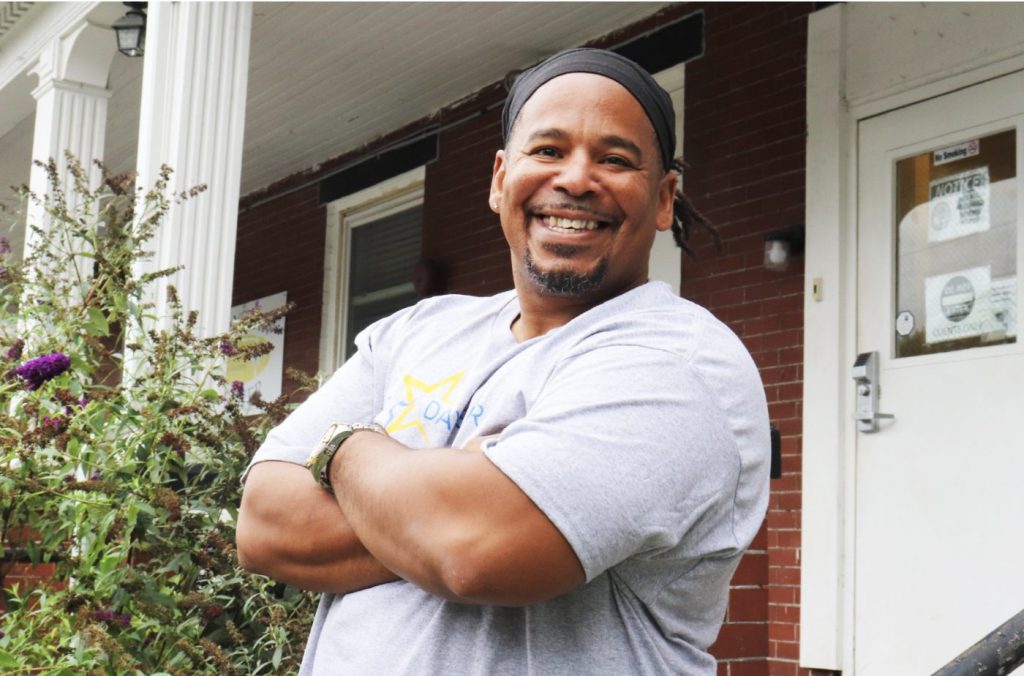
Craig Gittens and Hank Ryan personally have experienced such a transformation at Daystar. Several years ago, they were recovering from substance use disorders—now they’re employees.

“My office is 20 steps from where my bed was,” said Gittens, who is a case manager.

Gittens sees himself in every person in need who walks through the door, and that full-circle level of empathy energizes him to do more than just contribute to Daystar’s mission. Rather, he serves with his soul.

“If I hit the lottery, I would not quit my job,” he said. “That’s a promise.”

Ryan, who is Daystar’s director of facility maintenance, immediately agreed.

“I wouldn’t either,” he said. “Who wouldn’t want to work at the place that helped save their life?”

For the last quarter of a century, the drug and alcohol treatment center, located on N. 18th St. in Harrisburg, has provided long-term residential treatment for about 130 men each year. These men have completed a detox or rehab program, and, upon leaving, need a transitional place to call home.

At Daystar, home is more than just a bed to lay their head. The organization provides evidence-based counseling and compassionate support, and they model and mold healthy routines and mindsets through community involvement, spiritual guidance and exercising daily life skills.

Daystar also believes that family can play an integral role in the recovery process, as such involvement can increase recovery success rates. For residents who arrive with the backing of family support, a family program is available to facilitate group counseling and shared healing. And for those without a close-knit family, they gain one.

“Addiction is a disease of isolation, so we really want them to build support from the ground up,” said Daystar’s CEO Fern Wilcox, who plans to open a women’s treatment facility in New Cumberland within the next year called Rachel’s House—named in tribute of her daughter who passed away in 2019 and had 11 years in recovery.

Residents at Daystar break bread together, and they bicker as brothers might, but what makes their bond unbreakable is that they’re walking alongside one another—finding the way forward, together.

“I still call many of the men I lived with, including Hank, my brothers to this day,” Gittens said.

Daystar knows that, for many, the recovery process does not end at their doorstep. Those who graduate through the program bring a brotherhood with them and connections to community-rooted resources such as housing assistance and mental health services.

While the long-term goal is that those who go through Daystar never need to come back, they’re always welcome—to receive help again, to simply say, “Hi,” to mentor future residents or volunteer, or maybe even to fill an open job like Gittens and Ryan.

“We don’t take the credit for their success,” Wilcox said. “Each individual who graduates through our program did it themselves. We just supported them and believed in them. They had it in them all along.”

Daystar Center is located at 125 N. 18th St., Harrisburg. For more information, visit www.daystarrecovery.com.


If you like what we do, please support our work. Become a Friend of TheBurg!

Continue Reading

For Beer, Come Here: It’s just a hop to tour America’s oldest brewery

Where to? 420 Mahatongo St., Pottsville, PA, USA.

Let’s take I-81 North and US 209 North. Turn right on North 4th Street, then take the third right on to Mahatongo St. Destination is on your right.

Arrived. America’s Oldest Brewery.

A leisurely and scenic hour-long drive. An engaging, educational and entertaining 50-minute tour of history. Not one, but two complimentary, brewed-to-perfection malt beverages to top it all off.

Man, one would be hard-pressed to identify a finer day trip from Harrisburg than to the Yuengling Brewery tour.

A way to get away, without going too far away.

“I think my favorite part is when people walk into the caves and go, ‘Wow!’” said tour guide JoAnne Justus. “We’re losing our history, but it’s still here. I want people to stop, take a breath, go back in time, and see how they did things in yesteryear. Just take it all in.”

She paused then added, “Oh, and the beer is pretty darn good, too.”

From a marketing standpoint, Yuengling possesses no greater tool for advertising its family of 10 beers than the daily tours of its working brewery. For the fifth-generation, family-owned business, the tours are a way to stay connected with its roots, promote goodwill and give back to the community.

Yuengling offers free, guided tours of its nearly 200-year-old operation multiple times, Monday through Saturday, except on major holidays. With the smells of brewed, malted beverages from days gone by filling the surrounding air, visitors are guided on a personal tour of fermentation buildings, shipping docks, the bottle shop, the canning department, and, of course, Yuengling’s famous storage caves, dug by local coal miners from the rock of the mountains that helped establish Pottsville as a town.

But what the Yuengling Brewery does best is celebrate America’s love affair with beer. There’s a lot to take in and consider, but there is no question who or what the real star is.

“We (tour guides) are an extended family of the Yuenglings, and the tourists are extended family, as well,” Justus said. “The purpose of the tour is to show people some history and show people what we’re about—just to share America’s oldest brewery with everybody. This is Mr. (Dick) Yuengling’s advertisement, but it’s also a way to give back.”

People come from far and wide to tour the Yuengling Brewery. An acquired taste for Yuengling’s smooth, consistent product isn’t a prerequisite, but it certainly helps.

Yuengling Brewery hosts nearly 70,000 guests each year—locals, regional aficionados and curious world travelers. Tours are limited to 45 visitors, and guests are afforded rare glimpses into the inner workings of an active brewery.

“Brewery tours enable our fans to experience our history firsthand,” said Debbie Yuengling, employee engagement and culture manager. “Our tour allows fans to walk through the brewery and see how our brands have evolved and changed over time. They also get to see how their favorite beers are currently brewed and packaged. It’s informative and unique.”

David G. Yuengling established the brewery in 1831, and, although the tour isn’t quite that old, it’s been offered for close to 40 years. At one point, in the early days of the tour, the Yuengling family acted as tour guides themselves.

“It’s not about quantity,” Justus said. “What we do, we do well. It’s a good beer. It’s a simple beer. Everyone loves it. Their father drank it. Their grandfather drank it. Their uncle drank it.”

Yuengling is a testament to the power of a capitalist marketplace where a quality product can stand the test of time.

With connections to old-world Germany, the original Yuengling established the brewery in Pottsville partly because of the area’s clean spring water. Yuengling survived Prohibition and operated for nearly a century—some refer to it as the “original microbrewery”—before embarking on the current growth spurt that it is experiencing.

Not only do current owner Dick’s four daughters—Wendy, Debbie, Cheryl and Jennifer— signal a fresh, future direction for the brand, they also represent the company’s commitment to family values, as well as an unwavering refusal to yield to the allure of bigger companies’ proposals.

“They tried,” said Justus, of past corporate attempts to absorb Yuengling. “That bazillion dollars is not important to the family. They don’t care about the quantity; they care about the quality. You’ve got to do it well. When you get bigger, people’s names start to become numbers.”

Now a rather quiet place, once-thriving Pottsville is typical of the towns that comprise what outsiders affectionately refer to as “coal country.” Surprisingly, there’s a lot to see and do in and around Pottsville—a vibrant welcome center, numerous architecturally significant buildings and mansions and Kowalenek’s Kielbasy Shop—but few attractions define the area the way that the Yuengling Brewery does.

“We are constantly seeking opportunities to provide premium drinking experiences for our fans, engage with our customers, and take on any challenges as an opportunity to grow and to push forward,” said Debbie Yuengling. “We have maintained the high standard of brewing excellence that Yuengling is known for because of our ability to listen to our fans and innovate.”


Yuengling Brewery is located at 420 Mahatongo St., Pottsville. For more information, visit
www.yuengling.com.


If you like what we do, please support our work. Become a Friend of TheBurg!

Continue Reading

Perfectly Planned: Event Coordinator Joy Boudreau makes a business out of doing what she loves, wins local competition

Joy Boudreau

Nicole Flanders was “kind of freaking out” as she planned for her wedding. She wasn’t sure how everything would get organized on the big day.

After scouring the internet for wedding coordinators, Flanders, of Hollidaysburg, settled on Camp Hill-based Joy of Events. This seemed like a good choice. She liked the pricing and range of services the business offered.

But the service Flanders got from owner Joy Boudreau during her early Aug. 13 ceremony far exceeded her expectations.

“She was willing and ready to help with whatever,” Flanders said. “She had her hands in every part of the day. I seriously don’t know what I would’ve done without her.”

Boudreau attended the rehearsal, set up centerpieces, coordinated with vendors, made sure the processional was timed correctly and helped clean up at the end of the day. But she also handled the details, reminding the bride to hydrate, bringing appetizers to the couple and supplying safety pins from her emergency kit.

“All of my vendors loved her,” Flanders said. “She treated my family like her own family.”

For Boudreau, wedding days like these require a lot of running around, making sure things go smoothly and, when they don’t, putting out fires like locating the beer supplier who showed up late, in Flanders’ case.

But hospitality is Boudreau’s specialty and what she’s been doing for years.

“To me, events are like a puzzle, and I love being a piece of the puzzle,” she said.

Boudreau was born in Cameroon, Africa, immigrating with her family at 3 years old to the United States and growing up in Bloomsburg. She started her company, Joy of Events, with her husband Tyler in 2019 after years of experience in the hospitality, fundraising, events and even sports administration fields. She held jobs as a banquet supervisor for a golf course, a restaurant manager and a college sports administrator, among other positions before deciding to start her own business.

“I dabbled all over the place. I’ve done a lot,” she said. “I have a really healthy appreciation of what goes into events.”

Joy of Events focuses on wedding coordination, but also offers services for birthdays, conferences and other functions. From last year to this year, the business more than doubled its events, coordinating 14 weddings this year.

Significantly, Boudreau recently won a local competition for entrepreneurs.

In early June, she took home the $8,000 grand prize from M&T Bank’s Capital Region Multicultural Small Business Innovation Lab Pitch Competition. The competition came at the end of a six-week business accelerator program that launched in May in partnership with Harrisburg University’s Center for Innovation & Entrepreneurship. The innovation lab held weekly courses for participants on business planning, establishing credit, accessing capital, marketing, branding and networking.

“I left the program feeling very fulfilled and thankful that I had the opportunity to be a part of it,” Boudreau said. “It was very gratifying to get validation that what I’m doing is working.”

Boudreau had watched the TV show “Shark Tank” tons of times, she said, but nothing could prepare her for the nerves she felt while pitching her business model to the judges during the competition. When she was chosen as the first-place winner, she was in tears.

“It was truly amazing,” she said.

Boudreau hopes to continue growing her business at a scale she can manage while still balancing her work/home life as a mom of a 1-year-old boy.

One thing’s for certain—her son is sure to have some awesome birthday parties. In fact, Boudreau just recently planned his “Rugrats”-themed first birthday.

“I love doing this,” she said. “And I feel like everyone’s goal is to do what they love.”

For more information about Joy of Events, visit www.joyofeventsgroup.com.


If you like what we do, please support our work. Become a Friend of TheBurg!
Continue Reading

Community Corner: Notable October Events


Golf Fundraiser
Oct. 1: Daystar Center for Recovery will host a golf tournament fundraiser at Armitage Golf Course, 800 Orrs Bridge Rd., Mechanicsburg. In addition to the four-person scramble, there will be contests with prizes, a lunch buffet and more. www.daystarrecovery.com


HBG Flea
Oct. 1: Shop the HBG Flea for local art, vintage treasures, curated curios, and unique gifts, 10 a.m. to 4 p.m., at Midtown Cinema, 250 Reily St., Harrisburg. The mission of the HBG Flea is to create a platform for community growth by bringing artists, small businesses, and patrons together. www.hbgflea.com


Book Fest
Oct. 1: The Chocolate Town Book Festival will be held in Chocolate Town Park, Hershey, 1 to 5 p.m., to connect readers and writers. New York Times national best-selling poet Kate Baer and 50 PA authors will sign and sell books. www.hersheylibrary.org


Scavenger Hunt
Oct. 1-31: Throughout October, hit the trails and explore fall at the Ned Smith Center, 176 Water Company Rd., Millersburg, with a self-guided activity. Pick up a passport from the trailhead kiosk and follow the map to find all the exploration stations. www.nedsmithcenter.org


Pumpkin Fest
Oct. 1-31: Rockhill Trolley Museum and East Broad Top Railroad, 421 Meadow St., Rockhill, will host the Great Pumpkin Patch Express. Enjoy Peanuts-themed activities on a vintage trolley, picking out a pumpkin, shopping with vendors and more. www.eastbroadtop.com


Bus Tour
Oct. 2: Historic Harrisburg Resource Center, 1230 N. 3rd St., hosts its Annual Bus Tour of Local Landmarks, featuring African American heritage sites in Cumberland County, 10 a.m. to 3 p.m. www.historicharrisburg.org


Fall Meet Week
Oct. 3-7: Check out high-performance cars during the Eastern Regional Fall Meet, Hershey’s annual antique car show and festival. View period automobiles, see racecar demonstrations and visit a flea market. On Oct. 4, attend the “Night at the Museum” dinner and reception at the AACA Museum, 161 Museum Dr., Hershey, 6 to 10 p.m. www.hershey.aaca.com


Business Night
Oct. 6: Join the West Shore Chamber of Commerce for the 70th annual Business & Industry Night celebration, 3 to 7 p.m., at the Penn Harris Hotel, 1150 Camp Hill Bypass, 3 to 7 p.m. View members’ products and services and join in on the fun with this year’s “The ‘70s” theme. Tickets are $30. www.wschamber.org


Harvestfest
Oct. 7-8: Enjoy the fall season at the 37th Annual Big Valley Harvestfest of fall and winter décor, food, entertainment and activities at Mifflin County Youth Park, 110 W. Logan St., Reedsville. www.visitbigvalley.com


Heritage Fest
Oct. 7-8: Strasburg Heritage Society, 122 S. Decatur St., celebrates its 50th anniversary with Strasburg Heritage Fest. Attend an ice cream social, a movie screening under a large tent, historic tours, presentations and more. Kids can enjoy crafts, face painting and games. www.strasburgheritagesociety.org


Fun Run/Walk
Oct. 8: Join Tri County Community Action (TCCA) at the HACC campus in Harrisburg, 8:30 a.m. to 12 p.m., for the 8K for Kathy Fun Run/Walk, in honor or Kathy Possinger, who served as TCCA executive director from 2010 to 2015. Come dressed as your favorite superhero. www.cactricounty.org


Pop-up Paddle
Oct. 8: Take in the fall scenery as you kayak the Susquehanna during a Pop-Up Paddle, 8:30 a.m. to 2 p.m. This half-day, 6-mile float takes paddlers from Milton State Park to the PFBC Chillisquaque Boat Launch. Registration is $20. Limited kayak and canoe rentals are available. www.susquehannagreenway.org


Celebrate Autumn
Oct. 8: Check out beautiful colors on the mountain and explore all that autumn has to offer at the Ned Smith Center, 176 Water Company Rd., Millersburg, 10 a.m. to 2 p.m. Enjoy guided hikes, crafts, educational programs, a self-guided scavenger hunt, complimentary snacks, local cider and entertainment. www.nedsmithcenter.org


Volunteer Work Day
Oct. 8: Head to Wildwood Park, 100 Wildwood Way, Harrisburg, to enjoy the outdoors and help with continuing park and habitat enhancement projects, 10 a.m. to 1 p.m. Tools and work gloves provided. Pre-registration required. www.explorewildwoodpark.org


Senstoberfest
Oct. 8: Try more than 75 beers at Senstoberfest a craft beer sampling at FNB Field, City Island, Harrisburg. The event benefits Harrisburg River Rescue. Tickets are $55 general admission, $75 VIP. www.senatorsbaseball.com.


Fall Fest
Oct. 8: Enjoy Fall Fest at Reeds Gap State Park, 1405 New Lancaster Valley Rd., Milroy, 11 a.m. to 3 p.m. The event includes a hayride, pumpkin painting, a stream study, arrowhead artifacts, a lumberjack demonstration, apple cider, live music and more. www.juniatarivervalley.org


Evening Mixer
Oct. 13: Build new relationships with local business professionals at the West Shore Chamber of Commerce’s October Evening Networking Mixer, 4:30 to 6:30 p.m., at UPMC Outpatient Center, 2020 Technology Pkwy, Mechanicsburg. The event is free and open to chamber members. www.wschamber.org


Food Rally
Oct. 13: Enjoy fresh, savory foods at the New Cumberland Food Truck & Restaurant Rally every second Thursday of the month, 5 to 8 p.m. Grab dinner from area food trucks or New Cumberland restaurants and enjoy shopping and special promotions at local businesses. www.newcumberlandpa.org


Curiosity Kids
Oct. 13, 27: Kids ages 3 to 6 are invited to learn about fall leaves on Oct. 13 and about color pigments on Oct. 27 at the State Museum of Pennsylvania, 300 North St., Harrisburg, 11:30 a.m. to 12 p.m. Curiosity Kids events are included with museum general admission, but space is limited. www.statemuseumpa.org


Over the Edge
Oct. 14: Rappel from the rooftop of 200 N. 3rd St. in downtown Harrisburg between 8 a.m. and 5 p.m. Raise funds and awareness for Big Brothers Big Sisters of the Capital Region’s one-to-one youth mentoring programs. www.capbigs.org


Stargazing
Oct. 14: Join a Wildwood Park naturalist and the Lykens Valley Children’s Museum for an exciting evening exploring the night sky at Wiconisco Creek Park, 5 to 8 p.m. Enjoy STEM and art activities, stargazing with the Harrisburg Astronomical Society and learn about the James Webb Space Telescope. www.explorewildwood.org


Halloween Party
Oct. 15: State Museum of PA, 300 North St., Harrisburg, will host the family-friendly “Great Pumpkin Day,” 10 a.m. to 1 p.m. Come dressed as your favorite animal, superhero, ghost or museum icon. Play some holiday games, make a craft and more.
www.statemuseumpa.org


Harvest Fest
Oct. 15: Central Penn College, 600 Valley Rd., Summerdale, hosts its annual Fall Harvest Festival, 10 a.m. to 2 p.m. The festival will feature live music, food trucks, vendors, kids’ games and more. www.centralpenn.edu


Dinner & Concert
Oct. 15: Susquehanna Folk Music Society hosts a harvest dinner and concert with Colin Cutler at Beshore Hill Farm, New Cumberland Collective, 5-9 p.m. www.sfmsfolk.org


Burgers & Brews
Oct. 15: Central Penn College, 600 Valley Rd., Summerdale, is spicing up the fall season with its inaugural Burgers and Brews Music Festival as part of Homecoming weekend, 5:30 to 8:30 p.m. Enjoy gourmet burgers and sliders, a variety of brews and a full lineup of live music. www.centralpenn.edu


Art Tour
Oct. 15-16: The fourth annual Hershey Hummelstown Art Studio Tour features 11 Hershey/Hummelstown artists and studios that will open their spaces to the public. Visitors can tour studios, watch demonstrations and purchase art on Oct. 15, 10 a.m. to 5 p.m., and Oct. 16, 12 to 5 p.m. www.hersheyhummelstownartstudiotour.com


Book Festival
Oct. 19-23: Midtown Scholar Bookstore, 1302 N. 3rd St., Harrisburg, hosts the ninth annual Harrisburg Book Festival with in-person bookstore hours, an outdoor tent sale and virtual author events with award-winning and bestselling authors. www.hbgbookfest.com


3rd in The Burg 
Oct. 21: Explore the best of Harrisburg during 3rd in the Burg, the monthly arts and culture event, where you can visit and enjoy galleries, restaurants and art spaces throughout downtown and Midtown, from 6 to 9 p.m. www.thirdintheburg.org


Halloween Ball
Oct. 21: Inspired Simplicity Design and PCADV are hosting the annual Halloween Charity Ball at The King Mansion at 2201 N. Front St., Harrisburg, 6:30 to 7:30 p.m. Proceeds from the annual gala will benefit the PA Coalition Against Domestic Violence. www.pcadv.org


Charity Walk
Oct. 22: Join the 2022 Homeland Hospice 5K and Memory Walk at the Rossmoyne Business Center in Mechanicsburg, 8 a.m. Registration is $25 for anyone 13 years or older. Funds raised support Homeland Hospice supportive services. www.homelandevents.org


Boatoberfest
Oct. 22: Enjoy Boatoberfest, Pride of the Susquehanna’s fall fundraiser by the riverboat dock on City Island, with beer and cheer of the traditional Bavarian Oktoberfest celebration, 4 to 8 p.m. Drinking, live music, dancing and dining are on tap. Tickets are $60. www.hbgriverboat.org


FAB Night
Oct. 22: Help celebrate LGBT Center of Central PA’s work and honor leaders at “FAB 2021—Connected Across Communities,” at Hershey Lodge, 325 University Dr, Hershey, 6:30 to 8:30 p.m. FAB 2021 is a hybrid event, with in-person and free virtual options. www.centralpalgbtcenter.org/FAB


People Project
Oct. 22: Adams County Arts Council hosts The People Project at Mela Kitchen’s Core Theater, 1865 Gettysburg Village Dr., 7 p.m. With “My Place at the Table” as the theme, the event combines music performances, exhibits by Adams County artists, storytelling and a public art collaboration. Exhibits are open to the public, Oct. 21 to 23, during restaurant hours. www.adamsarts.org


Library Talk
Oct. 23: Join Friends of the Library, 1 Benjamin Plaza, for a conversation with New Cumberland resident and former Borough Council President John (Jack) Murra­y, on the history and his remembrances of New Cumberland, 3 p.m. www.cumberlandcountylibraries.org


Nature at Night
Oct. 23: Families can take an after-hours walk through the Olewine Nature Center at Wildwood Park, 100 Wildwood Way, Harrisburg, to watch exhibit hall critters come to life, 5:30 to 8 p.m. Make s’mores and sip apple cider, while enjoying a Halloween story. Dress as a favorite animal or in a costume, and bring a trick-or-treat bag. www.explorewildwoodpark.org


U.S.-Russia Relations
Oct. 27:  Jill Dougherty, former CNN foreign correspondent who once headed its Moscow bureau, will address the future of U.S.-Russia relations at a dinner at 6:30 p.m. at the Scottish Rite Cathedral in Harrisburg.  Event is hosted by the Foreign Policy Association of Central Pennsylvania. www.fpaharrisburg.org


Film Friday
Oct. 28: Head to Fredricksen Library, 100 N. 19th St., Camp Hill, for a screening of “We are the Best,” a film from Sweden, about three girls in 1980s Stockholm who decide to form a punk band. Showings are at 2 and 7 p.m. www.fredricksenlibrary.org


Haunted Adventure
Oct. 29: Join the Friends of Fort Hunter for a trip to Philadelphia for three haunting visits—the Eastern State Penitentiary, the home of Edgar Allan Poe and the Continental Tavern, 7:30 a.m. to 8:30 p.m. Bring a bag lunch, snacks and beverages. www.forthunter.org


Murder Mystery
Oct. 29: Scottish Rite Theatre presents a Murder Mystery dinner for guests 18 years of age and older at Harrisburg Consistory, 2701 N. 3rd St., 6:30 p.m. Dress for the night is “Roaring ‘20s” theme. Event includes a three-course meal, a bottle of wine and the show. www.valleyofharrisburg.org


Halloween Dance
Oct. 30: The Englewood, 1219 West End Ave., Hershey, hosts a Halloween dance at 4 p.m., with live music, small bites and a cash bar to raise funds for the Downtown Daily Bread, serving low-income and homeless central PA residents. Cost is $30 at the door or in advance online. Costumes are encouraged. www.englewoodhershey.com


Spooky Storytime
Oct. 31: Have some family-friendly Halloween storytime fun at the New Cumberland Public Library, 1 Benjamin Plaza, 6 p.m. Relax and get cozy for story sharing and rhymes the whole family can enjoy. www.newcumberlandlibrary


If you like what we do, please support our work. Become a Friend of TheBurg!

Continue Reading