Harrisburg restaurateur plans west shore dining concept, slated to open in 2023

The new restaurant will open in the current home of Cork & Fork Osteria.

A Harrisburg restaurateur is bringing his talents across the river, opening a new Mediterranean-style restaurant on the west shore in 2023.

On Friday, Brian Fertenbaugh said that he, with his wife, Jen, plan to open a restaurant in the current location of Cork & Fork Osteria in Hampden Township.

“There are a lot of chain restaurants on the west shore and not enough good independent restaurants,” said Fertenbaugh, when reached by telephone. “We want to bring something better.”

Currently, Fertenbaugh runs both Café Fresco Center City and the Level 2 nightclub, which he will continue to own and operate. But he added that he’s been wanting to open a west shore restaurant for some time.

“I was born and raised on the west shore and know it really well,” he said.

Cork & Fork Osteria’s owners are selling the business to Fertenbaugh in a deal that will close on Dec. 31, according to the principals. The Osteria has operated at 4434 Carlisle Pike since 2016.

After taking ownership, Fertenbaugh said that he’d like to make some updates to the space and open up in the spring. The new restaurant will feature a “modern Mediterranean” menu with dishes featuring Italian, Spanish, Greek and possibly Middle Eastern flavors, along with a full cocktail menu, he said.

“This will be a totally new concept,” Fertenbaugh stressed. “I’m not bringing Café Fresco to the west shore.”

Cork & Fork downtown is not changing owners, and all Osteria gift cards will be honored at the downtown location, according to their ownership group.

Continue Reading

Local, state officials address deaths on Harrisburg roadway, upcoming safety changes

City and state officials address safety upgrades coming to S. Cameron Street in Harrisburg. Pictured (from left): Harrisburg Communications Director Matt Maisel, PennDOT spokesperson Fritzi Schreffler and city Project Manager Percy Bullock.

On Thursday morning, city and state officials stood near the site of a recent fatal accident to discuss safety on the roadway.

Near the intersection on S. Cameron and Paxton streets, on Tuesday evening, a female bicyclist was struck and killed by a truck. This was the latest in a series of pedestrian and bicyclist deaths along the Cameron Street corridor in the last two years.

Harrisburg and PennDOT officials explained that, while there are no new proposals to make changes to the roadway, one long-standing project will aim to make the corridor safer.

PennDOT spokesperson Fritzi Schreffler explained that the department has plans, dating back to 2017, to improve safety on Cameron Street in anticipation of its I-83 widening project.

As PennDOT prepares for its major construction project to widen the highway, officials expect to see increased traffic on Cameron Street. This prompted the plan for upgrades, including improved street lighting, road patching, line repainting, sidewalk improvements and longer pedestrian crossing signals, among other changes.

Schreffler stressed that this project is not in response to the many recent fatalities. However, according to Harrisburg Communications Director Matt Maisel, they will help.

“Every time an accident like this happens, it is a reminder of why we are doing this,” he said.

Schreffler also noted that currently, motorists access the S. 13th Street interchange by driving through Paxton Street, making the intersection at Cameron Street busy. However, that will also change as part of the highway widening project, when the ramp is relocated.

“It’s safety improvements focused on motorists first, but also on anybody crossing the street, pedestrians, bicyclists,” Schreffler said.

PennDOT expects to begin construction on the corridor, from Berryhill Street to Elmerton Avenue, in the summer, and it will likely take around a year to complete. Construction from Berryhill Street to Sycamore Street is expected to begin the following year.

While some advocates have called for increased bicycle infrastructure, according to PennDOT and the city, adding bike lanes to the road is not in the plan.

“It’s a very busy drag,” said Harrisburg Project Manager Percy Bullock. “It’s too difficult with the businesses and the speed of the road to put bike [lanes] on it.”

In the meantime, while construction takes place, Maisel urged motorists, pedestrians and bicyclists to use the road responsibly. He advised drivers to be aware of their surroundings and speed and encouraged pedestrians and bicyclists to follow safe crossing practices.

“This is a call to action for everyone to be more careful when you are on the road,” he said.

For more information on PennDOT’s I-83 Capital Beltway project, visit their website.


If you like what we do, please support our work. Become a Friend of TheBurg!


Continue Reading

Weekend Roundup with Sara Bozich


Plan your weekend with my weekly list of things to do around Harrisburg and central PA! Scroll down or use the menu links to find ideas for your weekend.


What you’ll find:

For something new: Harrisburg Beach Club is hosting the Polar Plunge on New Year’s Day
Worth noting: Urban Churn is releasing its annual Sauerkraut ice cream again in time for the New Year
Things on my agenda this weekend: Tired: NYE plans; Wired: New Year’s Day Open House


For your weekend planning

Below are options for your weekend.

A Look Ahead

    1. HU Presents announces spring 2023 lineup
    1. The Best Farmers Markets around Harrisburg
    1. Submit your events for the Weekend Roundup

Thursday

Friday

Saturday | New Year’s Eve

Sunday | New Year’s Day

If you like what we do, please support our work. Become a Friend of TheBurg!

Continue Reading

January Publisher’s Note

Fourteen years ago, on a cold winter’s night, we distributed the first issue of TheBurg.

A lot has changed for us since then, and I’d like to use this month—our anniversary month—to announce another big change.

As the calendar flips to a new year, we have new leadership. Well, more correctly, we have new old leadership.

With the January issue, I am TheBurg’s majority owner and full publisher, an upgrade from minority owner and co-publisher. I’ll also continue as editor, so readers shouldn’t expect any radical departures in our content or operations.

But that’s not the real excitement.

For me, the real excitement is TheBurg’s two new co-owners—our long-time sales director, Lauren Maurer, and equally long-time creative director, Meg Caruso.

For 10 years, Lauren, Meg and I have been “TheBurg team,” and I couldn’t be more thrilled now also to call them my business partners. With this, TheBurg truly has become an employee-owned company.

There’s a good chance you already know these two incredibly talented people. So, if you see them around town, feel free to give a quick “congrats.” But not too long please—we have work to do!

Also, I want to offer my greatest thanks to TheBurg’s former publisher—and my former co-publisher—Alex Hartzler.

A decade ago, Alex saved TheBurg from imminent extinction and then helped us build a sustainable business, a Herculean feat these days for a small, independent publication. Alex has promised to continue offering his wise business counsel, which we certainly will take him up on.

Well, enough of this navel-gazing—I have swag to sell!

Last month, for the first time ever, TheBurg began to offer branded merch—T-shirts and sweatshirts. You can choose from two designs: our logo or a unique, Harrisburg-themed design featuring the Walnut Street Bridge.

What a great way to celebrate our new ownership—or just demonstrate your love of TheBurg and of Harrisburg. Please visit our website if you’d like to make a purchase.

With that sales pitch complete, I present you our January issue. Happy New Year, everyone!

Lawrance Binda
Publisher/Editor

If you like what we do, please support our work. Become a Friend of TheBurg!

Continue Reading

10 Little Stories: Our editor offers his top Harrisburg news of 2022

The holidays are behind us, the calendar has flipped to a new year, and you know what that means—my annual top-10 list of Harrisburg news stories.

OK, maybe you don’t know that, but it has been a tradition in this column for over a decade.

So, have a seat, pour that last glass of eggnog before its sell-by date, and read through what I consider some of the top local news items of the past year.

10. Book Building

In 2019, on a sweltering August day, I stood at the corner of N. Front and Walnut streets as Dauphin County Library System officials announced an ambitious plan. They would buy the historic Haldeman Haly house next door, connect it to the existing McCormick Riverfront Library and renovate both buildings. The problem? They would need to raise about $3.5 million to make it happen. Three years later, mission accomplished. In October, DCLS unveiled the renovated, expanded library with new rooms, new spaces and a renewed vision for the future. As I’ve stated in past years, I like to begin this annual list on a positive note, and this was certainly positive news in Harrisburg over the past year.

9. Full House

When it comes to politics, we tend to stay in our lane here at TheBurg, focusing on city elections. However, in 2022, we extended that lane a bit to include state government races following a favorable redistricting for Harrisburg. The city now has two state Assembly members, an increase of one, with a third member based just over the city line in Susquehanna Township. I find this significant for several reasons. Sure, it gives Harrisburg greater representation in the statehouse, which is welcome. But it also demonstrates the rising political power of our urban area, as well as its quickly increasing diversity. Moreover, Harrisburg-centric legislative districts now include much of the metro area, offering more common ground between city and suburbs. We can only hope this marks the beginning of the end for the ridiculous, counter-productive, tired old west/east shore divide.

8. Pie in the Eye

Having grown up just outside New York, I consider myself something of a pizza snob. So, when I moved here, I was unimpressed by the offerings. Then came Knead, which I thought was even better than the pizza of my childhood. So, I happily feasted, especially with the snug slice shop located just across the street from my office. Then, one summer day, Knead’s dozen or so workers announced a plan to unionize; the business swiftly closed. Like many of our readers, I had never heard before of a corner pizza shop unionizing. In my New Jersey hometown, pizza joints were everywhere, each one seemingly run by some middle-aged guy named Tony and his two blockhead sons. Anyway, in the end, there were no winners in this sad saga. With the business shut, everyone lost: the owners, the employees, the customers and the city.

7. Fund Times

For nearly a year, residents awaited a plan for Harrisburg’s $47 million bounty, the city’s share of money from the federal American Rescue Plan Act. Then it came, in part. In June, City Council approved an administration plan to allot about $15.6 for a new HVAC system for the public safety building, for fire and police bonuses, and to reimburse the city for pandemic-related expenses. The administration has stated that it would like to use the rest for a waterpark at Hall Manor and for an affordable housing initiative. These proposals, though, have yet to be publicly detailed, teeing up a potential top news story for 2023. In late October, the city got more good news on the funding front. The commonwealth selected Harrisburg to receive a $13 million federal grant to upgrade several parks and convert the aging Jackson Lick pool to a spray park. That’s no play money.

6. Mending Bridges

Harrisburg is a river city, and that means bridges—lots of them. In 2022, PennDOT offered continual fodder for bridge drama. Early in the year, it released a proposal to rehab the Market Street Bridge, only to significantly change it a few months later to include an unsightly utility bridge. It also made public a plan to rehab the Maclay Street Bridge. But perhaps the biggest bridge news was PennDOT’s own-goal as it lost a court challenge to toll the South Bridge. Separately, the Harrisburg Area Transportation Study issued its four-year improvement plan, which includes transforming the long-dormant CAT bridge for bicycles and pedestrians. The Walnut Street Bridge also is set for rehab work, though I argued, in this space, for rebuilding the truss bridge’s western span, which was destroyed in a devastating January storm 27 years ago.

5. Apartment Block

Nearly every year, I include a “dog that didn’t bark” story on this list. In other words, something was expected to happen, but it didn’t. For 2022, that honor goes to the many large building projects that have been proposed, even approved over the last few years, but still haven’t broken ground. Residential projects along and near the Reily Street corridor top that list, though the inventory of drawing-board buildings touches most Harrisburg neighborhoods. Notably, the soon-to-be-surplus Federal Building went from auction block to opulent rehab plan and back to auction block, all within 11 months. Fortunately, it wasn’t all deflating news on the development front. Projects like the Menaker apartments, Midtown Lofts, Harrisburg University’s health sciences building and the new federal courthouse all either were completed or neared completion in 2022. Nonetheless, residents can be forgiven if they treat the next grand building proposal with a healthy dose of skepticism.

4. Semi-Normal

2022 will go down as the year that our nation returned to normal, more or less. Despite a rough start to the year, most Americans—and I’ll say most Harrisburgers—eagerly embraced their old ways once the winter COVID surge abated. Restaurants fully reopened, entertainment venues were packed, and nearly everyone stashed away their masks. Nonetheless, pandemic fallout continued. Businesses had customers again, but they often lacked the inventory, supplies and employees to serve them. Downtown Harrisburg, in particular, continued to suffer from a dearth of state and other workers who never fully returned to the office, leading to numerous business closings. For this reporter, this was some of the worst local news since the rumored demise of the legendary Harrisburg beaver.

3. Stately Stall

Each spring, flowers bloom, robins return, and road construction crews begin pounding, digging and paving. This past year was no different, except that the crews started and soon stopped on one project—the redesign of State Street in Allison Hill. A long-planned project to narrow the street, add bike lanes and improve safety caused some residents to complain that the new road would force them to move their parked cars twice daily along the street. The biking community pushed back, advocating for the project and the bike lanes. Other project supporters argued that the parking situation shouldn’t have been a surprise—that it had been presented over and over during many public meetings. In April, the city administration issued a cease-and-desist order and, in June, unveiled a revision that would eliminate the bike lanes and retain the parking. That plan added more safety features, such as textured crosswalks, but didn’t narrow the roadway, a key part of the original plan to make the wide, dangerous street safer for pedestrians.

2. New at the Top

The first week of 2022 held one of the biggest stories of the year—the swearing-in of Harrisburg’s 39th mayor, Wanda Williams. A change in administrations always elicits concern for what lies ahead. What will the new mayor mean in terms of policies, priorities, procedures? In my view, the new administration started off strong with a seasoned team of managers to lead government operations. It then built upon the main strength of its predecessor with continued sound fiscal policy, while repairing frayed relations with the county, the state and other entities. It was adept in providing core services, completing the vital 2nd Street project and—huge kudos—in securing grant money. For 2023, I’m interested to learn the details of the administration’s pending affordable housing plan and, importantly, to see if it can bring down 2022’s distressingly high homicide rate.

1. 2nd to None

Back in 1956, Harrisburg—egged on by the commonwealth—turned several local streets into high-speed mini-highways. Overnight, once-quiet roads became noisy and dangerous, and the city became far less livable. Properties along and near these routes lost value, and many once-lovely houses fell into disrepair. Harrisburg’s urban fabric was shredded for the benefit of commuters, who raced along these roads each night to their suburban homes. Sixty-six years later, in 2022, Harrisburg took a huge step in righting this historic wrong. Much of N. 2nd Street was re-designed, and the road was returned to two-way traffic. The impact was immediate and profound: fewer cars, less speed, less noise and a much safer street. In short, the road was given back to the city and its people. I now hope that this successful project offers proof of concept for slimming and slowing down the city’s other urban highways, including Forster Street, Front Street and the downtown stretch of 2nd Street.

So, there you have it. Another newsy year in the books and a fresh one just started.

Raise that last glass of nog, and let me propose a toast. Here’s to a great 2023 to our readers and to all the wonderful things this community can accomplish in the coming year.

Lawrance Binda is publisher/editor of TheBurg.


If you like what we do, please support our work. Become a Friend of TheBurg!

Continue Reading

January News Digest

Harrisburg Passes 2023 Budget

Harrisburg has approved a spending plan for the new year that includes increased investments in public safety and infrastructure.

City Council voted last month in favor of a $74.9 million general fund budget for 2023 that includes no property tax increase. The budget passed 6-1, with council member Shamaine Daniels voting against it.

Harrisburg introduced the budget to council in late November. Before voting to adopt the spending plan, council made small amendments to a few salaries, among other items.

In total, the budget equals $110.4 million, including the general fund budget, the $20 million neighborhood services fund budget and several other separately budgeted areas.

Public safety is an area of focus in this year’s budget, as salaries for city police officers are set to increase by 3.5% and 16 new positions in the bureau will be funded.

Infrastructure improvements are another focus of the budget, including street lighting upgrades and ADA accessibility improvements within the State Street construction project. There are also funds designated for renovations to the MLK City Government Center and the Public Safety building.


Ribbon Cut on Federal Courthouse

After decades of planning and years of construction, local, state and federal officials last month cut the ribbon to officially open the new federal courthouse.

Mayor Wanda Williams, Gov. Tom Wolf and retired Judge Sylvia H. Rambo, for whom the building is named, were all on hand for the debut of the expansive, 243,000-square-foot, $200 million building at Reily and N. 6th streets.

 The journey to find a new location for the U.S. District Court for the Middle District of Pennsylvania began in the 1990s. The current federal courthouse, located in downtown Harrisburg, was deemed too small and not secure enough, unable to meet federal requirements.

Lengthy site selection and funding processes ensued, and the location was chosen in 2010. The first funds for the project came in 2004, with the remainder flooding in around 2018. The project ceremonially broke ground in June 2018.

“The new courthouse aims to build upon Midtown Harrisburg’s history and sense of community,” Rambo said during the ribbon cutting. “The building and its surrounding landscape will be a civic icon. The courthouse is a powerful symbol of justice and equality.”

Much of the courthouse construction is finished, though officials expect substantial completion this winter. Court personnel are expected to move into the building in the spring.

With its location in Harrisburg, officials stressed the potential impact that the new courthouse will likely have on the city.

“This space was an eyesore, a vacant parking lot, now transformation and redevelopment of this area is underway,” Williams said. “The possibilities are endless, and it starts here today.”


Milestone Reached for MulDer Square

A project to make a Harrisburg neighborhood safer and greener is nearing completion.

Last month, the city announced that road construction in MulDer Square, the area where Mulberry and Derry streets meet, was largely finished.

The project began in July, closing off Mulberry Street, from the Mulberry Street Bridge to Derry Street.

“This is one of the areas that had high fatalities due to accidents, so the point is to slow down any type of negative congestion in the area,” the city’s project manager Percy Bullock said.

According to Bullock, the construction included installing a roundabout at the intersection of Mulberry and Derry streets, making sidewalks ADA-accessible and updating street lighting. Side streets Nectarine and Evergreen were also paved, and Nectarine Street was transformed into a pedestrian-focused green walkway.

Additionally, the city is working on a project to transform the Derry Street cul-de-sac, which was previously a vacant, blighted area, into a linear park and pathway. The park will stretch from Sylvan Terrace to S. Cameron Street and include benches, ADA-accessible features, new trees and landscaping.

The park project will likely reach completion in April or May, according to Bullock.

The MulDer Square Redevelopment Project is part of the city’s Vision Zero initiative to reduce pedestrian fatalities.


Wastewater Rates Rise

Harrisburg utility customers will see their wastewater rates rise in 2023, though drinking water and stormwater rates will be unchanged.

In late November, Capital Region Water (CRW) passed its 2023 budget with new rates for the year.

Under the new rate structure, drinking water rates will be unchanged at $10.34 per 1,000 gallons consumed. Likewise, the stormwater fee will remain the same at $6.15 per month for most residential customers.

The wastewater rate represents the sole increase for next year. For Harrisburg residents, it will rise by 68 cents per 1,000 gallons consumed, from $8.56 to $9.24. That represents an increase of about $2.55 per month for the average residential customer who uses 45,000 gallons annually, according to CRW.

The overall increase for a Harrisburg residential customer is roughly the same as for 2022, when average rates rose by about $2.60 a month.

“It’s a testament to our leadership that we’ve been able to keep rates predictable this year,” said Capital Region Water CEO Charlotte Katzenmoyer. “Even through inflation and supply chain issues, we are focused on finding equitable and responsible ways to repair the aging infrastructure, both seen and unseen.”

Katzenmoyer added that the spending plan commits $58 million to capital projects aimed at reducing combined sewer overflows, addressing localized flooding and runoff, and meeting state and federal clean water requirements.

“This also comes at a time in which we have doubled the investment in our Customer Assistance Program,” she said.


Debt Payment Made

Harrisburg has made a major bond payment, as it eats away at the remainder of its once-mammoth debt load.

In late November, City Council passed a resolution to pay off $12 million of the city’s remaining $20 million in general obligation bond debt. This debt is money that the city owes after defaulting on loans during its financial crisis a decade ago.

“The city and members of this body and everyone involved wants to get the city out from under this debt that we got into,” said council member Westburn Majors. “We really see the light at the end of the tunnel. This agreement […] is a really good step in the right direction.”

While the administration had proposed paying off the remaining debt all at once, council had concerns about spending down such a large amount of Harrisburg’s fund balance.

While Harrisburg will still need to decide when and how to pay off the remaining $8 million of debt, Majors explained that the decision to pay off the $12 million early will save the city millions of dollars that would’ve accrued in interest had it continued with its regular payment schedule.

“We are very happy,” city Business Administrator Dan Hartman said, of the payment. “It’s a step in the right direction.”


Homes Sales Down, Prices Up

Residential sales declined but prices increased in November for the greater Harrisburg area, according to the latest report on previously owned houses.

For the three-county region, home sales totaled 616 units during the month compared to 724 in November 2021, as the median price rose to $255,000 from $231,000, said the Greater Harrisburg Association of Realtors (GHAR).

In Dauphin County, 279 houses sold, a drop from 371 in the year-ago period, as the median price rose to $219,000 compared to $208,500 last year, GHAR stated.

Cumberland County had 295 home sales, a dip from 299 a year ago, as the median price increased to $300,000 versus $245,000 in November 2021, according to GHAR.

In Perry County, sales fell by eight units to 38 homes, as the median price increased to $239,750 compared to $204,950 in the prior year, GHAR said.

Houses sold relatively quickly, as GHAR reported that the “average days on market” stood at just 17 days compared to 20 in November 2021.


So Noted

Capital Region Water has two new board members: attorney Karen Balaban and state House employee Nathan Davidson. City Council voted down two other proposed appointees, meaning that long-time members Marc Kurowski and Andrew Enders will continue to serve on the five-member board until reappointed or replaced, even though their terms have expired.

Dauphin County will hold its property tax rate steady for an 18th consecutive year. The county commissioners last month passed a $218.8 million general fund budget that maintains the county portion of the property tax at 6.88 mills.

David West last month was confirmed by City Council as the director of Harrisburg’s Public Works Department. West, who previously served in the post, was rehired out of retirement in July.

Fresca Burger & Chicken Shack is slated to open early in 2023 in the Strawberry Square food court. Owner Mina Gabriel plans to offer made-to-order burgers, chicken sandwiches, gyros and falafel wraps, plus a variety of side dishes, including loaded fries and onion rings, as well as all-day breakfast.

Harrisburg City Council this month will begin accepting applications for an open council seat. The application period opens on Jan. 3 and closes on Jan. 13. Applications are available on the city’s website and at city hall. The seat is open as former member Dave Madsen resigned last month after being elected to the state House of Representatives.

Harrisburg School Board last month reappointed Brian Carter as its board president for 2023, while naming Roslyn Copeland as vice president. The board currently lacks the ability to vote on most agenda items, however, as that power remains in the hands of the district’s state-appointed receiver.

Olivia Edwards Rindfuss has been named president of Harrisburg Young Professionals for 2023, replacing 2022 President Jade Honey. The executive board also will include vice presidents Iqbal Singh and Lauren Maurer, Treasurer Peter Megoulas and Secretary Ali McFadden.

PA Dairymen’s Association last month announced a special flavor to celebrate 70 years of Farm Show milkshakes: orange cream. You can grab one at the 2023 PA Farm Show, which runs Jan. 7 to Jan. 14.

SkarlatosZonarich last month announced the addition of Harvey Abramson, Esq., as Of Counsel, bringing 40 years of legal experience to the Harrisburg firm. Harvey will join the firm’s Elder Law, Estate Administration and Estate Planning Department.


Changing Hands

Adrian St., 2242: M. Moyer to C. Feliz & E. Suero, $98,000

Benton St., 704: PA Deals LLC to J. Marrero, $69,950

Berryhill St., 1101: J. Garcia to D&F Realty Holdings LP, $200,000

Berryhill St., 1417: NA Capital Group LLC to J. Alvarez, $55,000

Berryhill St., 1423: NA Capital Group LLC to R. Pena, $55,000

Berryhill St., 2479: P. & M. Myers to K. Dieu, $110,000

Bigelow Ct., 5: A. Blount to VAB Investments LLC, $80,900

Calder St., 104: M. Freeman to T. Green, $160,000

Capital St., 1228: S. Moore to M. Whipple, $205,000

Christian St., 1183: D. Vasquez & J. Paulino to Y. Martinus, $40,000

Division St., 501: G. Neff to EBM Real Estate Holdings LLC, $68,000

Edward St., 104: R., A. & S. Boyer to E. Chattah & Y. Guhl, $80,000

Emerald St., 409: 2 Sons Mechanical LLC to J. Tribue, $108,000

Forster St., 416: ITSM1 Inc. to M. Caylor & A. Shafer, $260,000

Geary St., 609: R. Dunbar to Balaci Properties LLC, $81,500

Geary St., 628: F. Ruiz to O. Rivera, $90,000

Green St., 1102: E. Kramer to C. Frey, $260,000

Green St., 1110: M. Schiavo to M. Siddique & N. Taraska, $207,500

Hamilton St., 208: K. West to Calder Street Development LLC, $225,000

Herr St., 1726: Gold Key Properties LLC to A. Otero, $128,000

Hoerner St., 140: A. & L. Maiga to Hamar Constructions Inc., $80,000

Howard St., 1347: H. Hidalgo to Val de Vie Estate Investment LLC, $160,000

Hummel St., 331: A. Hidalgo to E. Clemente & C. De Rojas, $53,000

James St., 1329: I. Mallouli to A. Hoffman & D. Payakmaloeng, $163,000

Kensington St., 2320: J. Cramer to A. & T. Hancock, $95,000

Kensington St., 2327: Lansanah Home Services Group LLC to R. Rodriguez & A. Matos, $130,000

Lenox St., 2000: B. & K. Ramper to KRP Limited, $57,000

Logan St., 2206: PA Deals LLC to Balaci Properties LLC, $87,000

Market St., 1827: Henry & Sons Property 2 LLC to Baker Property Services LLC, $83,000

Market St., 2006: C. Queeley to Willow Mill Realty Holdings LLC, $49,000

May St., 916: Integrity First Home Buyers LLC to K. Laubach, $124,995

Nagle St., 112: J. Weaver to D. McLaughlin, $147,000

Naudain St., 1429: Integrity First Home Buyers LLC to P. Sanchez, $59,995

Naudain St., 1436: J. Palmer to Integrity First Home Buyers LLC, $65,111

N. 2nd St., 513: Cricket Real Estate Enterprises LLC to Fernandez Investments LLC, $350,000

N. 2nd St., 1931: S., R. & S. Coslow to A. Spagnoli, $169,000

N. 2nd St., 2421: T. Weishaar to S. King, $275,000

N. 2nd St., 2441: J. Ryan to D. Mouzon, $115,000

N. 3rd St., 1101: D. Carroll to A. Blaylok, $200,000

N. 3rd St., 2301: Capital Tax Collection Bureau to Healing Center International Inc., $100,000

N. 4th St., 2319: Carters Clean Up LLC to Berrospi Properties LLC, $82,500

N. 4th St., 3221: M. Allen to C. Dyer, $132,000

N. 5th St., 1732: R. Nagel to J. Drayton & R. Nelson, $200,000

N. 5th St., 2238: D&F Realty Holdings LP to C. & A. Payano, $66,500

N. 5th St., 2406: R. & G. Kessler to C. Grimm & J. Price, $125,000

N. 6th St., 2521: M. Yablonski to L. Martinez, $115,000

N. 7th St., 2158: T. Karijomenggolo to L. Banks, $113,850

N. 7th St., 2164: M. Howell to K. Morrison, $130,000

N. 12th St., 35: D. Green to C. & R. Guerrier, $60,000

N. 13th St., 144: A. Odunayo to Cooper Hawk LLC, $72,000

N. 16th St., 617: T. Reeves to H. & C. Le, $170,000

N. 16th St., 1215: F. Washington & G. Worrell to R. & R. Loja, $65,000

N. 18th St., 703: Henry & Sons Property 2 LLC to E. Reyes, G. Alexander, V. Tejada & C. Tejada, $83,000

N. Front St., 1525, Unit 213: B. Esworthy to Selenite Real Estate LLC, $115,000

N. Front St., 2417: PA State Corrections Officers Associations to Beautiful Holding LLC & A. Stidfole, $330,000

Park St., 1919: Inoma Properties East Shore LLC to 2020 Real Estate Ventures LLC, $55,000

Paxton St., 1619: C. Barboza to L. Morales, $300,000

Penn St., 1603: M. Miller & D. Smith to Stanton Investments LLC, $170,000

Penn St., 2312: R. & S. George to JRP Transportation LLC, $58,000

Reel St., 2734: JAK Investment Properties LLC to MS AM Properties Inc., $60,000

Regina St., 1834: S. Olmeda to World Energy LLC, $65,000

Rolleston St., 1315, 1411: JWM Associates to Hyperion Capital LLC, $2,100,000

Seneca St., 263: L. Cervantes, T. Astuto & E. Marquez to K. Williams, $133,900

South St., 111: M. & N. Hylind to T. Chandler & D. Jackson, $125,000

S. 12th St., 1504: K. Foster to R. Hussain & H. Tagreed, $70,000

S. 13th St., 1257: Brookside Premier Properties LLC to Coopers Hawk LLC, $42,000

S. 17th St., 314: K. Hugo to GCA & BN Real Estate Holdings LLC, $240,000

S. 19th St., 228: G. Neff to J. Acosta, $63,500

S. 19th St., 1106: M. Murphy to R. Andia, $72,500

S. 23rd St., 612: A. Radon to Shutter Real Estate LLC, $400,000

S. 26th St., 706: F. Guzman to M. Cedeno, $42,000

S. 28th St., 737: S. & J. Rivera to K. Olotu, $130,000

State St., 1500: Stoute Housing Inc. to L. Voong, $204,000

State St., 1620: Integrity First Home Buyers LLC to SNB Real Estate Solutions LLC, $109,900

State St., 1934: Wilton Hampshire LLC to SNB Real Estate Solutions LLC, $115,000

Summit St., 160: J. & J. Domenico to PR&J Properties LLC, $60,000

Taylor Blvd., 36: J., J. & P. Straw to LMG Enterprises LLC, $40,000

Verbeke St., 120: LanPro Properties LLC to S. & B. Gill, $180,000

Vernon St., 1535: 37 Estate B. LLC to World Energy LLC, $44,000

Wayne St., 1718: D. Daniel, C. Carey & E. Wilson to C. & T. Zerbe, $149,900

Wyeth St., 1409: H. Swanson to I. Jordan & A. Wooditch, $165,000

Wyeth St., 1418: Ruth E. Graham Trust to R. Martin, $165,000

Zarker St., 1812: J. Santiago to PACC Homes & Development LLC, $55,000

Zarker St., 1944: SR Homes LLC to J. Monegro, $65,000

Harrisburg property sales, November 2022, greater than $40,000. Source: Dauphin County. Data is assumed to be accurate.


If you like what we do, please support our work. Become a Friend of TheBurg!

Continue Reading

Stay a Spell: A major publication ranked Harrisburg among the best cities for retirement. We wanted to know why.

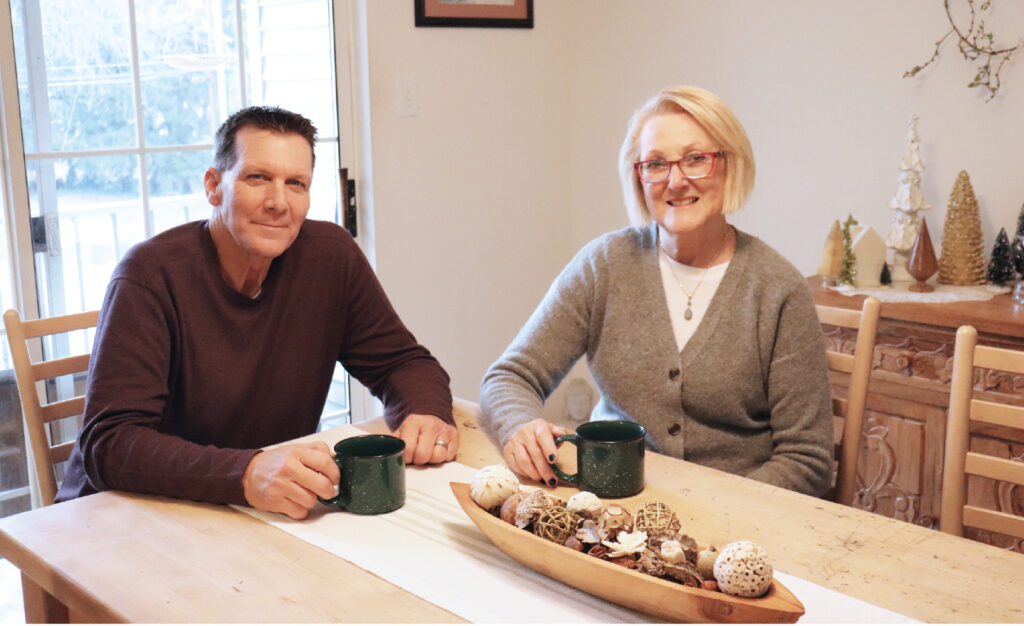
Bradley & Faye Gibson at their home

Faye and Bradley Gibson loved raising their children in the Harrisburg area before moving to her native northern Pennsylvania. Then they moved to Florida, which turned out to be too hot.

So, they returned to Harrisburg—Swatara Township, to be precise—and discovered that the region was pretty nice for retirement, too.

“We enjoy going out through the neighborhood when the weather’s better,” said Faye Gibson. “My husband was always a hiker. After he got his knee replacement, he started hiking again. He goes to the Appalachian Trail. He goes hiking everywhere.”

The Gibsons discovered for themselves what U.S. News & World Report calculated for its readers, ranking Harrisburg as No. 2 in “Best Places to Retire in the U.S. in 2022-23.” Second to Lancaster, but still, outranking all those sunny, more traditional retirement spots thanks to its housing affordability, happiness, desirability, retiree taxes, job market and healthcare quality.

Although the U.S. News website’s photos depict city attractions, it’s Harrisburg and its environs that garnered boffo reviews. Riverfront Park, the Appalachian Trail and camping got shout-outs as outdoors highlights. Amish County, Gettysburg and Hersheypark are an easy drive, and “big-city weekend getaways are also there for the taking.”

Actually, I once heard it said that Harrisburg’s civic slogan should be, “Two hours from major cities.” It comes up a lot in conversations about Harrisburg’s advantages for retirees.

“You’re so close to New York City and Washington and Philadelphia and Baltimore,” said Gibson. “We go to Baltimore just for a day trip.”

The region hasn’t been immune to rising real estate prices, but “we are still a really good value,” and its proximity to the cities of the Northeast makes it attractive to retirees, said Ray Davis, Jr., real estate agent with Howard Hanna.

“We’re convenient to New York, where people who want to go to Broadway can make a day trip out of it,” Davis said. “We’re convenient to Baltimore and Washington, D.C., and all these areas. Particularly in Harrisburg, we’re the state capital. ‘Location, location, location’ really factors into our desirable situation as much as anything else.”

In some areas, housing is affordable because other enticements are scarce, but Harrisburg pairs affordability with good quality of life, said Davis. Some of his clients, such as the Gibsons, left the region for sunnier climes but then trekked back.

“We are a destination for some retirees,” Davis said. “They didn’t like Florida, and they realize that life here is pretty good.”


Everything & Anything

As for happiness and health, the region’s museums, galleries and robust theater scene spark engagement and connections.

Research finds that learning can help offset dementia, while socialization is “a key to avoiding depression,” said Anastasia Petrovskaya, director of Pathways Institute.

The Messiah Lifeways catalog of courses for the 55-plus crowd uses the region as a classroom, exploring the area’s history, art, culture and nature—everything from equine bonding to introduction to pickleball to canoeing 101 at Gifford Pinchot State Park.

“Learning is what unites people,” Petrovskaya said.

Connections matter for those who move to the area or move to retirement communities, she added. To accommodate those retirees who may still be working or deeply engaged in volunteer work, Pathways Institute is adding more weekend and evening courses.

“Retired people are the most busy people I have met,” Petrovskaya said. “Finally, people have the time to do all the things they always wanted to do.”

In 2013, retired educator Sandy Gilleo moved to Mechanicsburg from Bucks County at the urging of a friend. She experienced some culture shock, missing the wealth of adult learning available back home, before discovering Pathways Institute. Now, she’s a regular, taking “everything from history to religion to crafts to whatever you want,” said Gilleo, who moved pre-pandemic to Carlisle. “That’s what I’m interested in—everything and anything.”

The region has long been known as a top place to live, work, play and raise a family, and now, it’s “Destination Dauphin County” for people of all ages, said Dauphin County Commission Chair Mike Pries.

The Capital Area Greenbelt, local arts and museums, excellent health care and county parks such as Wildwood, Fort Hunter and Detweiler make the area attractive to retirees, he said. Plus, he noted, 18 consecutive years without a county property tax hike doesn’t hurt (and famously, Pennsylvania doesn’t tax pensions).

“We’re viewed as a place where an older person can retire with the confidence that, no matter their economic circumstances, they’ll be stable,” Pries said.

From veterans’ services to the Area Agency on Aging, county officials “connect the dots” to ensure a protective web of services for older adults, Pries added.

“We are in constant communication with the municipalities and the city, discussing with them opportunities for retirees,” he said.


All the Trappings

U.S. News weighted healthcare quality heavily, after happiness and housing affordability, in its rankings. Increasingly, local health systems are “age-friendly,” addressing the holistic needs of older adults, with support groups and education addressing mental and physical health, said Dr. Qurat-ul-Ain Mansoora, Geriatric Medicine, Post-Acute Care Clinical Services, UPMC in Central Pa.

“There’s a vast spectrum of needs people develop as they get older,” she said. “A good starting point is to find a very good personal care physician or geriatrician who can anticipate a person’s needs as they get older or even prior to it becoming an absolute necessity.”

The region’s engagement and interaction opportunities play key roles in elderly health because socialization is one of four criteria known to prevent or slow dementia, Mansoora said. The region’s pace of life and outdoors opportunities also amp up its appeal.

“Harrisburg and Lancaster are the perfect big little towns,” she said. “These are big little cities for older adults to live in and have a good social life, to be interactive, and still be close enough to their children or loved ones who are in New Jersey or New York or Maryland. Harrisburg is right along the river with a walking path for great exercise. It has enough activities to keep people engaged in society.”

Pries noted the region’s fit with the pandemic-driven, upward trend in outdoors activities.

“We are blessed,” he said. “We have all the trappings and the enticements of big-city living right here in rural, south-central Pennsylvania.”

Gibson, who is retired but back to working part-time at the flooring and carpet store where she used to work, agreed.

“There are a lot of things for retirees,” she said. “You can get involved with the art galleries or the Harrisburg Art Association. We like to go to some of the galleries. There’s a lot to do. You’re in the city, but it’s not a big city.”

If you like what we do, please support our work. Become a Friend of TheBurg!

Continue Reading

Change Agent: Meet Greg Czarnecki, a man on a mission to impact climate change, one Pennsylvanian at a time

Greg Czarnecki
Photo by Dani Fresh

If there’s a face, or voice, of climate change awareness in Pennsylvania, it might be Greg Czarnecki’s.

As climate change and research coordinator for the Pennsylvania Department of Conservation and Natural Resources (DCNR), he’s the only person dedicating his entire focus to climate change at a Pennsylvania state agency.

For more than five years, he’s been crisscrossing the state, giving about 60 presentations annually, about the impacts of climate change on the Keystone State. His audiences include nonprofits, businesses, colleges and state agencies. That’s more than 300 speaking engagements about climate change, and counting.

But last summer, there were three that stood out as perhaps more vital than all the others.

“They were definitely my youngest audiences, and it’s really important for two reasons,” said Czarnecki. “Number one—they’re the ones that are going to suffer the brunt of what we’ve done and are still doing to the earth. And number two—they’re the ones that are going to be saddled with solutions, especially adapting to climate change.”

He’s talking about the next generation of Pennsylvania’s climate change agents.


Natural Leaders

About 100 teens—nominated by their teachers as outstanding students destined to become the next generation of park rangers, biologists and researchers—gathered for three separate weeks of intense summer study. Camps, organized by the nonprofit Wildlife Leadership Academy (WLA), deep in the woods of Centre County’s Krislund Camp and Conference Center, nearly pinpointed Pennsylvania’s geographic center.

And on Aug. 2, within one of those camps, Czarnecki’s presentation got to the heart of climate change issues in the commonwealth.

Czarnecki, 63, a 33-year veteran of the environmental field, began by explaining the greenhouse effect—the science that explains why the earth’s climate is changing.

“Sunlight travels through our atmosphere, to earth—and think of our atmosphere as a blanket, an insulating blanket that holds in some of that heat,” Czarnecki said, his PowerPoint graphic illustrating the process. “Greenhouse gases—think of them as the fiber in the blanket. We’ve nearly doubled the normal amount of carbon dioxide in the atmosphere.”

That carbon dioxide, the end result of burning fossil fuel—coal, oil and natural gas—has increased dramatically since the start of the Industrial Revolution about 200 years ago.

“Last summer, for the first time ever inside the Arctic Circle, it was over 100 degrees,” Czarnecki said, explaining rising temperatures associated with climate change. “My hometown is Erie, and the Great Lakes aren’t icing over like they used to. Warmer temperatures mean more lake effect snow. Last year, lake effect snow made it all the way to the Chesapeake Bay, which never used to happen.”

As the climate changes, affecting weather, nature too is shifting, impacting wildlife, habitats, agriculture, human and animal food supplies, human health and the economy.

“How are species going to respond? There are three responses,” Czarnecki explained to the teenage audience. “They either adapt, move or disappear. DCNR has studied about 150 species across the state to assess how they’ll do under climate change.”

There were times, throughout the presentation, when you could have heard a pin drop. That’s because the teens were rapt, processing, engaging and asking questions. They seemed to have both a sense of wonder and worry.

“For that reason, I try to be a bit more upbeat with younger audiences,” Czarnecki said later, “because I get a real sense they’re really worried—almost scared. One of the kids afterwards said, ‘Should we be planning to leave the planet—is that the solution?’ No, absolutely not— there are solutions—but that showed me the level of concern.”


2-Pronged Approach

The way forward, outlined in Pennsylvania’s Climate Change Plan, includes two strategies. The first, adaptation, identifies ways of coping with climate change’s direct and indirect impacts. Mitigation, however, seeks strategies for reducing greenhouse gases.

“We have to do both,” Czarnecki said.

Within the sprawling 2.5-million-acre network of state parks and forests is one form of adaptation. Countless culverts—pipes channeling stormwater—are being redesigned to withstand intense flooding, the kind Pennsylvania used to experience every 50 to 100 years. Under climate change, flooding frequency is increasing. Previously, culverts were created to withstand 25-year floods.

That’s just one adaptation strategy. But the students, like the vast majority of Czarnecki’s audiences, have a more personal, burning question.

“What can you do to help deal with climate change?” asked Czarnecki—and it brought a shift in energy to the room.

The entire hour, it felt like Czarnecki was briefing the high schoolers, preparing them for the passing of Pennsylvania’s environmental baton—and with it, the continuation of climate change research. But it’s not just a race for research and solutions. He’s in the midst of a marathon mission to change human habits.


Ripple Effects

“It’s a mindset—think about everything you do,” Czarnecki said. “Number one, reduce your carbon footprint—walk or bike.”

His message is that individual, daily decisions form habits that, collectively, can make a difference.

“I’m trying to change my habits. I feel like my family and I are conscious of climate change,” said 16-year-old Mia Carado of Linglestown, a Central Dauphin High School junior who not only attended WLA, but calls it “one of the most impactful weeks of my life.”

She’s implemented many of Czarnecki’s climate change-fighting strategies related to daily meals.

“I pack my lunches in reusable containers, and I reuse metal straws instead of plastic,” Carado said. “Our neighbors have a compost bin, and we add our food scraps. My family and I—we try to eat as organic and clean as possible. We don’t want to contribute to pesticide runoff in area creeks.”

Waterways are always running through her mind.

“I’m hoping to become a wildlife biologist,” Carado said. “I really enjoy creek-side studies and macroinvertebrates like crayfish, water pennies and mayflies, because the cool thing about macroinvertebrates is that they can tell you about the quality of the water.”

She especially perked up when Czarnecki mentioned that climate change’s warmer temperatures favor invasive species, including those invading warming waterways.

“I don’t want to see any animals going extinct, because all wildlife is in a delicate balance,” said Carado, who hopes to study environmental science at Washington College in Chestertown, Md.

While climate change was a small component of WLA’s enriching weeklong curriculum, organizers say it was one of the most critical.

“For me, as a director, I feel it’s a current topic kids are going to have to deal with now, and into the future—and we want to be part of that conversation,” said Michele Kittell Connolly, WLA’s executive director of 10 years. “The students are always asking questions—exceptional questions—and this conversation about climate change is something we’re grappling with as a society. Our hope is that we’re educating and empowering the next generation … to think, through science.”

For more information on Pennsylvania’s DCNR—including climate change, and the WLA, see dcnr.pa.gov and wildlifeleadershipacademy.org, respectively. To learn more about climate change from Greg Czarnecki, tune into TheBurg Podcast’s January episode, available on Jan. 13.


TheBurg is proud to present this first story in a six-part, Pennsylvania-focused climate change series by freelance writer Karen Hendricks, which will publish every-other month throughout 2023.


Make a Change

The following are ways you can lessen climate change impacts:

  • Reduce your carbon footprint by walking or biking.
  • Consider a hybrid or electric vehicle.
  • Choose an electric provider powered by wind-generated power.
  • Evaluate your diet and consider becoming a flexitarian (integrating meatless meals).
  • Choose locally grown foods that have a lower carbon footprint.


If you like what we do, please support our work. Become a Friend of TheBurg!

Continue Reading

Past Life: After retiring, John Maietta began a busy second career as a history lecturer

John Maietta

John Maietta is a rock star of history.

He has groupies, like Nancy Bayuk. She has come to see him maybe 70 times over the past 10 years, every time he gives a talk at the Jewish Community Center in Harrisburg.

It’s an over-used cliche, but Maietta makes history come alive. He makes it fun, not focusing on the dates and names that made history so boring in your high school classroom, but relating it to your own experience in a way both entertaining and educational.

The success of this endeavor has surprised no one more than Maietta himself.

Following a civilian career in public relations and one in the Pennsylvania Army National Guard that saw him rise to the rank of colonel, Maietta, at age 60, decided to re-invent himself and to go back to his first love—history.

After a deployment in Iraq—his last stop before retiring from the military—he had brief stints handing out census forms and working the polls for the 2010 election.

“I thought, ‘I gotta do something more meaningful with my life,’” Maietta, now 72, mused during an interview at Cornerstone Coffeehouse in Camp Hill.

So, at a time when most of us are winding down professionally, Maietta decided to take advantage of his GI Bill benefits and enter graduate school at Shippensburg University to pursue a degree in applied history.

He embarked on this journey with some trepidation.

“I had never studied history professionally or academically,” said Maietta, who lives in Upper Allen Township with his wife Judy. “In fact, I got two ‘B’s’ in college—one was in gym and the other was in Chinese history. So, I didn’t have a good experience with history in college, but it was something I came to enjoy.”

His professors at Shippensburg were young enough to be his kids; his fellow students his grandchildren.

“It was always fun,” Maietta said, of returning to school as a senior citizen. “When we did group projects with these youngsters, I would do most of the work, but anyway that’s the kind of person I am.”

Instead of a thesis, Maietta opted for an internship exploring the idea of giving public lectures on history.

A contact at Messiah Lifeways told him about a lecture series the retirement village offered to its residents called “Pathways.”

The contact suggested that Maietta dip his toe into the water by presenting a program on his experience in Iraq, as well as a posting he had served in Germany helping with World War II commemorations throughout Europe.

The other came through a history professor who had served as his mentor at Shippensburg. As a result, Maietta started giving history talks to residents of Willow Valley, a retirement community in Lancaster.

While slowly building his resume as a guest lecturer at retirement communities, public libraries and an assortment of luncheon groups, Maietta spent several years as an adjunct history professor, first at Shippensburg and then at York College.

But he derived more enjoyment giving his talks to fellow senior citizens whom he found “very intellectually engaged” in the subjects he was presenting, in contrast to 18- and 19-year-old college kids who were just getting their history course ticket punched on the way to an unrelated degree.

Most in the audience for Maietta’s history lectures are his own peers in their 60s and 70s. He often begins his talks saying, “We are historical figures ourselves.”

“When I talk to older people, they can relate to the references I make,” Maietta said. “When I talk to older people about the Cold War, when I make references to a skit by Monty Python, when I tell a joke or reference some musical singer from the 1950s, all these things with older people, it connects with them. I can’t tell you how many people have come up to me afterwards and said, ‘You know if history had been taught this way when I was in school, I might have enjoyed it.’”

The popularity of the talks has soared since the reopening following the pandemic. Maietta estimated that he had presented well over 60 talks in just the first six months of 2022.

He has about 10 regular clients, including retirement communities and libraries, but he’s given programs to more than 50 different organizations and groups.

One is the Jewish Community Center in Harrisburg, where he recently gave a talk on the history of the automobile in the United States.

“He’s a really nice fellow,” said Bayuk, who never misses one of Maietta’s talks. “He’s very interesting. He always talks about something different.”

Maietta’s lectures cover a broad range of topics, from the trivial—like how the states got their names and where Christmas carols come from—to deep dives on Islamic art and architecture, and on the nature of the faith itself.

“I spent three deployments in predominantly Muslim countries, so it’s kind of interesting to me,” Maietta said. “We have a very active Muslim community in the area.”

As for his own personal interests, Maietta is partial to the history of ancient civilizations. He is also drawn to American history from the late 19th century into the early 20th century.

His talks from that period include the history of immigration to the United States, the impact of World War I on the home front, and the Jim Crow era, in which Maietta presents stories of African-Americans who excelled despite profound social, legal and political roadblocks.

His most popular in-demand topic?

“By far, the amazing history of ordinary things, from aspirin to the zipper—just where these ordinary items in our everyday life came from,” Maietta said. “I’ve given that program 27 times.”

To reach John Maietta, email [email protected].


If you like what we do, please support our work. Become a Friend of TheBurg!
 

Continue Reading

Founders Keepers: Hi-tech ideas hatch from HU’s business incubator

Michael Hughes, Zack Schade, Dave Segal, Jay Jayamohan, MaDonna A. Awotwi, Shaina McDonald & Jamal Jones

Harrisburg University President Eric Darr had a big idea.

Certainly, it wasn’t his first one, as he’s guided HU from struggling to thriving, but it was an important one.

Economic development and support for businesses have always been part of HU’s mission. However, he wanted to institutionalize that mission, as well as focus on underrepresented communities. The result: the Center for Innovation & Entrepreneurship at HU.

Less than three years in, the CIE has moved into accessible new digs in Strawberry Square and is home to nine founders in its business incubator program, 80% of which are BIPOC-owned and 50% women-owned. It also offers founders—the entrepreneurs who are invited into the incubator—residency space for up to 18 months, financial assistance, coaching and student interns.

That support is paying off. Several of the companies have raised a combined $3.6 million in investments. One, NAQI LOGIX, a thought-controlled earbud technology company led by Dave Segal, recently was valued at $100 million.

It took much more than a mission statement and Darr’s vision to reach this point. He needed to find the right person—someone who had been a founder, had connections outside the Harrisburg area, and could work in central PA. He found all of that in Jay Jayamohan, wooing him from D.C. to become the CIE’s founding executive director.

Jayamohan, who is from India, has a “typical immigrant story,” he said. He received his undergraduate engineering degree there before completing a master’s in management at George Mason University. He then worked for PricewaterhouseCoopers before he “stumbled into the world of startups.”

The end result was hardly a stumble. Jayamohan had created three start-ups with $22 million in venture capital. While one company failed, the others (both software firms) thrived, and he sold them both. He also got involved in startup centers at both George Mason and Georgetown universities.

Why teach? Because “50% of what you learn is completely useless when you go out and start a company,” he said. “It’s a whole different journey.”

That’s exactly where his experience benefits his HU CIE founders.

Just 30 months in, HU’s CIE program has had more than 250 applications, which Jayamohan said, “shows a huge appetite in the area.”

“I’m thrilled that Jay’s here,” Darr said. “The way it all kind of happened—to structure the CIE almost like a business within Harrisburg University. We gave Jay the authority to build programs to work with founders the way he wants to—the way he would as a founder.”

HU’s CIE invites applicants from the Harrisburg community and beyond. Of the nine founders currently in the program, only one is university-related.

“We hope, by having them come here, it creates new companies and jobs in this region,” Jayamohan said.

Jayamohan and his network mentor the incubator’s founders. They help them form corporations and connect them with funding resources. They help them find pro bono attorneys for their intellectual property. They help them flesh out ideas. They provide support staff. They connect them with technology and software development partners. They network.

In turn, founders who graduate from the incubator remain available as mentors to new founders.

“The center is for anybody who has an idea,” Jayamohan said. “It can be anybody who just has a concept, but doesn’t know where to start.”


Idea Is Born

Sharina Johnson was a military kid who moved a lot until her family landed in New Cumberland. After graduating from Dauphin County Technical School, she moved to Baltimore. She joined the Army Reserves while in high school. In 2004, she was activated and sent to Iraq for a year.

Coming home was difficult. She didn’t realize that she had PTSD. A highly functioning addict, she graduated from Morgan State University with a telecommunications degree. She slipped further into addiction. Finally, in 2018, she went into treatment. That journey sparked an idea, but a multicultural business event in 2021 featuring a presentation by CIE fueled it.

Today, Johnson is part of the incubator and has secured $100,000 from four investors for an application called “Arcana Recovery,” which will connect veterans with local resources. On a web platform, it will offer recovery support services, client management systems and data presentations. It will be able to track users’ moods. It also will include a wellness assessment that she hopes will be able to predict a relapse or spot people at risk for substance abuse.

Johnson hopes to launch her full product in June. Until then, she will continue to work within the CIE streamlining her product.


I Was Home

Segal, the NAQI founder, arrived similarly to the CIE—with “just a big idea and a few patents.” He said that his company wouldn’t be where it is without the CIE’s help with public relations, exposure and introductions to other big companies and investors.

Those introductions led him to a New York venture group that led him to Mark Godsy, now a co-founder and CEO of NAQI and one of the biggest biotech entrepreneurs in Canada.

“I basically said, ‘I’ll give you the keys to the car,’” Segal said about meeting Godsy.

Together, they have created an invisible, thought-controlled operating system that works with earbuds and head muscle contractions so users can control computers, wheelchairs and more.

“NAQI gives a silent, inconspicuous, invisible, multidirectional communication and navigation for everything,” Segal said. “Nobody would know what you’re doing.”

Segal’s “aha!” moment came in 2013 when he read about a soldier home from Iraq who was fitted with a thought-controlled prosthetic arm. It enticed him to Google “thought-controlled computing.” He started drawing patterns trying to figure out a thought-controlled OS. He got his first patent.

He had a concept and a patent, but his motivation came from a local man who was being treated at the Penn State Health Spinal Cord program. Now a close friend, this man, who is paraplegic, has joined development and executive meetings at NAQI to help inform their work.

“Meeting him changed the way I view all of this,” Segal said. “It happened for a purpose—he was my purpose.”

By the end of the first quarter of the year, Segal hopes to have a new design complete and a small run manufactured for user testing. His long-term goal is to complete an application programming interface that will allow other companies to integrate his OS into their products.

“Eric [Darr] has brought the region’s top innovative minds together with an open door to other start-ups. It’s almost like the Statue of Liberty—come in,” Segal said. “The moment I met the team at HU, I knew I was home.”


The Harrisburg University Center for Innovation & Entrepreneurship is located in Strawberry Square in downtown Harrisburg. For more information, visit
www.cie.harrisburgu.edu.


If you like what we do, please support our work. Become a Friend of TheBurg!

Continue Reading