Susquehanna Chorale names Michael McCarthy as executive director

Michael McCarthy

The Susquehanna Chorale is planning for its future with the announcement of a new executive director.

On Monday, the chorale announced the hiring of Michael McCarthy, the former director of music at the Washington National Cathedral in Washington, D.C., where he led their choirs for 21 years.

McCarthy will lead all non-artistic aspects of the Susquehanna Chorale as the 43-year-old organization undergoes administrative and operational changes in anticipation of “the future retirement of its founder and current artistic director, Linda L. Tedford, and the eventual hiring of her successor,” according to a press release from the chorale.

Tedford founded the Susquehanna Chorale in 1981 and has led it since.

In his former position, McCarthy was responsible for all aspects of the Washington National Cathedral’s music program and, from 2020 to 2024, also served as director of institutional planning.

““Discovering Linda Tedford, the Susquehanna Chorale, and its wonderful youth program took me back to a youthful epiphany that resulted in my enduring love of choral music,” McCarthy said, in a statement. “As custodians of a precious and vital tradition, the Chorale inspires through excellence, the beauty of their singing, and an ever-present sense of joy and purpose in what they do. I am so honored to join this extraordinary community for the next part of the journey.”

For more information about the Susquehanna Chorale, visit their website.

If you like what we do, please support our work. Become a Friend of TheBurg!


Continue Reading

Burg View: A Better LERTA

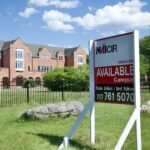
A developer long has had plans to build apartment buildings on these empty lots on Reily Street, one of many unrealized residential projects in Harrisburg.

When it comes to housing, Harrisburg is in a strange place. Demand is strong, but little new supply has come onto the market.

Enter the city’s Local Economic Revitalization Tax Abatement (LERTA) program. Narrowly passed in 2015, the program was supposed to incentivize residential construction by offering developers a 10-year property tax abatement.

Only it hasn’t worked well at all.

Recently, Jason Graves, director of economic development for the city, told City Council that, in the past three years, only about 10%—43 out of 426 eligible projects—applied for the program.

Meanwhile, city-approved building proposals line Harrisburg’s streets—single-family, duplexes, apartment buildings—but almost nothing has been built (with the notable exception of several affordable buildings, which, often subsidized, have different economics than market-rate projects).

So then what’s the problem?

In general, it’s two-fold.

First, the recent building environment has been brutal. With rising construction costs and interest rates, slim-margin projects that may have been viable pre-pandemic no longer are.

But, secondly, even before COVID, the city’s LERTA program was not functioning as intended—as an incentive for builders, especially for new construction, which has tougher qualification requirements than renovation projects.

This problem was already obvious back in 2017, when TheBurg published a feature story about the program. Even in that lower-cost environment, potential builders were bypassing Harrisburg’s LERTA due to conditions it placed on new construction, such as mandating the prevailing wage (government project) rate, which, they said, raised costs so much that any potential benefit was limited or even nullified.

I applaud both the administration and City Council for recently extending the current LERTA program for an additional year as they conduct an assessment. Yes, this review should have already occurred, as the program was due to sunset at the end of 2024, but a late response is better than none at all.

As the city conducts its assessment, it should focus on what works, as opposed to trying to appease interest groups, which resulted in the strictures that doomed the 2015 effort. After all, if no one is using LERTA, what’s the point of having it at all?

In the end, LERTA is no guarantee that Harrisburg will get the new housing it so badly needs, but it is one tool in the toolbox, along with possible reforms to zoning, density, parking minimums, etc.

In 2025, the administration and council have a golden opportunity to build a better LERTA. For the sake of the city’s future, I hope they take it.

Lawrance Binda is publisher and editor of TheBurg.

If you like what we do, please support our work. Become a Friend of TheBurg!

Continue Reading

The Week that Was: News and features around Harrisburg

Harrisburg Mayor Wanda Williams at a press conference this week.

This week’s news brought several hyper-local stories, delivering readers information about water bills, budgets, city government, real estate and events. That’s what we love to do here at TheBurg—share with our readers everything they need to know about their community. If you missed any of it, we’ve gathered our stories, below.

Affordable housing is sorely needed in Pennsylvania, said developer George Fernandez in a Community Comment. To bridge the gap between immediate needs and long-term solutions, Fernandez makes the case for more initiatives that are readily available and quick to execute.

Annie Hughes will serve as the newest board member for the Harrisburg School District’s board, our online story reported. Hughes was appointed to the seat left vacant by Jim Thompson, who recently passed away.

The Broad Street Market approved a healthy $513,524 budget for 2025, our online story reported. The spending plan includes money for infrastructure improvements, a new manager position and marketing.

Capital Region Water approved new budgets and rates for 2025 which will increase the average customer bill by about $3.45 per month. Find out more, here.

Christkindlmarkt will return to Linglestown this weekend for the sixth year. In our magazine story, find out more about the outdoor German Christmas market that features vendors selling handmade crafts and German and festival food.

Harrisburg City Council extended its Local Economic Revitalization Tax Abatement (LERTA) program, which gives tax break incentives to developers, our online story reported. Additionally, council weighed a plea for financial support from the Heinz-Menaker Senior Center.

Harrisburg High School student athlete Messiah Mickens was named the 2024-25 Gatorade Football Player of the Year for Pennsylvania, our online story reported. The program annually recognizes one winner in each state across 12 high school sports.

The Harrisburg Police Bureau will continue to increase its patrol around the Harrisburg School District following an assault on a student, our online story reported. The city held a press conference to discuss the matter this week.

Home sales slowed down, but prices rose slightly in November in the Harrisburg area, our online story reported. For the three-county region, 474 homes sold compared to 492 in November 2023, as the median sales price rose to $275,000 from $259,500.

Sara Bozich is feeling festive with a lineup of holiday events for the weekend, here.

Wildheart Ministries in Allison Hill spoke out against the Harrisburg School District’s decision to halt the nonprofit’s operations on a district-owned farm property, our online story reported. Since May 2023, the district leased its property at 213 S. 18th St. to Wildheart, which called the property The Hill Farm and utilized it for educational programs and farmers markets.

Do you receive TheBurg Daily, our daily digest of news and events delivered right to your email inbox? If not, sign up here!

Support quality local journalism. Join Friends of TheBurg today!

Continue Reading

Harrisburg water/sewer rates to increase in 2025, bills will rise less than $4 per month for average user

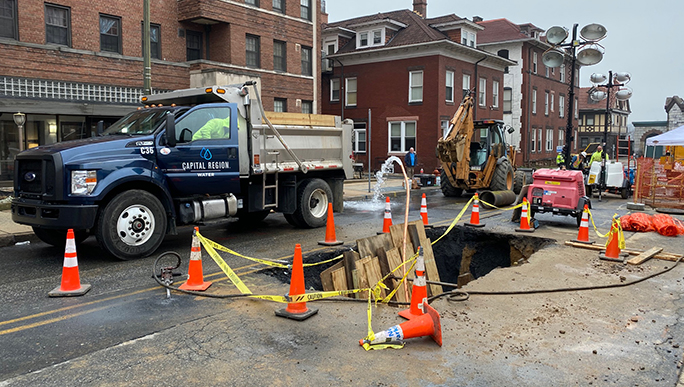
Capital Region Water at work (file photo)

The average Harrisburg utility customer will pay about 3.7% more for water and sewer service under a newly approved rate schedule for 2025.

Recently, the board of Capital Region Water (CRW) approved new budgets and rates for next year, which will increase the average customer bill by about $3.45 per month, from $92.31 to $95.76.

“While it’s difficult to raise rates, we are only talking about a $3.45 increase per month or roughly $40 (per year) to the average rate payer,” said board chair Marc Kurowski. “We don’t portray that as less, but we are getting a lot done for very nominal rate increases.”

Last year, CRW raised its rates by an average of 5.2% per month.

Effective Jan. 1, CRW’s charge for drinking water will increase from $10.65 to $10.97 per 1,000 gallons consumed, or about $1.20 per month for the average customer, according to the new rate schedule.

The wastewater charge will increase from $9.98 to $10.58 per 1,000 gallons consumed, or about $2.25 monthly for the average customer.

The stormwater fee will remain unchanged at $6.77 per month for the average residential customer.

The rate schedules all passed by a 3-1 vote, with board member Nate Davidson voting no.

During a budget presentation, Douglas Keith, CRW’s chief financial officer, said that the utility had to raise rates due to its own increasing costs. Health insurance, pensions and union-mandated salary increases all will raise expenses by over $1 million next year, he said.

Keith also stated that CRW plans to spend about $192 million over the next three years on infrastructure projects. CRW is currently under a consent decree to vastly reduce the flow of wastewater into area waterways and expects to spend some $327 million over the next decade improving its system.

It plans to pay for these capital improvements through a variety of possible funding sources, including grants, low-interest loans, bonds and customer fees.

“While an increase to the rates is not something that is particularly fun to have to talk about and engage with, it is necessary and it’s very proper based upon the situation we find ourselves in, with an opportunity to improve our system dramatically,” said board member Andrew Enders.

If you like what we do, please support our work. Become a Friend of TheBurg!

Continue Reading

Broad Street Market passes 2025 budget with infrastructure, personnel investments

Broad Street Market

About a year after the Broad Street Market nearly faced closure, it has a healthy financial projection for the new year.

At a Wednesday meeting, the market’s board approved a $513,524 budget for 2025 that includes funds for infrastructure improvements, a new manager position and marketing.

“It’s obviously been a very hard year,” said board chair Eric Hagarty. “A whole bunch of things helped us get to this point, but first obviously is the outpouring of community support.”

According to Hagarty, the market began 2024 with only about $14,000 in its operating account and owed thousands of dollars in delinquent and unpaid bills. The previous July, the market’s brick building caught fire, closing the building and significantly decreasing revenue. In August of this year, the former executive director of the market, who resigned in February, was charged with stealing money from the market.

Since then, Hagarty said that the market cut down expenses such as marketing and saved money by having volunteers take on responsibilities in place of a market director. Donations and the temporary tent opening helped as well. Additionally, market vendors agreed to a 25% rent raise in January, which helped bring in funds. The 2025 budget does not include a vendor rent raise.

In the 2025 budget, the market will begin using some of its $350,000 grant from the state Department of Community and Economic Development that was awarded in August. The money will go towards renovations and improvements in the stone building.

The budget also accounts for the hiring of a new market manager, a position that Hagarty said will be posted online soon. The role will look a little different moving forward, as well, Hagarty said. The manager will focus more on day-to-day operations, and responsibilities such as grant writing will move to the board.

The market has also allocated funds for resuming preventative maintenance and paid advertising, as Hagarty said that he believes many people still don’t realize that the market is open post-fire.

As the market takes advantage of its state grant and hopefully continues to increase revenue over the year, Hagarty believes that the market will be able to build up a cash reserve of around $100,000 to carry into 2026.

“I’m just so appreciative for everybody that has helped make this possible,” he said.

In other market news, Honeybush Raw Smoothie Bar, a former brick building vendor, will return to the market, as the board approved its vendor application.

For more information about the Broad Street market, visit their website.


If you like what we do, please support our work. Become a Friend of TheBurg!    

Continue Reading

Weekend Roundup with Sara Bozich


Plan your weekend with my weekly list of things to do around Harrisburg and central PA!


What you’ll find ⤵️

For something new: Roundtop Mountain Resort opens for the season! Worth noting: Lots of jazz this weekend! Holiday Jazz at the Scholar Friday while you browse; Michael Dease & Friends at Rose Lehrman Sunday! Things on my agenda this weekend: my friends made up their own holiday, and this is when we celebrate. Also, jazz and a skating bday party!

For your weekend planning

Below are more options for your weekend.

A Look Ahead

  1. Get tickets now for our final 3rd in the Burg in SoMa!
  2. Are you on my email list?
  3. Submit your events for the Weekend Roundup

Thursday

Friday

Saturday

Sunday

If you like what we do, please support our work. Become a Friend of TheBurg!

Continue Reading

Harrisburg School District appoints new board member to fill vacant seat

Annie Hughes. File photo from 2017.

The Harrisburg School District has a new board member.

At a meeting on Tuesday, Receiver Dr. Lori Suski appointed city resident Annie Hughes to fill a board seat left vacant by former director Jim Thompson, who recently passed away.

During the meeting, district officials and the board weighed two candidates who submitted letters of interest: Hughes, a Penn State employee and professional coach/consultant, and Heavenly Smith, a Susquehanna Township Parks and Recreation program coordinator. One additional person submitted a letter of interest, but did not attend the meeting.

Hughes will serve a one-year term, before the two-year seat is up for election.

Although the board does not have any voting power while the district is under receivership, except for the power to levy taxes, Suski allowed each director to share their preference between the two candidates. The vote came out to 5-2 in favor of Hughes, with one abstention.

Hughes is a nine-year resident of Harrisburg and currently works as the statewide coordinator for Penn State’s Invent Penn State Innovation Network. She also serves as the co-founder of Hughes Coaching & Consulting LLC. Hughes also previously served as the president and a board member of neighborhood group Friends of Midtown.

“I know that the school district has been going through challenges; I’m a person who appreciates working on problem-solving, creating structure around implementing solutions,” Hughes said at the meeting. “I think I can do some good.”

For more information about the Harrisburg School District, visit their website.

If you like what we do, please support our work. Become a Friend of TheBurg!    

Continue Reading

Harrisburg increases police presence near schools following assault

Harrisburg Mayor Wanda Williams, along with Superintendent Dr. Benjamin Henry (left) and Police Commissioner Tom Carter, spoke at a press conference in city hall.

The Harrisburg Police Bureau has increased its police presence after a recent assault on a student.

City and Harrisburg School District officials at a Wednesday press conference said that there will continue to be additional police patrol around district schools, following an alleged rape of a 12-year-old girl.

“The city and the school district are collaborating closely to assess and strengthen safety measures both in our schools and in our neighborhoods,” said Mayor Wanda Williams.

On Dec. 4, police arrested I Marr Finley for raping a 12-year-old girl on Nov. 25 in Uptown Harrisburg, according to CRIMEWATCH.

In response to the incident, Williams and Police Commissioner Tom Carter said that the police bureau would continue patrolling near schools during heavily trafficked times of the day, such as the start and end of the school day.

“First and foremost, I want to express our concern and care for the student,” said Superintendent Dr. Benjamin Henry. “Safety is one of my top priorities.”

In November, the district approved a plan to hire police officers for the district and create a police station in the Harrisburg High School-John Harris campus. According to officials, the plan was formed in response to a significant increase in violent incidents in the district.

While several board members expressed concern for the possibility of creating a school-to-prison pipeline by hiring in-school officers, Henry, who was sworn in as superintendent in September, said that his top concern was safety.

“We want to make sure our babies are safe every day coming to school and going home from school,” Henry said on Wednesday.

Support quality local journalism. Become a Friend of TheBurg!

Continue Reading

Community Comment: Pennsylvania’s housing crisis can’t wait for long-term solutions; mobile initiatives can bridge the gap

George Fernandez

If you drive 10 miles in any direction around the Greater Harrisburg region, you are likely to find new developments adding a combined thousands of homes to the market. While this may seem like a sign of growth and vitality, it is not the whole picture.

Here’s the hard truth. Pennsylvania is amid a significant low-income housing crisis. Our commonwealth faces a shortfall of approximately 265,537 affordable rental homes for extremely low-income households, those earning less than 30% of the area median income. Additionally, more than 13,000 individuals across Pennsylvania are experiencing homelessness. This includes individuals in shelters and those living unsheltered.

The price point of most homes presently on the market is far out of reach for those who have the greatest need for housing. And for those who stretch and sacrifice to get into a home, nearly 72% of these households are severely cost-burdened, spending more than half their income on rent. This situation often forces trade-offs, such as cutting back on food or healthcare to meet housing costs.

This is just one piece of the complex puzzle of Pennsylvania’s housing crisis and the problem impacts far more than just those seeking affordable housing. The effects ripple into our economy, workforce, healthcare and educational systems. Additionally, the broader housing crisis in Pennsylvania includes rising housing costs, declining homeownership, and increasing rental demand. It is estimated that the commonwealth needs at least 100,000 additional housing units to meet current demands

I commend Governor Shapiro for initiating steps to address these challenges, such as the Housing Action Plan, which aims to increase affordable housing supply, support vulnerable populations, and repair aging homes. However, these efforts will require significant time to yield changes. To bridge the gap, we need more initiatives that are readily available and quick to execute to meet the needs of our unhoused communities.

One such initiative is preparing to launch in the central Pennsylvania region in 2025. Instead of breaking ground, Latino Connection’s mobile shower trailer is taking to the streets to meet the most urgent needs of those experiencing homelessness. This unique trailer is equipped to provide showers, haircuts, basic hygiene and nourishment to bridge the gap until more permanent housing solutions can be established. By extending and complementing the efforts of local shelters, and quite literally driving into the heart of areas where such services are most needed, this innovative concept is one small but powerful step in the right direction.

We must remember that, when someone lacks access to affordable housing, there are always dynamic factors at play. Housing is one important piece of the solution, but it doesn’t address the full problem if that person is barely able to scrape by beyond the cost of rent. It takes more than just a roof over our heads to live a fulfilling life. Therefore, it takes collaboration from the whole community to uplift those in need.

While I am encouraged by the number of opportunities for affordable housing projects, many are years away from completion and won’t fully satisfy current demand. That’s why, in tandem, we must create and support more holistic resources that support the basic needs of our underserved and unhoused community right now. Shelters, food banks and mobile initiatives are playing an invaluable role in supporting our entire socioeconomic vitality!

George Fernandez is founder and CEO of Fernandez Realty Affordable Homes, as well as Latino Connection,

If you like what we do, please support our work. Become a Friend of TheBurg!

Continue Reading

At meeting, council extends tax abatement program for developers; senior center petitions for city funds

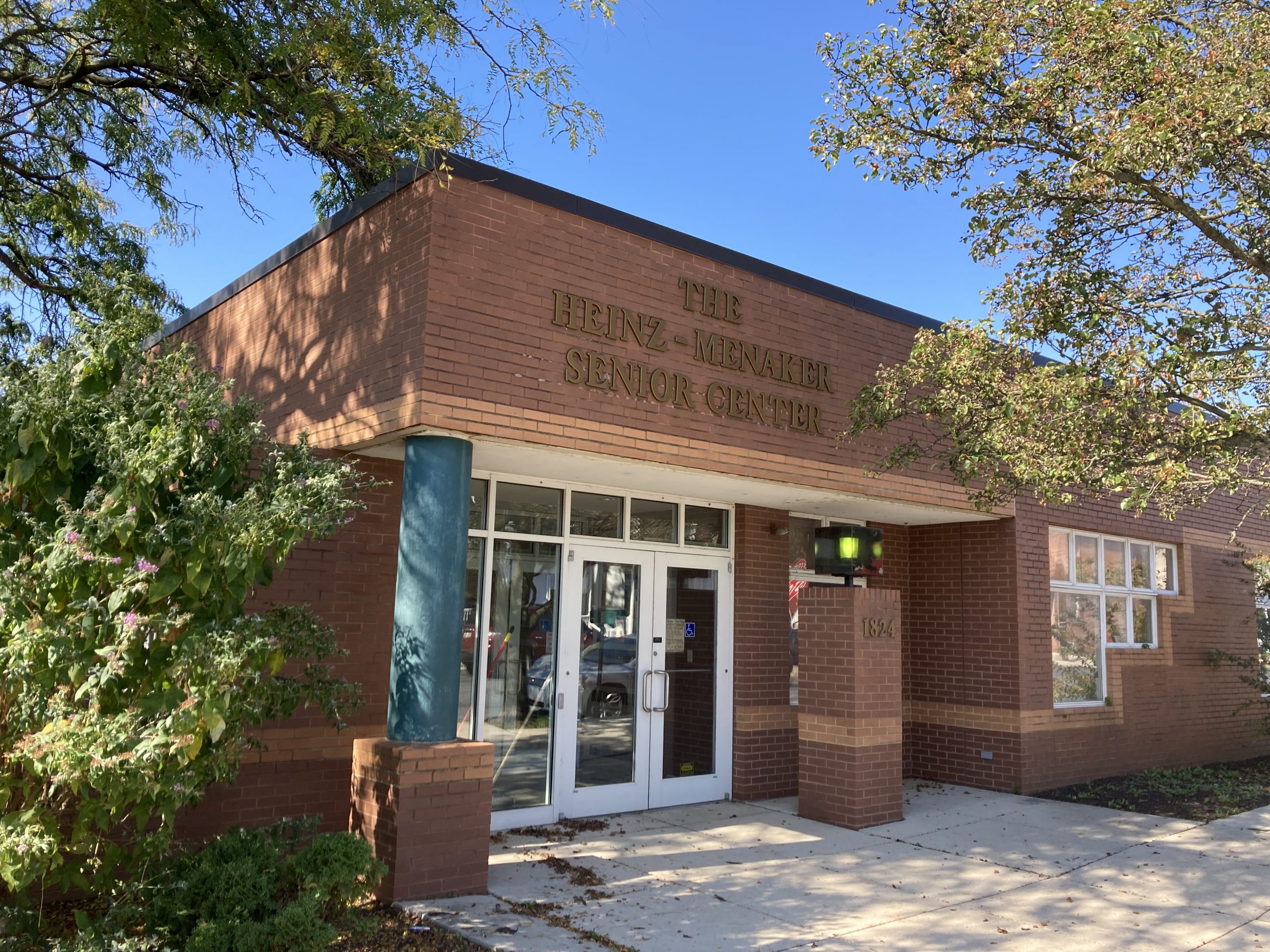
The Heinz-Menaker Senior Center

Harrisburg City Council has extended the city’s tax abatement program for another year, while weighing a plea for financial support for a senior center.

On Monday, City Council approved the extension of the Local Economic Revitalization Tax Abatement (LERTA) program, which gives tax break incentives to developers, while also questioning its success.

“We want time to be able to convene a committee, that will involve council as well, to talk about the LERTA, whether the LERTA has been as successful as we want it to be over the last 10 years,” said Gloria Martin-Roberts, interim director of building and housing development. “We need a year to just have that meeting to give us some time to be able to come up with a better LERTA.”

The city’s program was first approved by council in 2015, giving developers 100% tax abatement for 10 years for residential renovations and construction. Commercial and mixed-use projects were eligible for 50-100% abatement. However, to qualify, the city imposed certain requirements on new construction and commercial buildings, such as employing 15% minority businesses and 15% city-resident workers, and paying prevailing wage.

Over the years, the effectiveness of LERTA has been questioned by developers, some who say the requirements significantly raise the project cost, and city officials who see low numbers of developers erecting new buildings opting in.

At Monday’s meeting, Jason Graves, director of economic development for the city, shared that, in the past three years, only 43 out of 426 eligible projects applied for LERTA.

By extending the program, which was set to expire Dec. 31, officials said the city will have more time to move current applicants through the process, while brainstorming ways to improve LERTA.

Council voted 6-1 in favor of the extension, with council member Shamaine Daniels voting against it.

“There is a lot of work that needs to be done, and we do need the partnerships and it does need to be revamped, and the economic environment we are in is significantly different from the one we were in in 2015,” Daniels said. “So, giving us this time to work on a better bill is more valuable than simply extending something that’s kind of halfway working.”

Also on Monday, several staff and supporters of the Heinz-Menaker Senior Center in Harrisburg spoke during public comment on a city proposal to award the center a significant grant. They explained that, without the money, the center may close.

At a November council meeting, the city proposed awarding the senior center $250,000 of its share of federal American Rescue Plan Act (ARPA) funding that it received as COVID relief.

In March, council voted to move a large chunk of its multi-million grant into the city’s general fund, but earmarked portions of the money for specific uses. One of those allocations was the $250,000 for senior programming.

While the city administration has proposed giving 100% of that allocation to the Heinz-Menaker Senior Center, claiming it’s the only senior center in the city, council pushed back on the idea. Several council members said that they believe there should’ve been a process for organizations to apply for the money. Some council members also suggested that the way the proposal was introduced to council wasn’t fully transparent, as the allocation was lumped into another resolution for budget reallocations.

“This isn’t questions we are asking just particularly of the Heinz senior center, we’ve asked these process questions as far the ARPA money about every program,” said council member Ausha Green.

At that meeting, council members also questioned whether Martin-Roberts, the department head, was on the senior center’s board of directors.

Sheila Dow Ford, speaking on behalf of the center, has since said that Martin-Roberts was previously on the board, but has not been since she has been a city employee.

Ultimately, council decided to remove the allocation for Heinz-Menaker from the resolution.

In a press release following the November meeting, the city held their position that Heinz-Menaker was the only “viable contender” for the money. They stated that, out of four senior centers listed on Dauphin County’s website, Heinz Menaker was the only one certified by the county and city and providing social, cultural and health-related services.

At Monday’s meeting, Les Ford of Heinz-Menaker said that, without the money, the center would not be able to continue operations.

“We don’t have funding to go beyond Dec. 31,” said Ford. “If we don’t get some additional funding from somewhere, by the 31st of December, we are in no position to continue to operate.”

After hearing comments from Heinz Menaker supporters, council member Jocelyn Rawls said that she isn’t against giving the center money, but rather has concerns about how the decision was made.

“It was never that I didn’t think you all deserved funding, that wasn’t it,” Rawls said. “My concern was, why is it that Heinz Menaker Senior Center was the only senior center to get the $250,000? They were going to get all of it.”

If you like what we do, please support our work. Become a Friend of TheBurg!   

Continue Reading