If you share your home with a dog, a cat, or anything in between, the thought of a roof replacement probably raises one question before any other: just how crazy is this going to drive my animals?
It’s a fair thing to wonder. Roofing work is loud. It’s unfamiliar. It’s a full crew of strangers moving around the outside of the house while your pet has no idea what’s happening or why. So if you’ve been googling “will my dog be okay during roofing work” at 11 pm, you’re not being dramatic; just a responsible pet owner.
At Equity Roofing, we’ve helped hundreds of homeowners in Central PA through their roof replacements. So in honor of TheBurg’s special pet edition, here’s what we’ve actually seen work for pet owners during their roof replacements.
Is a Roof Replacement Loud Inside The House?
The most common concern we hear is noise. People picture their home shaking, their dog inconsolable, cats vanished under a bed for a week (or, every pet owner’s favorite, them taking revenge by peeing on the carpet).
It’s true that a roof replacement is not a quiet project. Shingles come off. New ones go on. There’s hammering, and there’s walking overhead, and none of it sounds small from the inside.
What it doesn’t feel like, typically, is a shaking house.
How a Cat Owner in New Columbia Handled Her Roof Replacement
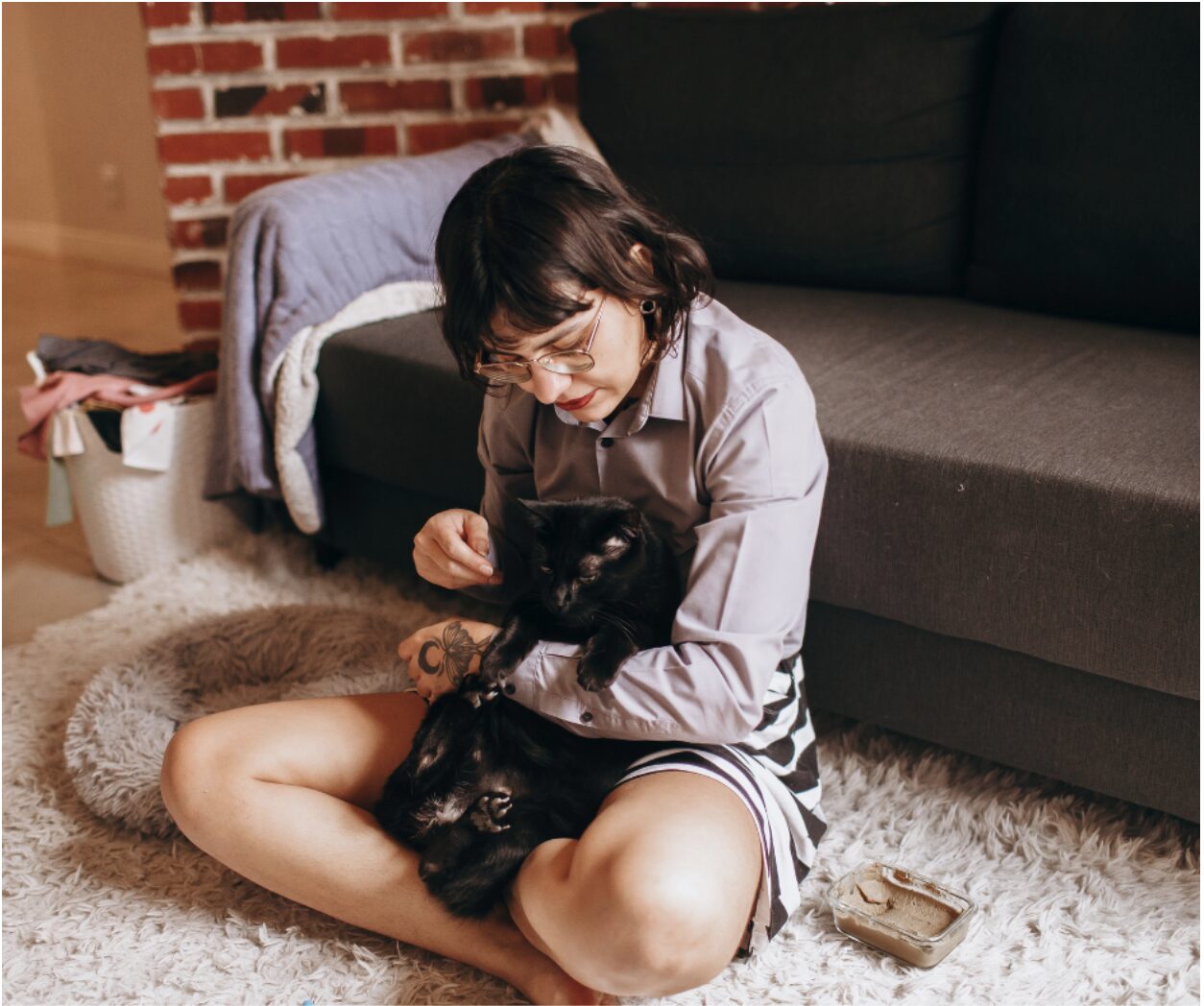
One of our homeowners—a pet owner in New Columbia who was replacing her roof before a home sale—reached out to her Production Coordinator, Ben Stoltzfus, with exactly this question. She’d been advised by her veterinarian to board her cats during the installation, with the impression that the house would be shaking throughout. She was close to booking a $250 hotel room for them.
What Ben told her was something worth passing along: every home is different, and so is every person’s experience of the same sounds. What one homeowner describes as a “shaking house,” another calls “pounding on the roof.” For her two-story home in solid condition, he expected the upper floors would take the brunt and that her cats, tucked away downstairs, would do just fine.
She took his advice. Here’s how it went, in her words:
“I closed off the bedrooms on the top floor of the house so they couldn’t hide in there, and then I made the basement comfortable and inviting. They spent most of the days in the basement—though one of them gradually made his way upstairs and was entertained by the work.”
One cat spent the day watching a roof get installed while the others relaxed. That’s a pretty good outcome.
A Dog Owner’s Roof Replacement Experience, 3 Years Earlier
True to small-town life, when our homeowner called the hotel to make a reservation, the receptionist mentioned she’d had her own roof done by Equity Roofing three years prior. She also had cats and dogs. And she mentioned that everything had been fine during the roof replacement.
That conversation was ultimately what prompted our New Columbia homeowner to give Ben a call and reconsider her options. Pet owners looking out for other pet owners—we love to see it.
How to Set Your Pet Up for a Good Day
Much like roofing in general, there’s no one-size-fits-all answer here. Your dog and your neighbor’s dog are going to have different temperaments and so different experiences when it comes to installation day.
Here are the things that tend to make the biggest difference:
- Put some floors between them and the noise. The upper level of your home is going to be where the sound is loudest. Giving your pet access to a basement, a main-floor bedroom, or any room that puts distance between them and the roof line will help considerably. This is the single most effective thing most pet owners can do.
- Make that space feel like theirs. A familiar blanket, their bed, their food and water, a toy or two. If they have a crate they already feel safe in, now is the time to leave it open and inviting. The goal is to give them somewhere that already smells like comfort before the noise begins.
- Block access to upper floors. Baby gates or simply closing the stairwell door does the job.
- Talk to your vet if your pet is anxious by nature. This is exactly what our homeowner did, and it was the right call, even if the initial advice sent her in a more worried direction than necessary. Her vet ended up recommending a mild sedative for the installation days, and she said it helped a lot. If your pet struggles with thunderstorms, fireworks, or strangers near the house, a conversation with your vet before the project starts is worth your time.
- Let your crew know. A good roofing team will work with you. If you need the side gate left closed, if there’s a dog that will bark every time someone walks by the fence, if you need to step out for a few hours mid-day and want to know the best window—just say so. These things are easy to accommodate when we know about them.
Should You Board Your Pet?
Maybe. It depends on the animal.
For a high-anxiety dog who already struggles with loud noises, boarding for the day or two of the heaviest work might be the kindest choice. Same for a cat who hides for a week after a single thunderclap. You know your pet best.
For most animals, though—especially in multi-story homes—staying home with a little preparation is absolutely manageable.
If you’re not sure, ask your production coordinator before the project starts. They’ve had this conversation before, and they can give you an honest read based on your home’s layout and what your installation will involve.
Customer Service That Extends to Your Pets
The goal of a roof replacement isn’t just a finished roof. It should, hopefully, be a smooth and relatively stress-free experience for the homeowners and pets alike.
If you have questions about an upcoming project and what to expect for your pets, contact Equity Roofing for a free inspection and estimate. We’ll walk you through what the project will look like for your home, and for everyone who lives in it.
Sponsored Content