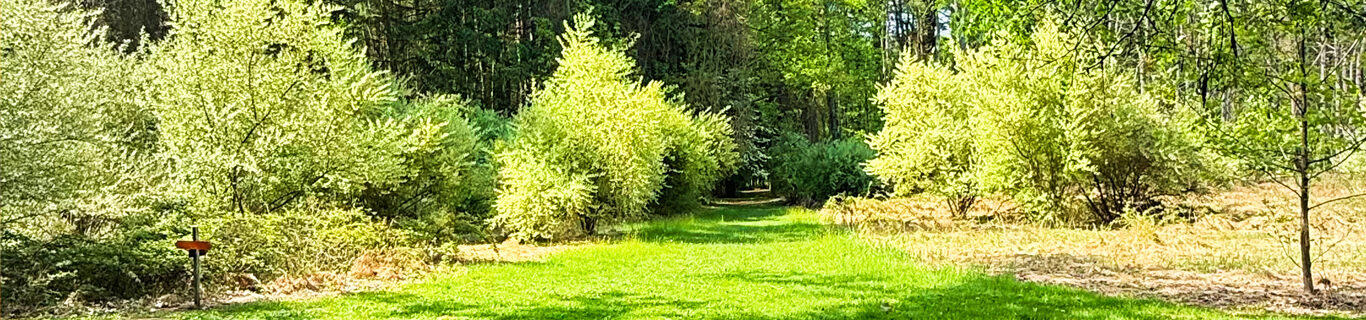
Harrisburg Peace Garden
On a clear summer day in Harrisburg, a walk along Front Street is not just a good way to be active outdoors—it can give the walker a deeper appreciation of the city and its history.
Along this path are memorials, buildings and pieces of the natural world that tell the stories of Harrisburg.
For a 3.5-mile stretch, the Capital Area Greenbelt trail joins up with Front Street through Riverfront Park. The path’s placement near the river and its proximity to the Uptown and Midtown neighborhoods make it a popular walking path for residents.
As you walk south along the path, you’ll see homes and businesses to your left, the Susquehanna River to your right and a pathway framed by tall oaks and populated by geese. The river is an important piece of Harrisburg’s founding, but its own history extends far beyond the city.
In fact, Harrisburg’s blue western border is of ancient origins. Geologists consider the Susquehanna to be one of the oldest rivers on the planet. Some 300 million years old, the river predates the Nile, the Amazon and even the Appalachian Mountains, which it cuts through. At over 400 miles long, it is the longest river on the East Coast of the United States.
As it passes Harrisburg, the Susquehanna reaches about a mile in width but sits at an average depth of only three to seven feet. In this area, the river is popular for fishing and kayaking but isn’t viable for navigation of larger ships.
Water & Gardens
I started my Front Street walk at the Pennsylvania Governor’s Mansion, located at the intersection of Maclay Street. Built in 1968, the 29,000-square-foot building succeeded several previous residences further down the street. For decades, a decorative iron fence surrounded the expansive property, but that recently was replaced by a more formidable “anti-climb” wall following the tragic firebombing of the building last year.
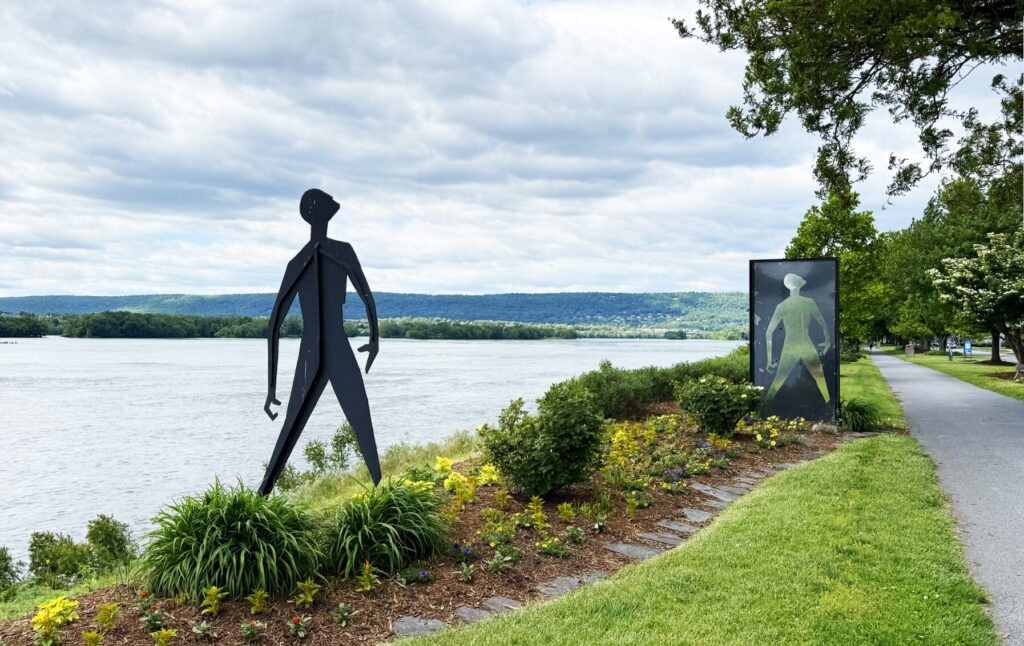
Continuing down the Riverfront Park path, one encounters the Harrisburg Peace Garden, a lengthy series of plant beds and landscaped greenery punctuated by metal silhouettes and cutouts of human beings. The Physicians for Social Responsibility constructed the Peace Garden in 1990 to promote reflection, peace and environmentalism, and volunteers maintain it to this day. Some of the metal figures represent victims of the atomic bombing of Hiroshima; others represent a Native American saying that states, “In all our deliberations, we must be mindful of the impact of our decisions on the seven generations to follow ours.”
As the Peace Garden ends, the path continues with old brick row houses on the left and cherry trees along the path. Further on lies the Harrisburg Sunken Garden and more sculptures. The first sculpture is a memorial to the victims and survivors of the Holocaust. Built in 1994 of stone, steel and barbed wire, the monument was constructed through the efforts of local Holocaust survivors.
Past the gardens, the path crosses busy Forster Street and comes upon a stone brick building at the water’s edge, the Old Waterworks. Built in 1841, the octagonal structure pumped water from the Susquehanna to reservoirs, serving as Harrisburg’s waterworks facility for 130 years.
However, in 1972, water levels rose dramatically as Hurricane Agnes struck Harrisburg. Torrential rain raised the Susquehanna’s water level to nearly 33 feet, 15 feet above flood stage. Among submerged streets and tattered homes, the storm’s impact included extensive damage to the waterworks that put the building out of commission. It later was repurposed into an office building, which remains its function today.
Just past the Old Waterworks is a small, circular plaza with a view of the state Capitol building and a balcony facing the river. It was built in honor of John and Katherine Kunkel, the former of whom was a Harrisburg native and long-serving member of the U.S. House of Representatives. Notably, Mr. Kunkel is memorialized in the form of a statue, sitting on a bench, facing the Capitol, his gaze forever within a newspaper.
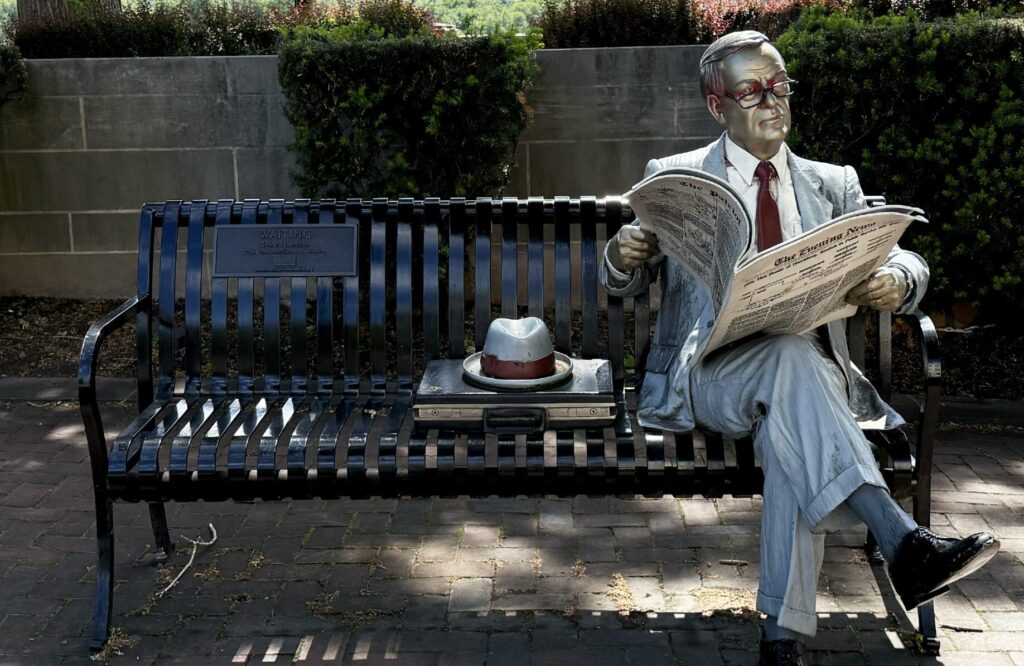
John Kunkel statue
The Walk Continues
From Kunkel Plaza, the green space widens and offers picnic tables and benches. In the middle of the grass is a square, stone monument. Directly below the monument, in a metal cylinder, lies a time capsule that was buried in 1960. It contains a history of Harrisburg to that point, as well as letters from residents written to their descendants.
The letters feature family recipes, descriptions of daily life in Harrisburg, worries about nuclear war and hopes for the future. A copper plaque reads, “Greetings to Future Harrisburgers,” and requests that the capsule be opened in 2060, its contents read and then returned to the capsule, along with contributions from the residents of 2060.
Midway across the wide Susquehanna, accessible via car and footbridge, is City Island. The island once housed camps of Union troops when Confederate forces threatened to invade the area. At another time, it was used for farmland and once housed Harrisburg’s filtration plant, which stored and filtered river water, pumping it to the Old Waterworks.
Today, the island is used primarily for recreation with a playground, volleyball courts and a soccer field. It also features FNB Park, home of the Harrisburg Senators, the AA minor league team for the Washington Nationals. Formerly known as Island Park, the field has been home to Harrisburg baseball teams since 1903 and has seen performances from all-time great players like Satchel Paige and Babe Ruth.
Next to the walking bridge is a wooden sculpture depicting a Susquehannock man and child. The Susquehannock Indians were the original inhabitants of the lower Susquehanna River watershed.
Nearing the end of our walk, Riverfront Park widens again and dips below Front Street, which veers away from the river. Here, a fence surrounds the gravestone of John Harris Sr., an English settler who established a ferry in 1719 near what would become Harrisburg.
Just across the street, catch sight of the Harris-Cameron Mansion, built by Harris’ son, John Harris Jr., and later expanded. A tour of the building, one of Harrisburg’s oldest and most historic, is a fitting endpoint for your walk.
The long stroll, now concluded, contains far more information than could fit in this article. It also cannot tell the whole history of Harrisburg on its own. However, for anyone looking to more deeply appreciate Harrisburg and the people who call it home, a walk down Front Street is a fine place to start.
If you like what we do, please support our work. Become a Friend of TheBurg!