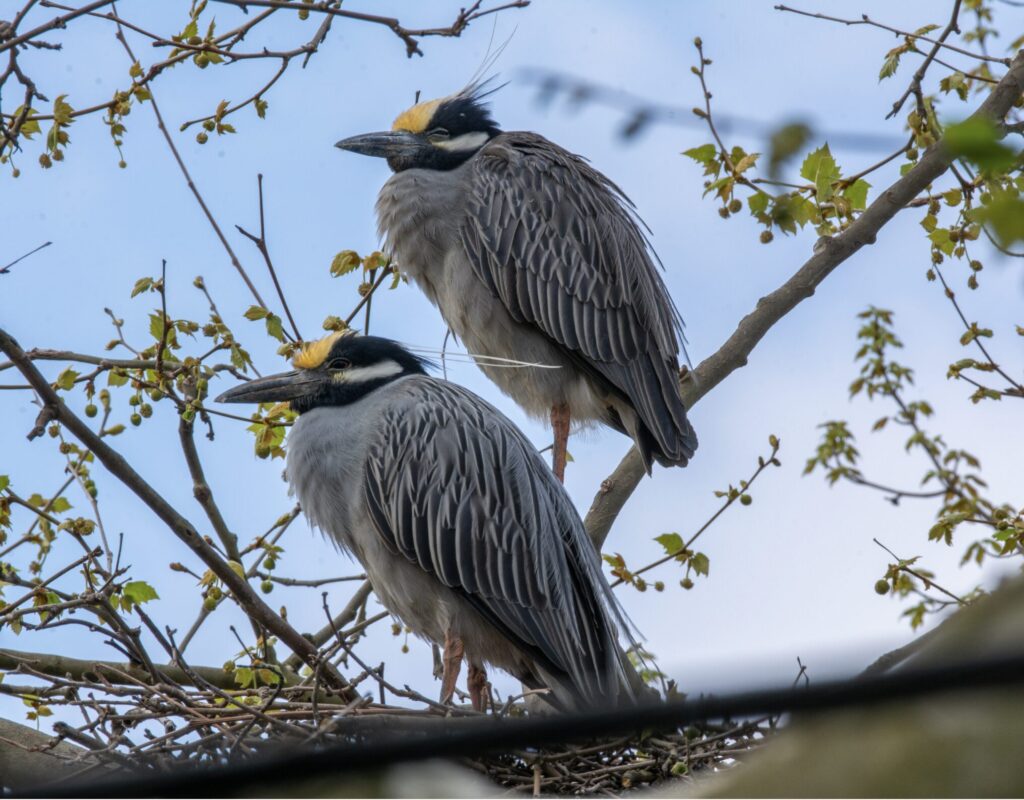
Yellow-crowned Night Herons by Joe Kavanagh
“I just saw two geese going by with seven goslings,” Donna Opuszynski told me when we met at a prime birding spot on Harrisburg’s riverfront—across from the Governor’s Mansion, facing the Susquehanna River.
Harrisburg is now a “Bird Town.” The designation came in 2025, committing the city to promoting community-based conservation, and birders are flocking together to protect their feathered friends.
Feathering the Nest
Opuszynski, a semi-retired massage therapist, has been a birder since childhood in northeast Philadelphia.
“I was just fascinated by their behavior,” she said.
She came to Harrisburg in 2010 and, today, leads some of the city’s Bird Town bird walks.
On a recent, chilly-for-spring morning, we sat on a Front Street bench. Birdwatchers identify behavior and flight patterns as well as markings and calls, Opuszynski explained.
With her eagle eye—I suddenly realize how many bird terms have seeped into our lexicon—she spotted three ducks barely visible in the distance. Probably mergansers, she said, because they were diving.
“They have a serrated bill, and they catch fish,” she said. “They’re fishermen. Fisher-ducks.”
From the front door of her Midtown Harrisburg home, Opuszynski can see a nest woven by a yellow-crowned night heron.
“The ones that everyone complains about,” I said.
“You don’t park under them,” she concurred. “They poop pink. They eat crustaceans.”
Fall and spring amp up the variety as migrating birds follow the Susquehanna River on the way to their destinations. A brown thrasher hung around Opuszynski’s backyard for a week. There have been Eastern towhees and white-crowned sparrows.
“People don’t think, if you have a little 13-by-13 backyard in Midtown, that you get migrants,” she said. “I was getting a common yellow-throated warbler. I miss him.”
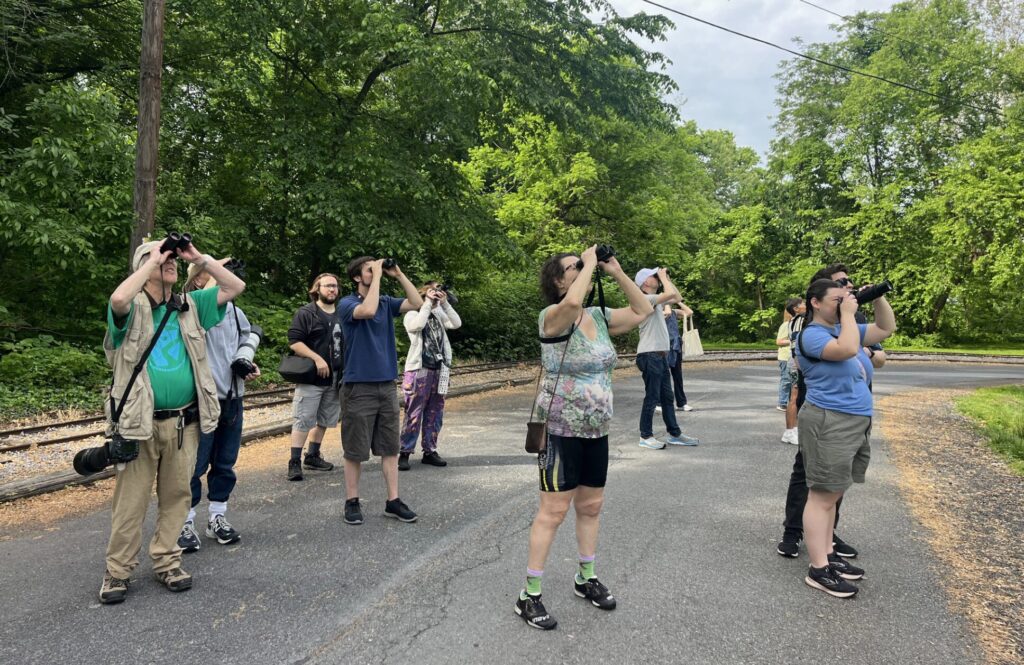
Harrisburg Bird Town and Camp Hill Bird Town Bird & Nature Walk
Bird in the Hand
Why birds? Madelyn Good gets the question a lot.
“Why not birds?” said the city sustainability coordinator. “I think that birds are indicators of climate change because of their migration patterns and breeding habits. You track how those change with the changing environment.”
Harrisburg’s quest for Bird Town designation from the Pennsylvania Audubon Council was underway under Good’s predecessor, Danielle Lewis, when Good joined the city in late 2024. Now extended to about 80 Pennsylvania municipalities, including others around Harrisburg, Bird Town Pennsylvania supports programs and learning that help birds thrive and inspire residents to do the little things that sustain bird life.
Bird Town Harrisburg hosts spring and fall bird walks in city parks. For kids, there are summer-camp bird walks and activities. On June 7, a native plants workshop will offer a tour of Reservoir Park’s new native meadow, with lessons on the plants that feed the insects that mama birds feed to their young.
Good remembers spotting orioles, hummingbirds and bald eagles during a walk in the Capital Area Greenbelt’s Five Senses Garden. On a walk last spring, the experienced birders were excited to see a spoonbill—a rare pink Southern native in the Susquehanna, “which is another indicator of climate change,” noted Good.
“This is a whole world in itself,” she said. “It makes you appreciate what’s going on around you more. I definitely notice that I stop and look up much more often than I used to since I started bird watching.”
Protecting city birds preserves the beauty of nature and its benefits, Opuszynski said.
“If all our trees are gone, we can’t breathe,” she said. “If birds are gone, they’re not keeping populations of other things in check. That’s part of nature. Nature has a certain balance, and we keep interrupting that balance, but it always seems to bounce back.”
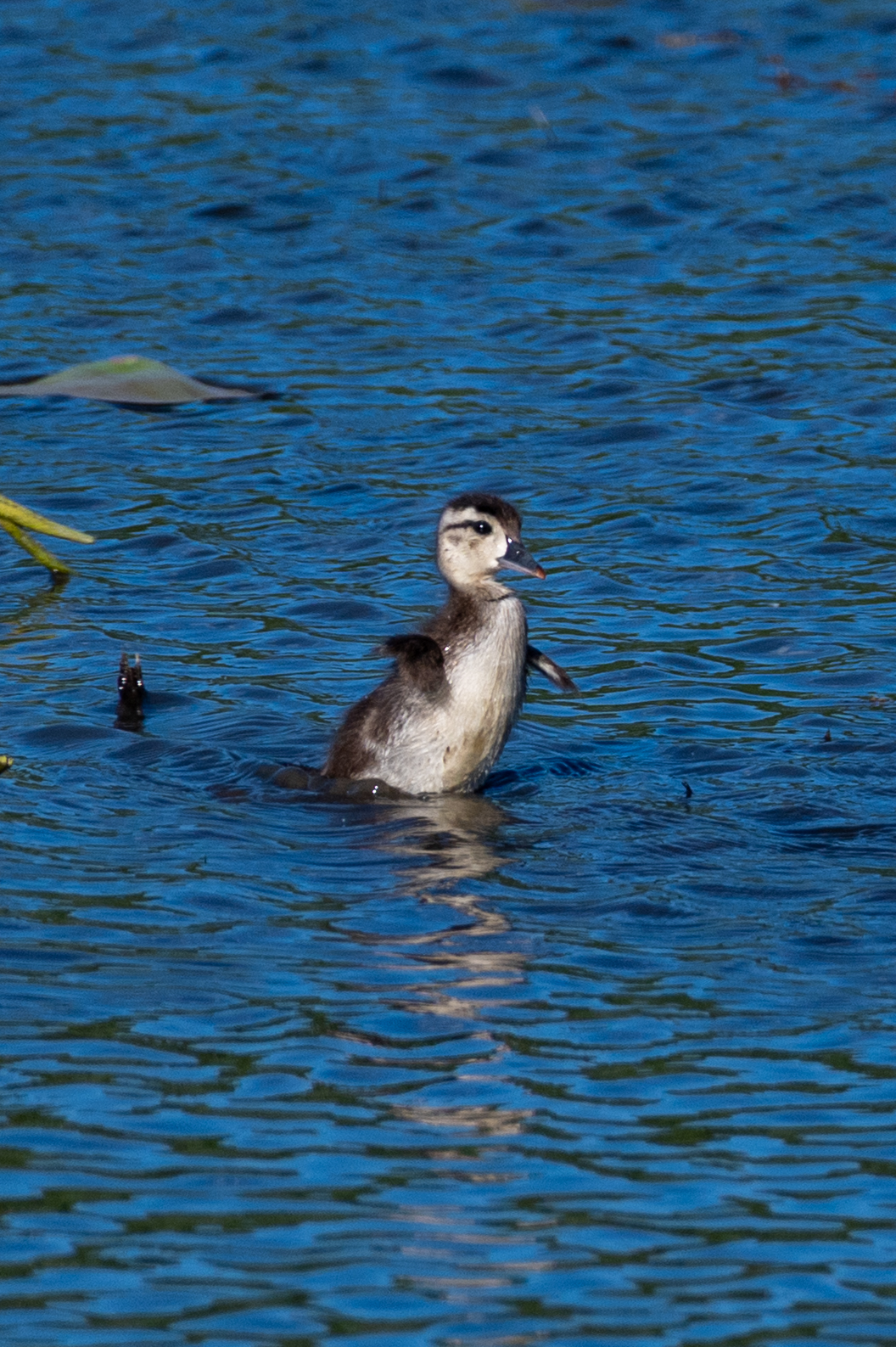
Wood duckling by Joe Kavanagh
Bird’s-Eye View
In 2025, 99 birds died from building collisions in Harrisburg—but that’s just the known count. The actual fatality number could be 10 times higher.
Bird Safe Harrisburg does the counting—and the prevention. Through Bird Safe Harrisburg, an Appalachian Audubon Society program, collision-monitoring volunteers hit the streets of downtown, the Capitol Complex, and the HACC campus every spring and fall from 5:30 a.m. until 8 a.m.
These intrepid early birds (see what I mean?) count and collect stricken birds. Other volunteers drive the survivors to rehab at the West Shore Wildlife Rehabilitation Center.
The data collected can pinpoint the species most likely to collide and the buildings needing attention, said Zach Richard, past president of Appalachian Audubon Society.
“All the live birds, we’re giving them a second chance,” Richard said. “Most suffer internal injuries. A bird may seem like it’s recuperating, but it may very well die later.”
Bird Safe Harrisburg is helping building owners retrofit their windows with specially designed, patterned film that makes the glass evident to birds. Homeowners can buy their own window film or use soap to smudge the reflection—but on the outside. I tried suggesting that cat nose prints made my windows bird-safe, but no go.
Bird Safe also sponsors Lights Out Harrisburg, recruiting more than 50 building owners to dim or redirect their migration-season nighttime lighting. There’s no switch to lower the lights on a city, Richard conceded, but residents, officials and business owners can help reduce upglow on the stars that birds rely on for navigation.
Birds perform “a variety of services” for humans, said Richard. They eat crop-destroying pests. Pollinate crops. Add to soil nutrients with their droppings. Even the scavengers reduce rabies transmission and the costs of carcass removal.
And culturally, birds create communities. One adult in three is a bird watcher, said Richard. More children are getting involved, using the eBird app to track their finds.
“It’s kind of like real-life Pokémon Go,” he said.
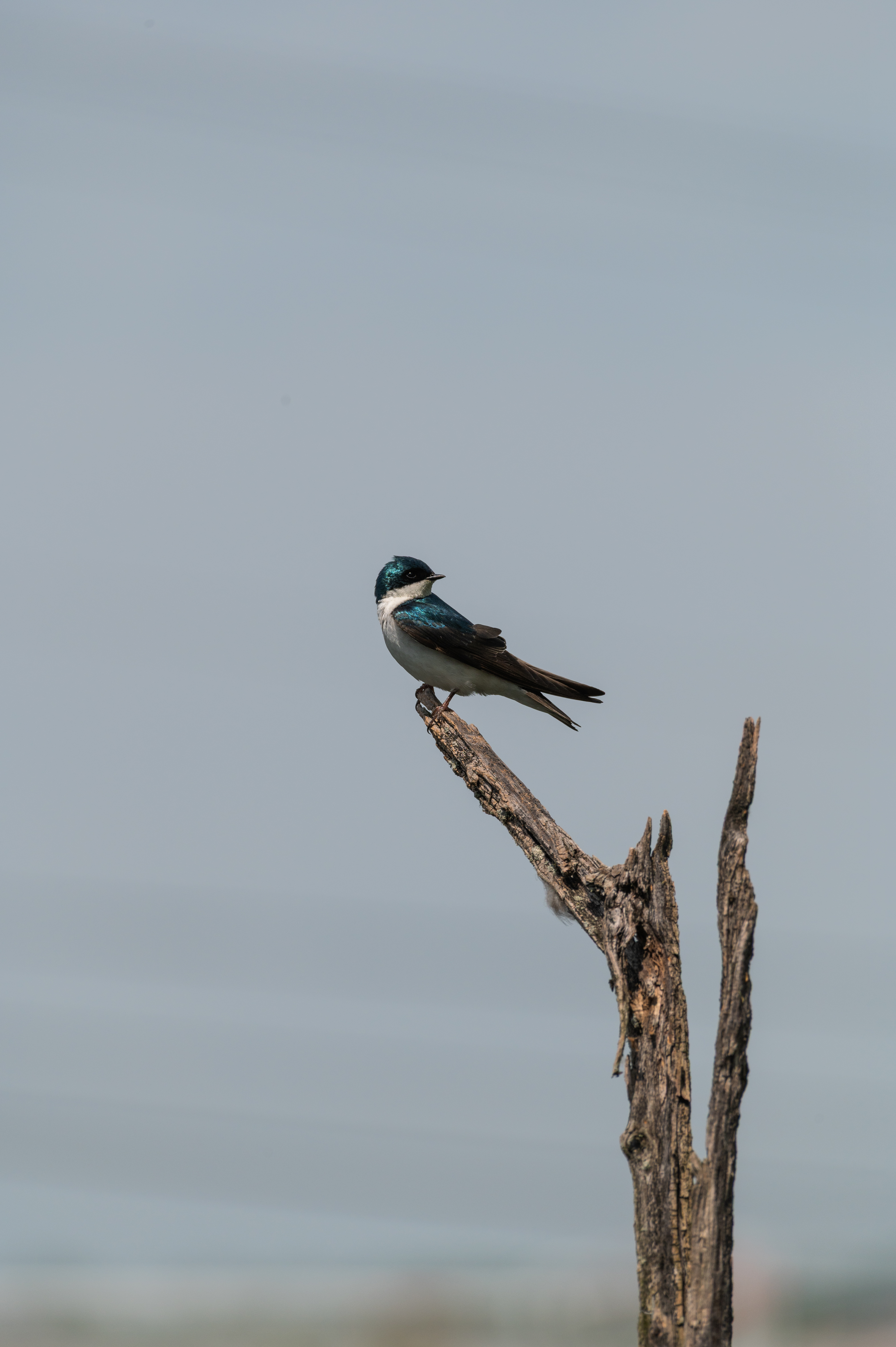
Tree Swallow by Joe Kavanagh
City Birds
There’s a new purple martin house and educational signage at City Island, a gift from the Pennsylvania Game Commission to the city.
Purple martins are migratory, social creatures, said PGC Aviation Recovery Specialist Stefan Karkuff. When their nests disappear, so do their colonies.
Next, Good hopes the PGC can help Harrisburg install nests for chimney swifts, whose natural habitat—chimneys, of course—can dwindle as chimneys are capped.
“They really like cities, especially cities that have those brick-and-mortar old chimneys,” said Karkuff, whose office helps conserve Pennsylvania’s non-game birds. “I would say they’re still common in Pennsylvania, but we want to keep those common species common.”
Harrisburg residents love their birds, he added. As his office recently surveyed the yellow-crowned night herons of Midtown, they heard the complaints, but mostly, residents stepped out to express their appreciation for “these big wonky birds that are sitting up in this tree.”
In all of Pennsylvania, yellow-crowned night herons nest only in Harrisburg. They choose their spots and reappear, or not, in successive years, but as to why Harrisburg, “You’d have to ask the birds that.”
“Why are they nesting in these big sycamores when, if they just flew to the middle of the river, there’s huge sycamores out on islands, and they could have a nice peaceful existence out there?” Karkuff said. “They have the answers, and we don’t, but we’re lucky to have them.”
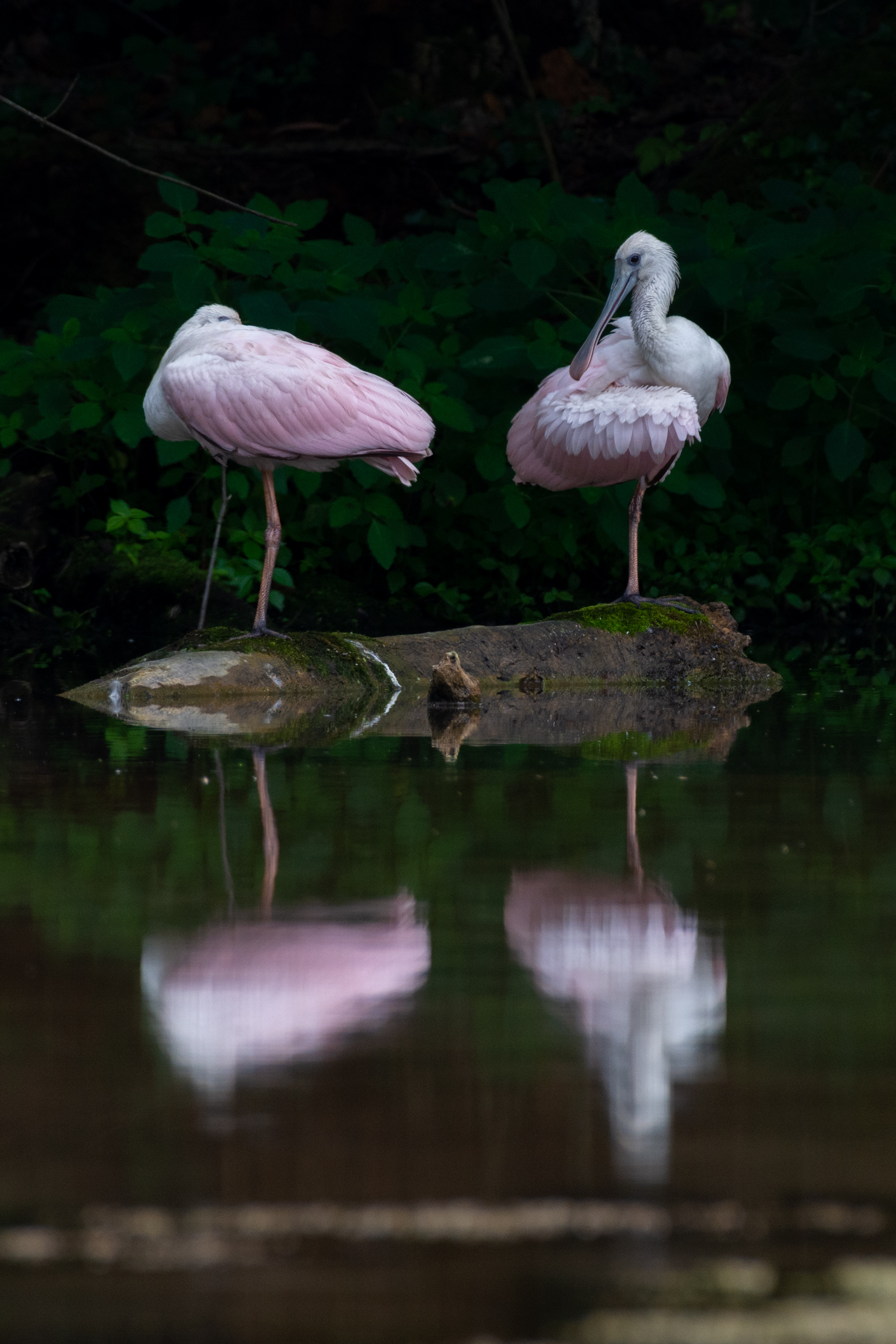
Roseate Spoonbills in Cumberland County by Joe Kavanagh
Happy as a Lark
Birders agree, and I can attest: Cornell University’s Merlin app is the gateway to bird identification. On a beautiful summer evening, I’ll step onto the porch, raise a cocktail in a toast to my late husband, and tap Merlin’s Sound ID icon.
From there, my phone lists the life soaring around me—the robins, gray catbirds, American goldfinches, American redstart, and, yes, chimney swifts.
From there, birding is about learning to listen and watch for yourself, said Opuszynski. As we sat along the riverfront, she singled out the tiny rough-winged swallows, catching bugs as they swooped.
Then she pointed to a nearby robin. Whenever it cocked its head, it was listening for worms.
She remembers a moment in Shipoke during fall migration, when five ospreys were spiraling above.
“They were communicating,” she said. “I think they were saying, ‘Hey, boys or girls, time to go south,’ or wherever they go. It was their last meeting before migration. It was magical.”
And that’s what she loves about birding, “just the sheer joy of seeing them do their thing. And the beauty. Their value. The calm.”
“You sit here long enough,” she said, “and it comes to you.”
Bird Bits
Would you like more information on the events and organizations named in the story?
- Bird Town Harrisburg: Bird & Nature Walk, free, 8 a.m. June 14, Italian Lake. Social media updates @hbg_parksandrec. Registration at Harrisburg.recdesk.com or by calling 717-232-3017 is requested but not required. “If anyone comes the last minute, the more the merrier,” said Madelyn Good, the city’s sustainability coordinator.
- Bird Town Pennsylvania: birdtownpa.org.
- Bird Safe Harrisburg: appalachianaudubon.org/bird-safe-harrisburg-collision-monitoring.
Stories on environmental issues are proudly sponsored by LCSWMA.
If you like what we do, please support our work. Become a Friend of TheBurg!