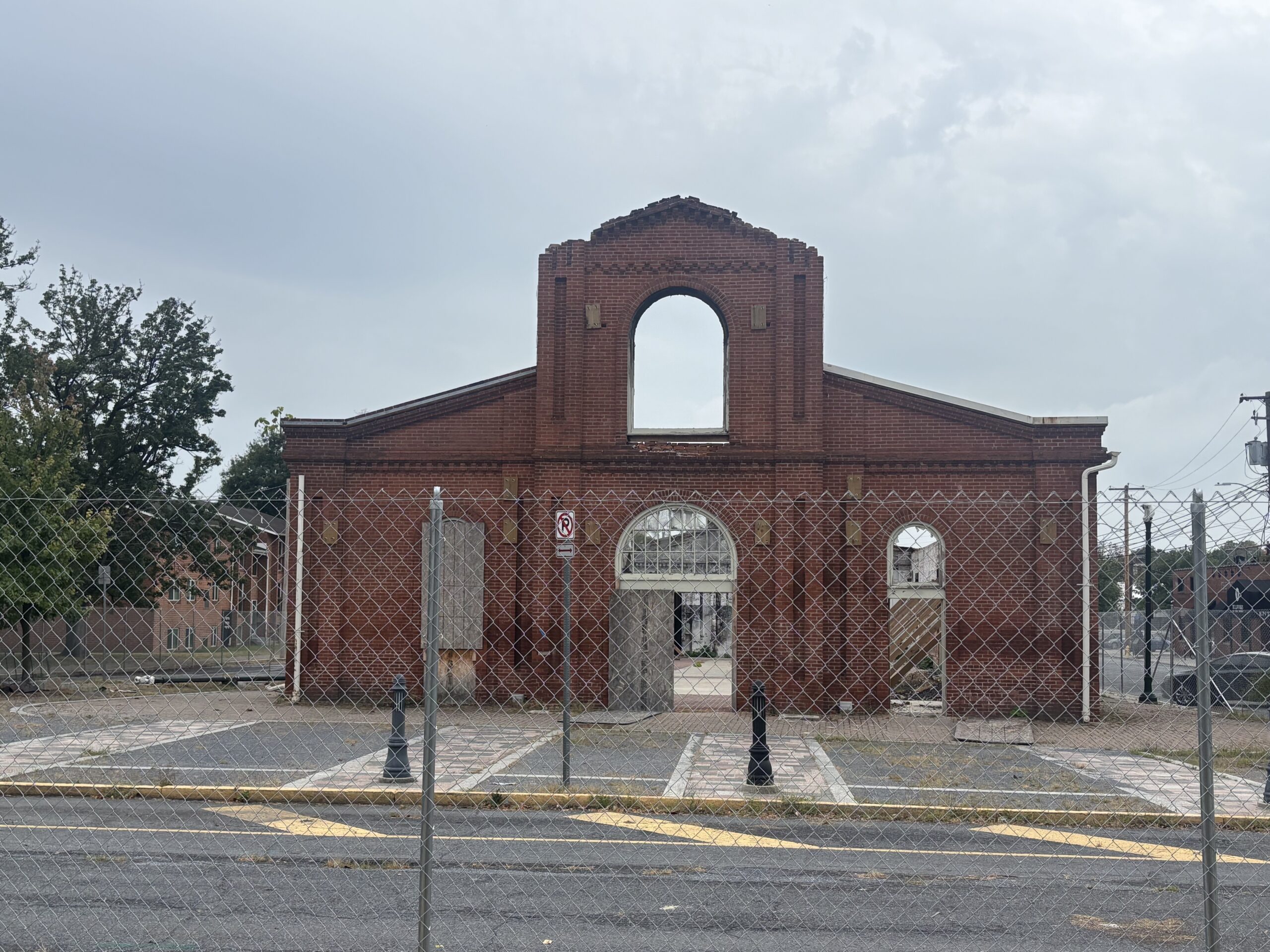
Broad Street Market brick building
Construction is slated to begin on the Broad Street Market in the coming days, and Harrisburg is getting ready financially.
At a City Council meeting on Tuesday, officials shared that the city needs to come up with over $14.4 million to add to the current 2025 budget for the market, as they finalize contractors and prepare for an 18- to 20-month construction period.
Previously, city officials said that they would break ground by Sept. 30 on the rebuild of the market’s fire-damaged brick building, which burned in 2023 and has been closed since. According to Dave Baker, facilities director, the city still hopes that work will begin next week, but the exact timing depends on when contractors can start. However, he said he is hopeful that work will begin around that Sept. 30 date, give or take a few days.
“We are urging them to move as fast as possible,” Baker said.
As Harrisburg finalizes 10 of the 11 bid packages for things like demolition, construction, plumbing, etc., for the market rebuild, city officials asked that council sign off on allocating more money in the city’s budget to pay for and get that work started.
The only bid package that did not initially receive a response was for site prep work, which was put out for bid a second time.
In total, Baker and city finance officials have estimated that the Broad Street Market rebuild of the brick building, all-in, will cost around $23 million. So far, the city has spent about $3.3 million on the market, for things like selective demo and payments to construction manager Alexander Building Construction Co. and architect Murphy & Diffenhafer Architects.
As Harrisburg’s 2025 budget stands, the city has about a $14.4 million hole to fill to get the budget up to $19.1 million, the estimated remaining expense of the project, which allows them to finalize construction contracts. That money would then be spent over the course of the project.
At Tuesday’s meeting, Accounting Manager Brian McCutcheon explained that the city has proposed shuffling unspent money from other city budget funds, such as the state grants fund, capital projects fund and the city’s fund balance, to the general fund for the market.
What construction will I see?
If city council approves the budget reallocations to fund the market contracts, people can expect to see demo work begin first by contractor Power Component Systems at a cost of $425,673.
Baker said that, while demo was done previously to remove fire-burnt debris and decay, this round of demo would focus on structural stabilization. Some small portions of the brick walls may need to be taken down and re-bricked, and the entire building will be repointed. The building’s concrete foundation will be rebuilt as well.
Crews will also work on underground utilities, updating the electricity and installing a new, large grease interceptor tank that will service all vendors.
The roof will be torn out, down to the rafters, and in some parts, to the foundation walls, and a new roof will be constructed. All new windows and doors will be installed as well.
Baker said that the city is pushing to have contractors work throughout the year, even during the winter, weather dependent.
The temporary market tent will remain open through the entire construction process.
Some council members asked Baker why work on the physical structure has not begun yet, to which Baker replied that the behind-the-scenes process has been extensive.
“We’ve been planning everything out very strategically, and unfortunately, it has taken a long time, and I can tell you, my office has been working every single day on the Broad Street Market,” he said. “A lot of the time that’s been taken so far has been put into design and thinking out each step that needs to happen to keep all the governing bodies happy with what we’re doing and to really make the construction process happen the right way the first time and not have to go back to the well to ask for additional funds.”
Outside of a few contracts that are already funded, all other work cannot proceed until council signs off on the fund reallocations.
But what about insurance money from the fire?
Officials said that Harrisburg has already received about $4.9 million in insurance funds, but doesn’t know how much to expect in the future. Insurance money that the city gets, besides an up-front lump sum following the fire in 2023, is reimbursable, meaning that Harrisburg has to expend the money for project costs first and then submit claims after and hope for reimbursements.
“The business office is going to work very hard, with our outside entity, to get and maximize that return. We really won’t know, though, until we’re in the weeds on that, until we’re actually spending the money on those particular bills,” said City Solicitor Neil Grover.
While Harrisburg has a $140 million insurance cap for all of its buildings in the city, according to Baker, he’s not sure how much the market, one building, can receive.
Baker emphasized that the project cost is an estimate from construction manager Alexander Building Construction Co., which they determined before all of the bids were received from contractors. And, now that most bids have come in, the estimate was basically spot on, Baker said.
The $14.4 million would go into the 2025 budget, but wouldn’t all be spent before the year’s end. McCutcheon said that, while all of the money needs to be allocated upfront to finalize construction contracts, only about 40% would be spent in the next three months. The remaining 60% would roll over into the city’s next two years’ budgets for spending.
Where’s the city’s money for the project coming from?
Harrisburg proposed taking $9.1 million from the city’s fund balance, but again, not all of that would be drawn down at once. They also discussed using the $1.3 million of interest that has accrued from money made available from Harrisburg’s federal American Rescue Plan Act (ARPA) dollars, millions of which sit in the city’s state grants fund. Grover explained that the use of that interest money is allowable by the federal government.
Harrisburg also received $1 million from the city’s portion of Community Development Block Grant (CDBG) money from the U.S. Department of Housing and Urban Development. Another $825,000 is expected to come from revenue from hotel taxes and PA street cut fees.
All of this money funds the work for the market rebuild and “gets those contracts signed,” Grover explained.
The city has not yet released information on the bulk of the contractors chosen for the job, as many are still being finalized.
Council moved the reallocation resolution to its next legislative session, which is scheduled for Oct. 14, but discussed potentially hosting a special legislative session on Sept. 30 instead to vote on it. That has yet to be scheduled.
If you like what we do, please support our work. Become a Friend of TheBurg!