
Purple Dead Nettle. Photo courtesy of Debbie Naha-Koretzky.
It’s going to be hard to look at the dandelion flowers growing in my yard with disdain again after exploring with foraging expert Debbie Naha-Koretzky, who gives those pesky weeds a whole new image.
I no longer see them as weeds to mow over or something that turns into fluff that children love to blow into a breeze while making a wish.
Naha-Koretzky, who grew up in the nation’s most densely populated city (Union City, N.J.), never set out to be a professional forager. But after someone told her the unexpected fact that she could eat the dandelion flowers sprouting on the campus lawn at what is now New Jersey City University, where she was studying biology, it piqued her passion. She wanted to learn everything she could about edible plants—and that included making dandelion flower fritters.
“There’s something satisfying about eating food from the wild. I guess it brings us back to our prehistoric roots,” said Naha-Koretzky, who has worked as a nutritionist, a dietitian supervisor and a biology teacher.
Now decades later, she is known as the “Wild Edibles Lady” and lives in the Harrisburg area. The author of “Foraging Pennsylvania and New Jersey,” which was published in 2021, she leads foraging tours and education programs around the area and state.
The book describes the plants, their seasons, edible parts, nutritional information, fun facts and problematic lookalikes, along with photos to help with identification. It also includes recipe ideas. While the recipe for dandelion flower fritters is not included, one for dandelion strawberry salad is. Naha-Koretzky said the dandelion root also can be chopped and roasted to create a super-nutritious, coffee-like drink.
I have always wanted to know how to forage, but I’ve been afraid I might munch on something poisonous and keel over dead. I grew up roaming the forests of central Pennsylvania on Sunday family walks in the woods. For two of my teenaged summers, I worked as a Youth Conservation Corps member, clearing trails and building jack dams. Despite chewing on teaberry leaves that I could identify, I was afraid to sample any of the other flora and fauna—until my springtime walk along the Appalachian Trail with Naha-Koretzky.
Even before we had left the parking area, I learned from her that we don’t have to leave our yards or our cities to find edibles. Much more than dandelions flourish in our urban environment, but venturing into nature can reveal so much more. Cautions for urban foraging include avoiding anything that has been sprayed or treated or in areas that might have pet droppings.
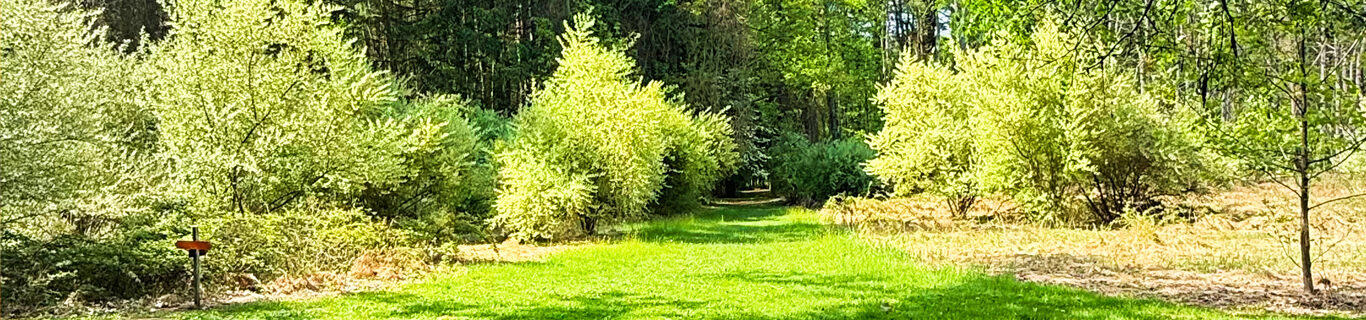
On our walk, we saw dandelions, winter cress, garlic mustard and purple dead nettle before we’d even made it to the trail. From there, we admired a shagbark hickory tree, cleavers, spring beauties, ground ivy, Virginia bluebells, mayapples, trout lily, multiflora rose, violets, spicebush, teaberry or wintergreen and chestnut oak. That was quite a variety for a short, early spring walk.
We came back empty-handed, which had been the plan as early growth was sparse, and a rule of foraging is that “if a plant isn’t plentiful, leave it, and don’t disturb it,” Naha-Koretzky said. “If you find a good-sized patch, take only a small amount. It shouldn’t even be obvious that you’ve been there. But I guess we can make exceptions for invasive species. Eat the garlic mustard!”
Much to Know
Naha-Koretzky recommends, if possible, finding an experienced forager to help with identification at first.
“Safety is really important,” she said. “I always tell people, don’t rely on just one person, book or website. Check multiple sources. Buy at least a few good field guides. Don’t trust apps.”
It’s also important to know the rules for foraging in each area—and they won’t always be posted. It’s still the forager’s responsibility to check whether foraging is permitted by searching online or with townships, counties, states or parks. Some areas only allow foraging non-native plants.
Pennsylvania state parks allow harvesting of edible fruits, nuts, berries and fungi. Pennsylvania state forests allow edible wild plants or plant parts to be foraged. If a species is rare or endangered, it should not be touched. Foraging is only permitted for personal consumption.
After Naha-Koretzky told me about the spring beauties we found—she says the starchy roots look somewhat like little potatoes also known as “fairy spuds” that can be boiled, roasted or eaten raw for a deliciously sweet and chewy treat—I put that on the list for my first solo foraging expedition.
Mayapples also make the list even though they could be dangerous. The umbrella-shaped plant lies on the forest floor, and all parts of it except the ripe fruit are poisonous. Some Native American tribes used the root to commit suicide, she said. The flesh of the ripe yellow fruit still tempts me.
We didn’t see the edible native plant at the top of my list—the pawpaw. But Naha-Koretzky said that pawpaw trees grow throughout the Harrisburg area, sometimes by water, sometimes on wooded slopes. The largest edible fruit native to North America, the pawpaw is called the “Susquehanna Banana” by many in the area because of its tropical flavor. Pawpaws ripen in late summer into early fall and resemble (and taste like) mangoes.
Among the places that Naha-Koretzky offers educational programs is the Ned Smith Center for Nature and Art in Millersburg, which recently received a state grant that it will use to establish Pennsylvania’s first “Wild Mushroom and Conservation Area” on 72 acres of the center’s lands over the next two years. They will continue to develop more fungi educational programming and start a mushroom club.
“Our ‘Fungi Foray’ is a great program for anyone already interested in mushrooms or anyone who’d like to learn more,” said Emily Rosmus, the center’s director of educational programming.
That program is led by Rosmus and Jerry Hassinger, a long-time volunteer and retired Game Commission biologist and will be held in September.
“Whenever I forage something new, I make a point of cooking up a small portion for myself and my husband, eat that, wait a few hours or overnight, and if neither of us have a negative reaction, then we will go ahead and use it,” Rosmus said.
For those who already feel competent identifying edible mushrooms and plants, the grounds of the center are open for foraging, Rosmus said. The center has more than nine miles of marked trails across 530 acres of property.
For her part, Naha-Koretzky has several events slated for June, including at the Nature & Arts Festival of the Ned Smith Center on June 21 at MYO Park in Millersburg, where she will give a talk and a walk. She also has an event sponsored by the Alexander Family Library in Hummelstown on June 25. On July 22, she will give a slideshow and discussion on Wild Edible Plants at the Olewine Memorial Library in Harrisburg.
For more information, visit Naha-Koretzky’s website at www.wildediblesnjpa.com.
For more information on the Ned Smith Center, visit www.nedsmithcenter.org.
Correction: To readers who saw the print version of this story, the photos of mushrooms that ran with it were mistakenly credited to Debbie Naha-Koretzky, but they were taken by Emily Rosmus of the Ned Smith Center. The mushrooms pictured are not edible.
If you like what we do, please support our work. Become a Friend of TheBurg!