Tag Archives: Cornerstone Coffeehouse

This Song Is Your Song: Gather round to hear the music of protest.

Doug Morris

Doug Morris

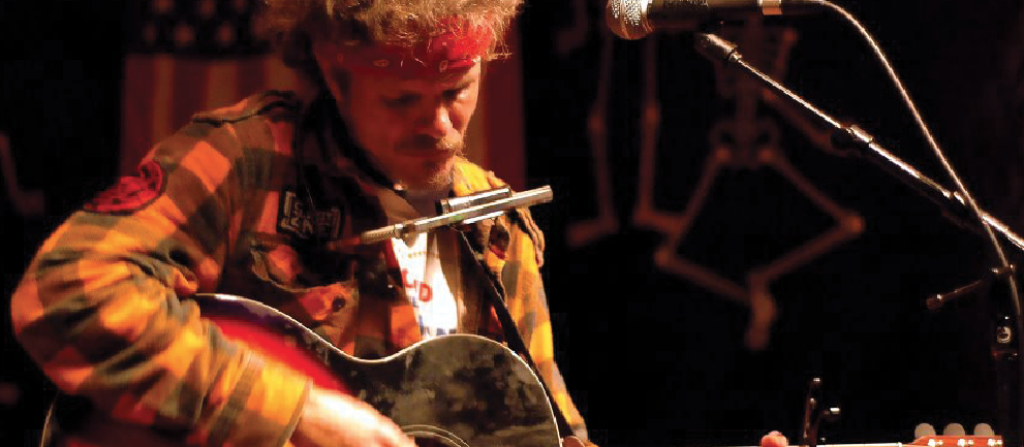
Doug Morris started bringing evenings of protest music to the Cornerstone Coffeehouse in Camp Hill about four years ago.

First, he played for Woody Guthrie’s 100th birthday, a celebration of the iconic songwriter/performer who wrote, “This Land is Your Land.” He then started organizing around different themes and songwriters such as Pete Seeger, Utah Phillips, Bob Dylan and Bruce Springsteen.

“Pete Seeger offered the following: Some music can help us escape our troubles; some music can help us understand our troubles; and some music can help us overcome our troubles,” Morris said. 

Morris, who plays monthly at Cornerstone, attempts to provide “some of each.”

He next will perform at the popular Camp Hill café on Feb. 18, holding a “Woody/Bruce Heavyweight Championship,” during which he’ll pair Guthrie and Springsteen tunes. He’ll also offer commentary about how both songwriters, though very different, have sought to raise public consciousness about struggles for social justice and against inequality.

“So, Woody’s ‘This Land is Your Land’ could be paired with Bruce’s ‘This Hard Land’ and Woody’s ‘Bound for Glory’ with Bruce’s ‘Land of Hope and Dreams,’” said Morris. 

Audience members are encouraged to sing along at the free event.

For his day job, Morris is a professor at West Chester University, and, before that, played jazz guitar and studied with Philly guitar legend Joe Federico. Morris also has written scholarly papers about the history of protest music and has done studies on the connections between progressive politics, radical music and social transformation.

Morris has been captivated for years by Guthrie’s humanist politics and finds his music gripping and transformative. As a prolific songwriter, a satirical cartoonist and newspaper columnist, Guthrie turned complex ideas about democracy, human rights and economic equality into simple drawings, stories and songs that all Americans could embrace.

His catalogue of songs includes favorites such as “Pastures of Plenty,” “Goin’ Down the Road Feeling Bad,” “Union Maid” and “Bound for Glory.” His most famous song, “This Land is Your Land,” was written in 1940 as a socialist response to Irving Berlin’s “God Bless America.” Guthrie wanted to write about the Depression-era America he knew, so he wrote lyrics addressing liberty, individual rights, poverty, freedom, equality and property ownership.

“The song should really be heard as a rousing anthem for working people—i.e. most of us,” Morris said.

According to Springsteen, it’s “the greatest song ever written about America. It gets right to the promise of what our country is supposed to be about.”

Many Springsteen fans may not recognize how politically informed his music is or that he considers that his work “has always been about judging the distance between American reality and the American Dream,” Morris said. Throughout the years, Springsteen has become progressively more vocal about social injustice and inequality, which, he believes, get in the way of making America great.

Springsteen’s contributions were recognized this past November when President Barack Obama awarded him the Presidential Medal of Freedom. In his remarks, Obama called Springsteen “a songwriter and a humanitarian” and said, “Through stories about ordinary people from Vietnam veterans to steel workers, his songs capture the pain and the promise of the American experience.”

“Woody and Bruce are among the world’s preeminent protest songwriters as both are informed by an expression of workers’ struggles against exploitation,” said Morris. “Their work is grounded in and alive with history.” 

Their music often addresses such issues as the horrors of war, social marginalization and economic inequality.

“They’ve demonstrated an engagement with our most serious social crises and challenges,” Morris said. “They are critical and hopeful observers who have been able to interject into their songs our human capacities for empathy, creativity, solidarity and love.”

Morris performs monthly at Cornerstone Coffeehouse, 2133 Market St., Camp Hill. He’ll perform the “Woody/Bruce Heavyweight Championship” on Feb. 18 at 7 p.m. He’ll also present the show at Crave and Co., 614 N. 2nd St., Harrisburg, on Feb. 17 at 6 p.m. For more information, visit www.thecornerstonecoffeehouse.com or www.craveandco.com.

Author: Jess Hayden

Continue Reading

From Sky to Sea: Despite retirement, former Camp Hill Mayor Lou Thieblemont moves full-steam ahead.

Screenshot 2016-02-26 16.38.53Most mornings, when he’s on land, that is, you’ll see Lou Thieblemont holding court at a small table in the dining area of Cornerstone Coffeehouse.

That’s where I typically find him, regaling his breakfast mates with tales of his life as a pilot, his time as Camp Hill mayor and, for the past few years, his adventures on the high seas.

Some people refer to Thieblemont as Camp Hill’s renaissance man, but I don’t know. I just find it fascinating that he’s been able to squeeze so much living into one lifetime.


Taking Off

Thieblemont grew up in New York, went to Catholic high school and attended the New York Institute of Technology, graduating with a degree in communications and broadcasting.

“In high school, I received my pilot’s license at the tender age of 17 and went on to get a commercial pilot’s license and flight instructor’s rating,” he said. “It was kind of funny because I couldn’t drive a car in New York until I turned 18. So, I would need friends to drive me to the airport, then I could give them a plane ride.”

Thieblemont graduated from college in 1967, intent on going into broadcasting, but he continued to teach flying. One day, he saw a brochure announcing that TWA, United and Pan Am were all recruiting pilots. He applied to each of them and was offered employment by all three. TWA presented the earliest class date, so he took a job there in May 1968.

In his long pilot’s career, he had many unique experiences, but one especially stood out.

“The shah of Iran was building up his domestic cattle herd so he contracted with TWA to bring cows to Iran,” he said. “We flew Boeing 707 cargo planes twice a week from the U.S. to Iran with 88,000 pounds of pregnant Herefords.”

He laughed.

“When we arrived in Tehran at nine in the morning, it was already hot so we had to offload the cattle quickly so they wouldn’t die. When we opened the cargo door, hundreds of gallons of cow urine poured out. After the cows were off the plane, we hosed out the cargo area and loaded 88,000 pounds of strawberries and flew them to Paris.”

Soon, the overwhelming aroma of strawberries filled the cockpit air and, to this day, he said, the smell of strawberries brings back one of the strangest days of his life.


Mr. Mayor

Thieblemont flew for TWA until American Airlines bought the carrier in 2001. After four years with American, he retired in 2005 with almost 38 years of experience.

A long-time Camp Hill resident, he had made a name for himself in the borough through volunteer work, which included developing the police department website. Then the position of mayor came open.

“The job of mayor became available due to some mistakes by the incumbent,” he said. “Six of us applied for the remainder of his term. The interview process narrowed the field, and finally I was appointed to serve until the next election. At that time, I ran for the position and was elected to finish the remainder of the four-year term.”

As the full-time mayor of the borough of almost 8,000 residents, Thieblemont had “a multitude of responsibilities.”

“I set up a formal welcoming program and tried to personally meet and greet all new residents to the borough,” he said. “I also started a recycling center for things such as batteries, computers, etc. Then I developed a group of volunteers who would be on call to cut grass, shovel snow or run errands for seniors and disabled folks.”

Of course, he had more mundane mayoral duties, as well. He performed weddings and presented awards at various events and ceremonies. He acted as the borough ombudsman, giving speeches and making presentations. He even got some national publicity when, in 2008, he switched political parties so that he could vote for future President Barack Obama in the Democratic primary.

In 2009, having completed one full term, he decided it was time to move on. So, he didn’t run again.


At Sea

Shortly after retiring as mayor, Thieblemont and his wife took a 12-day cruise to the Caribbean. As they were leaving Baltimore harbor, the cruise director made an announcement that the person scheduled to make presentations was sick.

“Since I’d given a number of talks on a variety of subjects to groups in central Pennsylvania, I offered to substitute with talks on astronomy and Antarctic exploration,” he said. “The cruise director was thrilled. So, I put together a quick PowerPoint presentation, since I didn’t bring any of my computer talks with me.”

That evening, Thieblemont presented his talk in one of the theaters, and the house was packed. After the talk and Q&A, the cruise director told him how much he had enjoyed the presentation and asked him to do others.

“I have been giving talks on various cruise ships ever since,” he said.

So, when you take your next cruise, don’t be surprised to see a picture of the former mayor in the brochure, with a blurb that reads:

“Join the M/S Paul Gauguin’s cruise as a true Renaissance Man offers a series of lectures on topics as diverse as aviation, astronomy, Antarctic exploration, optical illusions and computer graphics.”

That’s just Camp Hill’s Lou Thieblemont, enjoying his post-, post-retirement.


Continue Reading

Open Mic Magic: Veteran hosts explain how to kill it on open mic night.

Screenshot 2014-12-29 09.11.07So you’ve got a guitar, a ukulele, an autoharp. You can play and sing reasonably well at the same time. Friends say you’re talented. What next? Put a band together and struggle, realizing you weren’t really all that prepared?

You could do worse than getting a few songs together and heading to an open mic event. And, luckily, the Harrisburg area has more than a few that are well-run, giving a chance for amateurs young and old to hone their chops, gain confidence and take part in the rich music scene this area has to offer.

There are, though, a few rules to follow, along with some best practices. So, we asked for advice and observations from the hosts of some of the best events in and around Harrisburg. Before you take your star turn, listen to the sage advice offered by veteran hosts Mike Banks (HMAC Stage on Herr), Justin Clauser (Bube’s Brewery), Janelle Eurich (Holly Inn), Phil Freeman (The Cove) and Jonathan Frazier (Cornerstone Coffeehouse).

Play it like you mean it

Of course, you are nervous—who wouldn’t be? But, if you do one thing right, do this: play your songs like you mean them. If you’ve practiced enough, listened to yourself, prepared your gear, gotten comfortable with the idea that you will likely make a mistake, there is no point being sheepish, timid or shy.

Banks: “For many folks new to open mic, there’s a huge disparity between what they’re accustomed to in their living room and what it’s actually like on an amplified stage. While it may be appropriate to be delicate and quiet when rehearsing at home, the stage is no place for such subtlety. Microphones and monitors only work well when folks put as much sound into them as possible. Dig in—physically and spiritually.”

Clauser: “What makes a good open mic performance is no different than any other performance. At the heart of it is good music. It also helps to have good stage presence and connection with the audience.”

Eurich: “Have fun. Your natural feeling for the song should be what is portrayed. We are not recording you. You are not being paid. Relax.”

But don’t make it about you

This is not the place to exorcise your childhood demons or get over a heart-trampling breakup. If you have songs about them, that’s one thing. But do not take half your time explaining the gory details of your tumultuous life. Let the songs do it, and let the audience connect to them in their own way. Good songs and good performances connect, almost all the time. Don’t force it.

Banks: “Generally speaking, an audience is much more likely to be interested in your stories after you’ve gotten their attention with your music, not before. But, either way, don’t squander away precious stage time with banter.”

Know the room, know the audience, know the host

It’s always a good idea to be a spectator before being a performer. Go to the venue without your instrument and observe. What does the audience respond to? Is it too big a place for you to feel comfortable? Is it a bar or a coffee house? There will be a difference. Most importantly, introduce yourself to the host and get to know how they like to run things. Get any technical stuff out of the way before you show up to play. Does your guitar have a preamp? Do you know what one is? Watch and be supportive of whomever is playing.

Banks: “Do your homework: know what your gear is and how it works before you show up—and make sure your instrument is strung, in tune, and has working batteries before you get on stage. While I’m happy to help folks fine-tune technical details on the fly, the stage is no place for Audio 101.”

Freeman: “From folk rock to country to spoken word, anything and everything is welcome as long as it doesn’t make the bartender’s or the patrons’ ears bleed. Definitely make the effort to connect with the host. People who do this are at the top of my ‘awesome’ list, so this is a priority.”

And know your songs

This should be a no brainer, but it deserves emphasis. Do not think a song you finished this afternoon is going to be one that connects. It might, but probably not. Few performers, even seasoned ones, can bluff their way through a set without looking awkward. Play your songs to the mirror, to friends, your cat. Be aware of your pacing because you will probably do them faster onstage. And make sure the arrangement you are going to play actually works.

Frazier: “So many people try to play full-length versions of songs, totally neglecting the fact that the layered variety of sounds in the original is lacking in their guitar rendition. Perhaps they hear the drums…but all the audience hears is someone banging out the same four chords in mind-numbing repetition. It’s usually best to cut the song down, get to the point, and wrap it up while you’re still ahead of the game.”

Try not to suck, but know there are worse things than sucking

Even if you do the above, there is a good chance you will mess up once—or several times. No worries. This is the place to do that, not once someone has offered you money to play. You will see onstage, before and after you, people who may be 10 times better or 10 times worse than you. However, there are worse things than playing slightly out of tune, forgetting words, fumbling chords.

Banks: “Remember: open mic isn’t a competition. In fact, what comes as a surprise to many is that it’s actually quite the opposite. Do your best and be prepared to learn from others—they’ll certainly learn something from you.”

Clauser: “I have seen people come in who were shy and barely spoke to other musicians turn into confident players.”

Freeman: “Performers should always start with a song that is both familiar to them as well as technically easy. For instance, I usually start with a slow- to mid-tempo song that is easy to play and that is lower in my vocal range so that I can use it as an extended warm-up.”

Choose your tunes wisely

If you’ve done the above, this should be no problem. You pick two of your own songs and decide to add a cover in the middle. Smart move, but you could completely ruin things by choosing poorly. There are 20 other people playing before and after you; chances are good that the Lorde or Dylan or Mumford hits have already been done. So go deep! An obscure J.J. Cale or a completely re-arranged Bright Eyes can convey just as much about you—maybe even more—than a smart-sounding “Angel From Montgomery” or “Wagon Wheel.” And, no, Nickelback is not acceptable in any situation!

Banks: “The goal should be to sound like yourself, not someone else—whether the material you’re performing is yours or someone else’s. And, please, no matter how fond you are of their music, don’t ever try to mimic the singing of Bob Dylan, Dave Matthews, Adam Duritz, Janis Joplin or anyone else. They certainly didn’t—and, unless it’s a spoof, neither should you.”

Freeman: “If you’re a metal band that’s hoping to destroy a stage and incite a riot, that’s awesome, but you’ll never be welcome at most, if any, open mics in bars and restaurants. Save that for the basement show or the rock club. No death metal—unless it’s a killer acoustic version of it.”

Don’t overstay your welcome

If it’s three songs, then play three songs. If it’s 15 minutes, finish up in 13. All the same, have five songs ready. You never know when people are going to bail or the host is going to need to pad some time. If he or she says, “Give us another one,” be ready to do so. Plus, you never know when a certain song is just not going to feel right once you get onstage. Have another couple in your back pocket.

Banks: “Asking for extra time over the microphone is about the worst thing one can do at open mic. The host is responsible for making everyone happy—no small task, let me assure you—and that means lots of time management and diplomacy involving many more people than just yourself. Forcing the issue through the PA only makes you look foolish and gives the host little reason to want to go the extra mile for you in the future. ”

Eurich: “Be aware that there are different formats and timeframes for different open mics. For example, Roy Bennett and I conduct our open mics in order of arrival. So, if you need an early out, arrive early.”

But do stick around

Unless you have somewhere specific to be, hang around and watch other performers. Chances are most performers are going to be at a similar skill level as you. You can learn a lot by just watching them and maybe even more by sharing a beverage. Plenty of great musical partnerships have begun this way. And, since everyone is going to tell you how awesome you were, you need to be there to hear it. No points awarded for being the mysterious disappearing musician.

Banks: “The cross-pollination of ideas and influences may be the most under-appreciated benefit of open mic—for both beginners and seasoned players. Newer players do themselves a tremendous disservice by avoiding interacting with more experienced performers, who are typically happy to share their insights.”

Clauser: “Amateurs who do well are the ones who already have the talent but need to gain confidence, experience playing with others, and connections with their local music scene. I have seen a lot of music partnerships born of musicians meeting and collaborating at open mics.”

Eurich: “Do your best to connect with the audience, host and other musicians. Staying and listening to other performers helps everyone.”

You’re an amateur, but act professional

When you’re onstage, make NO apologies, even if you make a mistake. When you are offstage, make even fewer. Don’t tell the audience this is your first time doing this. They can tell. Don’t downplay your abilities, degrade your songwriting, or appear otherwise unworthy. You are in a strip mall coffee shop playing for free on a Wednesday night—you don’t need to make yourself any lower. Say “thank you” when you’re done, and thank the host. And it should not have to be said at this point, but, if you cannot get up and play without excessive amounts of liquid courage, you are not ready.

Banks: “Everybody makes mistakes on stage—everybody, at every level. Play through them, forget about it, and move on. Stopping to start over almost always does far more harm than good, and apologizing on stage is worse still.”

Frazier: “I’ve seen people show up late, tune their guitars while others are playing and not listen to anyone else, then play their own slot and promptly leave without even hanging around to hear the next performer. That sort of behavior definitely makes a statement.”

Learn from your mistakes, learn from your triumphs

So you bombed? No worries, plenty of people have. That’s what an open mic night is about: getting the failure out of the way early. There is nowhere to go but up, right? So, practice more. Play more. Think about partnering with someone. There is strength in numbers. Take note of what you did well and double down on it for next time. And make sure next time is not six months from now, that is, if you want to get good.

Banks: “The key is to listen to yourself as objectively and critically as possible and solicit input from those with more experience. Identify your strengths and weaknesses and focus on the former while working to improve the latter.”

Eurich: “It is important for our community to foster a welcoming environment at our open mics. Ultimately, as these people grow, it will help perpetuate live music.”

Freeman: “Recently, I saw a guy who used to whisper into the mic and stop in the middle of songs to apologize just tear up a version of Rolling Stone’s “Dead Flowers.” It was a huge step, and it made me very proud for him to see that happen.”


Looking for a positive, supportive and well-run open mic? Then catch the contributors to this story at the following places:

Mike Banks: HMAC Stage on Herr, 268 Herr St., Harrisburg, Wednesday, starts 7:30 p.m.

Justin Clauser: Bube’s Brewery, 102 N. Market St., Mount Joy, Thursday, starts 8:30 p.m.

Janelle Eurich: Holly Inn, 31 S. Baltimore Ave., Holly Springs, first and third Sunday, 7-11 p.m.

Jonathan Frazier: Cornerstone Coffeehouse, 2133 Market St., Camp Hill, second Wednesday, 6:30 to 8:30 p.m.; Holly Inn, 31 S. Baltimore Ave., Holly Springs, second and fourth Sunday, 7-11 p.m.

Phil Freeman: The Cove, 1500 S. George St., York, Wednesday, 8 p.m. to 12 a.m.

Continue Reading

Vintage Look, Modern Style: In her jewelry, Zoe Schulder merges classic design with current trends.

Screenshot 2014-10-30 14.43.03As Zoe breezed into the Cornerstone Coffeehouse, her boho chic look and warm smile were as dazzling as the antique gold bangles that dangled from her arm.

“Sorry I’m a little late,” she said. “My client’s appointment ran longer than expected.”

She smiled, as her exquisite, custom-made coin ring clanked on the side of her latte mug.

Zoe Schulder is the owner of Zoe’s Antiques & Estate Jewelry, a business offering one-of-a-kind, affordable luxury jewelry that incorporates the past with the present. And, while her pieces are primarily antique or vintage, Zoe scours the marketplace for jewelry that speaks to the modern client. Whether you spotted leopard at Gucci or feminine florals at Dior this fall fashion season, Zoe is sure to have a piece that represents today’s trends.

Zoe’s love of luxury jewelry has deep roots. She recalls her mother’s style as “bohemian,” not unlike her own, with “a refined taste in simple gold and silver jewelry. She was a lover of the arts and a believer of supporting local businesses.”

This mindset fueled Zoe’s artistic and entrepreneurial spirit. She developed an awareness of fine things at a young age, fostered by her parents but enhanced by her aunt and uncle, with whom she traveled the world in her early years. This experience opened her eyes to the beauty of different cultures and gave her a greater appreciation of art and jewelry.

Yet, despite this artistic sensibility, Zoe graduated with a degree in psychology and decided to give the world of government a whirl, working in the House of Representatives as a legislative analyst for one year.

Finding this was not for her, she followed her artistic and creative calling, which led her to enroll at The New School for Design in New York City. After several years, the cost of big city living became exorbitant, and she made the decision to return to Harrisburg, a move that unknowingly would launch the start of her career as a visual artist and business owner.

On her return, she promoted herself as a freelance visual merchandiser and began creating signage for the Colonial Park Mall, which, in a short time, resulted in her executing all of the visual merchandising for the mall property. This job led to additional clients, such as The York Galleria and The Avenue at White Marsh in Baltimore, where she served as the sole, freelance visual merchandiser. Simultaneously, she marketed herself as an interior decorator to local boutiques and businesses in the Harrisburg area and decided to open a brick-and-mortar business in Camp Hill on Market Street, Zoe’s Signature Antiques. Here, for 10 years, she combined her visual merchandising and design expertise with her love of “found objects,” both vintage and antique.

However, as life changed and family became a central focus, Zoe made the difficult decision to close her doors in Camp Hill, which brings us to her current business. Zoe’s Antiques & Estate Jewelry merges her entrepreneurial spirit, artistic sensibility, industry knowledge and passion for jewelry.

When she discusses this venture, Zoe’s enthusiasm can’t be contained.

“I keep up with the trends when buying for my business,” she said. “I look for items that have a history but also represent current styles. Not only do I find unique pieces with a past, but also I create special, contemporary pieces with vintage components.”

And some of Zoe’s personal favorite pieces might fool one to think they were uncovered in the aisles of Neiman Marcus or discovered tucked away at Tory Burch—like a tortoise, vintage lucite chain with a flower pendant; a yellow-gold, mesh handkerchief choker; and an Art Deco rose-gold tassel necklace, all vintage interpretations of modern trends at a fraction of today’s retail costs.

“The difference lies in the materials and the construction,” Zoe points out. “Most of my pieces are either gold, silver or gold-filled and one-of-a-kind, unlike some of the current leading designer brands that use only base metals, like brass and surgical steel, but then charge an excessive price.”

Zoe quickly found an enthusiastic clientele for her jewelry. Susan Rohn, executive director of the Yocum Institute for Arts Education, describes Zoe’s collection as “wonderfully assorted” and finds “shopping with Zoe a lovely experience.”

“Zoe has an amazing eye, an artist’s eye,” added local attorney and long-time client Diana Clark. “Her pieces are remarkable, and she is fair with her pricing. She has something for everyone.”

So, for those of you who appreciate loved luxury, Zoe’s Antiques & Estate Jewelry offers heritage pieces with a modern interpretation to the sophisticated, metropolitan client.

Zoe’s Antiques & Estate Jewelry can be found at the Antique Marketplace, 415 Bosler Ave., Lemoyne, and at Historic Acres of Hershey, 2975 Elizabethtown Rd., Hershey. More information is at www.zoeschulder.com and on Facebook. She is in the process of launching an e-commerce site.

Continue Reading

A Legacy of Learning: Artist Oliver LaGrone devoted his life to teaching others. A scholarship in his name ensures that his work continues.

Screenshot 2014-07-30 21.24.35Oliver LaGrone, noted poet, sculptor, educator and humanitarian, believed in educating through generosity. He wanted to make education possible and dreams come true.

In 1974, LaGrone inspired members of the Unitarian Church of Harrisburg (UCH) to establish a scholarship in his name. He wanted to help graduates of the Harrisburg School District attend college so they could lead more productive, successful lives.

This past June, that dream came true for one Harrisburg grad, Merced Ramirez, now a sophomore at Messiah College. He was awarded $5,500 as the 2014 recipient of the Oliver LaGrone Scholarship.

“The LaGrone Scholarship helped me stay at Messiah,” he said. “I thought of transferring to another college that offered a full scholarship. But my professors at Messiah helped me work through my financial challenges, and, with the LaGrone Scholarship, I found a way to continue at Messiah.”

LaGrone, a committed Unitarian Universalist, was not a Pennsylvania native. He found his way here in 1970 after accepting a position teaching art education and African-American history at Penn State. He also was artist-in-residence at Penn State Harrisburg and held a similar position with the Hershey Foundation and Boas Center of Learning for the Harrisburg School District.

Several of his sculptures are prominently displayed in the UCH. In fact, proceeds from the sale of his sculpture, “The Dancer,” helped provide initial funding for the scholarship. His sculptures also can be seen in the LaGrone Cultural Arts Center at Penn State Harrisburg.

Dedicated, Driven

Meeting Ramirez at Cornerstone Coffeehouse in Camp Hill, I was introduced to a bright, articulate and witty young man. Graduating in the top 5 percent of his class from Harrisburg SciTech High, mathematics and languages were his favorite subjects.

While in high school, he was a member of the National Honor Society, Youth and Government Club, varsity soccer team and track and field team. He also participated with the Joshua Group, an at-risk youth mentoring organization in Harrisburg. That experience inspired his strong commitment to helping others and serving his community. Dedicated and driven, Ramirez now is majoring in international business with a minor in Chinese.

He does his best to make ends meet. He has a job at UPS this summer and hopes to be a residential advisor during his junior year. After graduation, he plans to work abroad collaborating with professionals from many backgrounds and careers.

When asked how he will give back to his alma mater, Ramirez said he wants to help students who struggle financially, providing secure pathways, allowing them to stay at Messiah and finish their education.

“My message is don’t let hard times destroy the possibility of a great future,” he said. “Don’t let disadvantages set you back. Make the hardest times the best times. Use them to grow and overcome adversity.”

Strong Foundation

In May of 1992, at the age of 84, LaGrone journeyed back to Harrisburg to celebrate the revitalized scholarship. Redefined to suit more diverse needs, the scholarship now may be used for any legitimate cost connected with schooling, such as tuition, books, room and board, transportation and childcare.

Margaret Carrow, chairwoman of the selection panel for the Oliver LaGrone Scholarship program, believes that a strong educational foundation can help people make a difference in the world.

“I grew up in Brooklyn, N.Y., and was fortunate to attend Clark University in Worcester, Mass.,” she said. “By chairing this committee, I am assuring that students have their chance to go to college and make a difference in the communities in which they live.”

The scholarship is given based on motivation to completion of one’s education despite obstacles, as well as financial need and knowledge and skills gained from life.

A unique feature of the scholarship is its mentoring component. A member of the UCH is matched with the scholarship recipient to provide personal support and encouragement throughout his or her education.

“My mentor understands me and the adversity that I have overcome,” said Ramirez, pausing before summarizing what the scholarship is really all about. “This is a great opportunity.”

Continue Reading