Author Archives: Maddie Conley

Once dilapidated, a historic downtown building is restored, modernized with stunning views of the Capitol

Chris Dawson and wife Tracie, along with staff, local officials and supporters, cut the ribbon on the Lowengard.

Over a decade ago, the historic Lowengard building in Harrisburg caught architect Chris Dawson’s eye.

The building, constructed in 1917 and nestled along N. 3rd Street’s historic streetscape facing the state Capitol, stood out to Dawson for its potential.

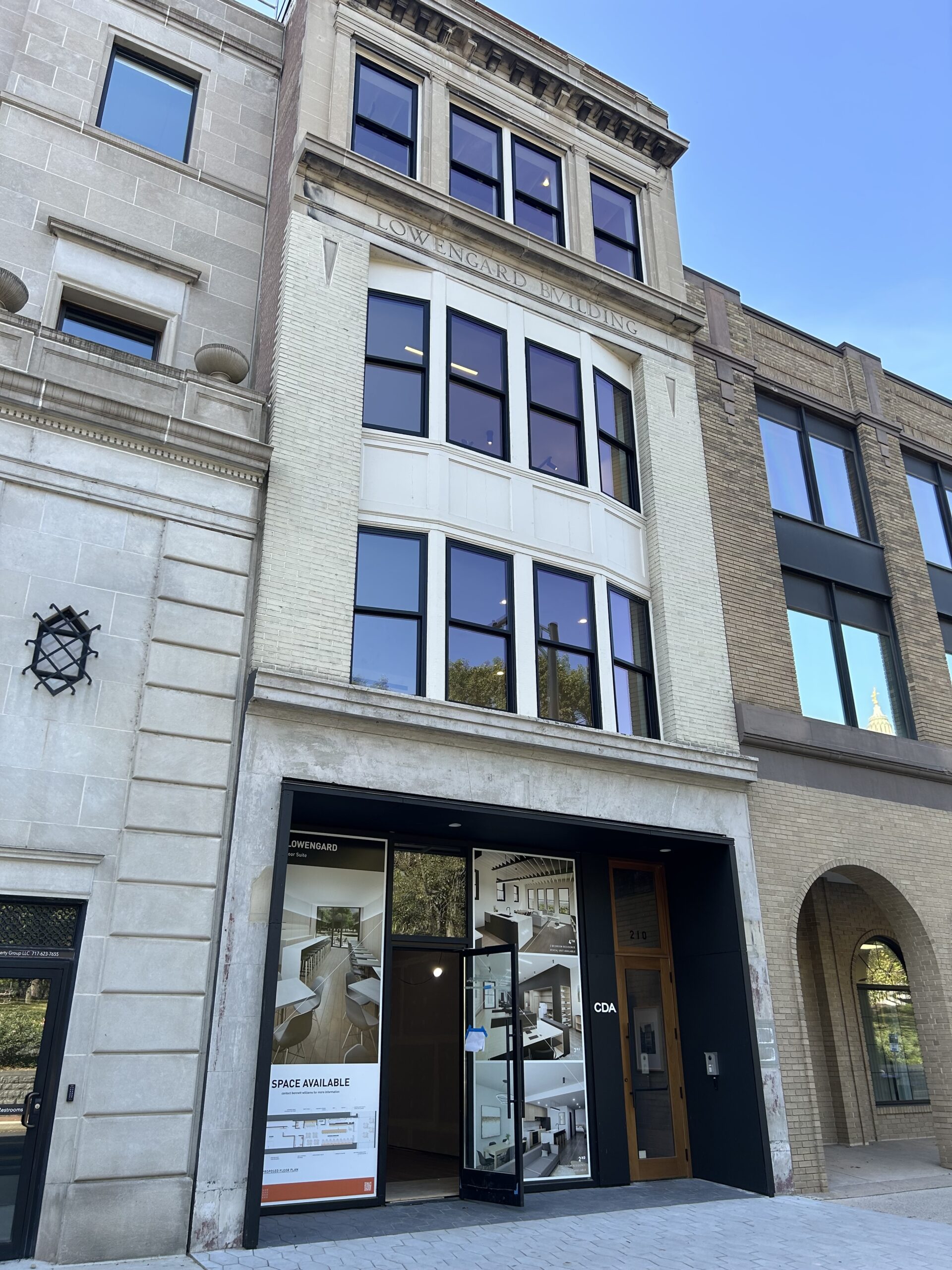
The Lowengard, 210 N. 3rd St.

After years of vacancies and the building becoming increasingly dilapidated, Dawson pulled the trigger, purchasing the property and completely renovating it.

On Thursday, he and his team were joined by local officials and supporters to cut the ribbon on the newly rehabbed building and offer tours of the completely remade space.

“The building was in really rough shape,” Dawson said. “You might not get a sense of that entirely with all of the beautiful historic photos we have up, and just hopefully how great it looks to you when you walk through.”

The $3.5 million project included rehabbing first first-floor commercial space, which Dawson hopes to find a business to occupy. The three upstairs floors house Chris Dawson Architect’s new office, as well as a one-bedroom apartment unit and a two-bedroom unit. The apartments will either be leased or used as short-term rentals.

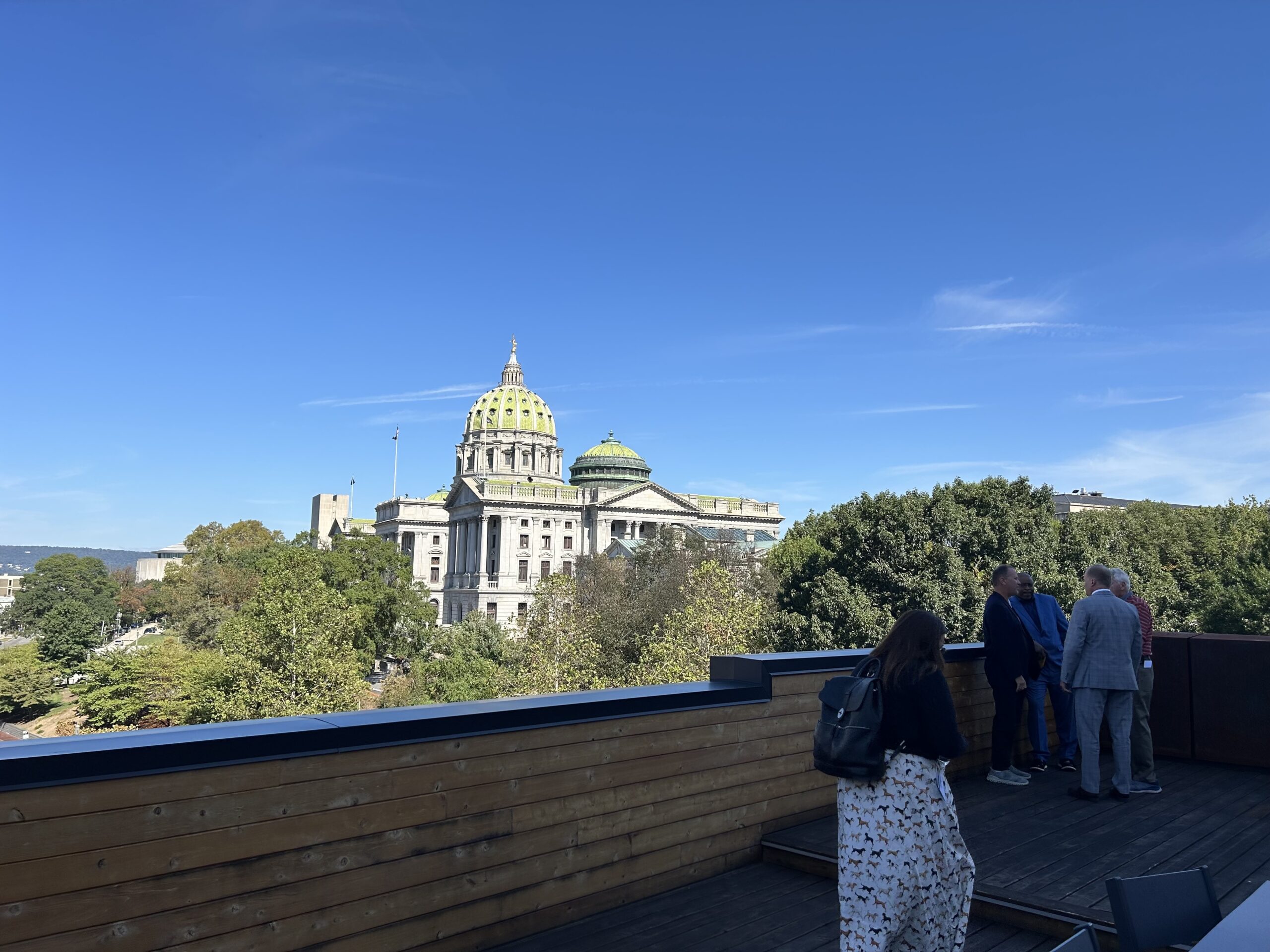
One of the most stunning elements of the project is the rooftop deck, which offers a view of the Capitol dome.

Rooftop deck

According to Dawson, the renovation process was extensive.

Historically, the building was erected for use by Courier Printing, with the first floor housing the first Mary Sachs department store in 1918, which eventually grew into the neighboring building. In more recent years, the first floor housed various restaurant tenants, but the upstairs floors were mostly vacant and accumulated debris, dirt and even dead critters.

“It looked like a bomb had gone off on the third and fourth floors,” Dawson said.

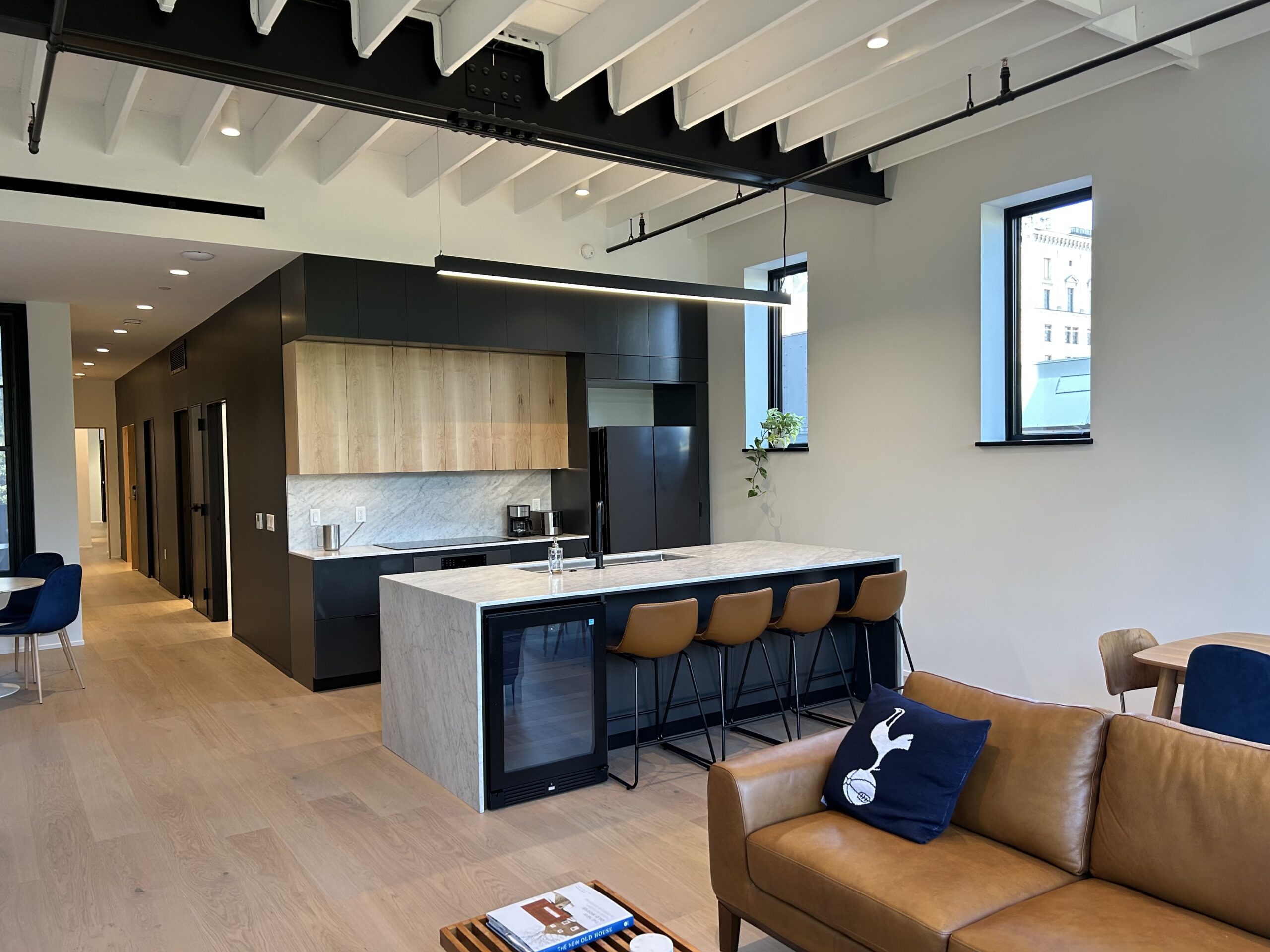
An apartment unit in the Lowengard

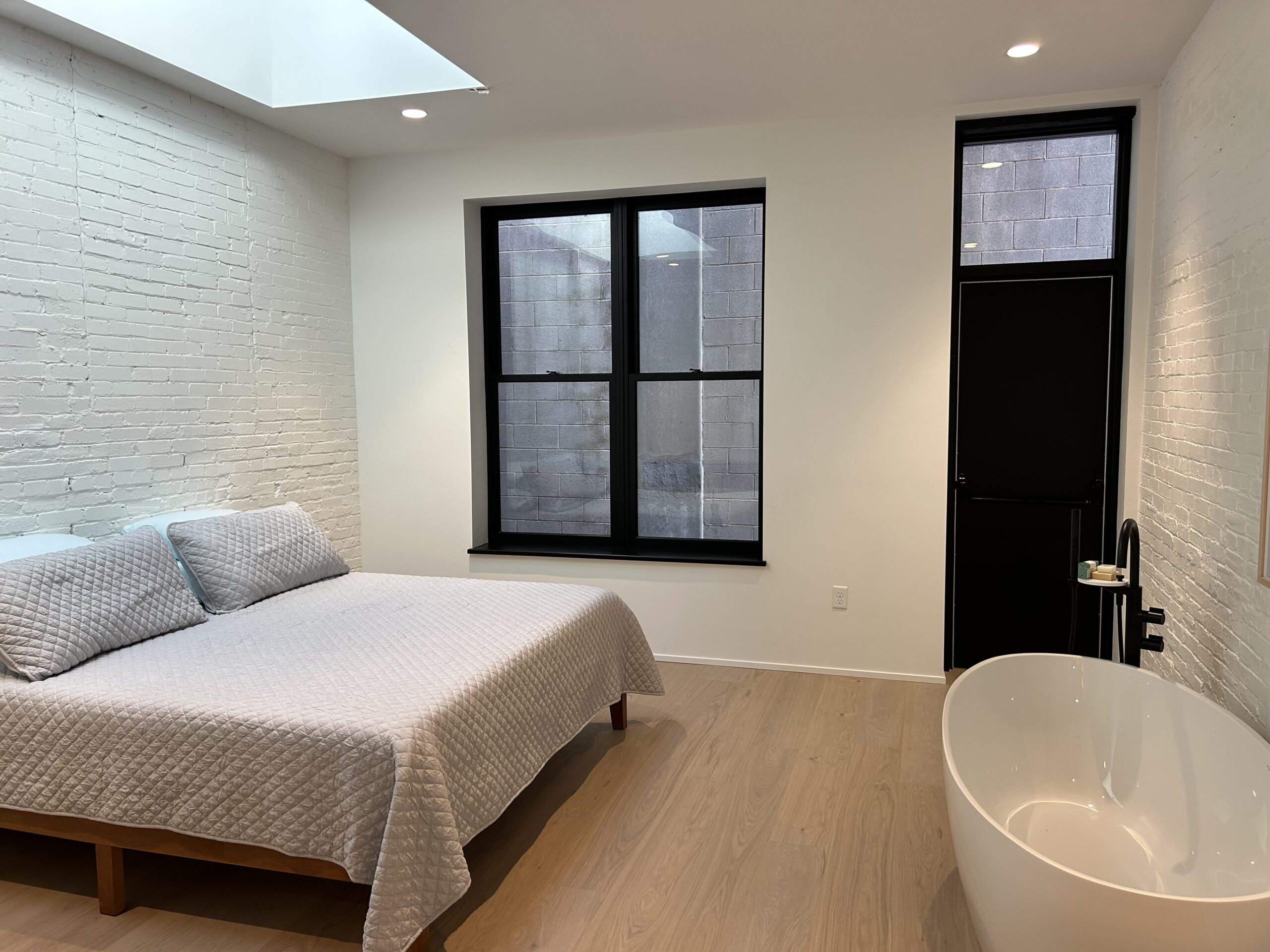
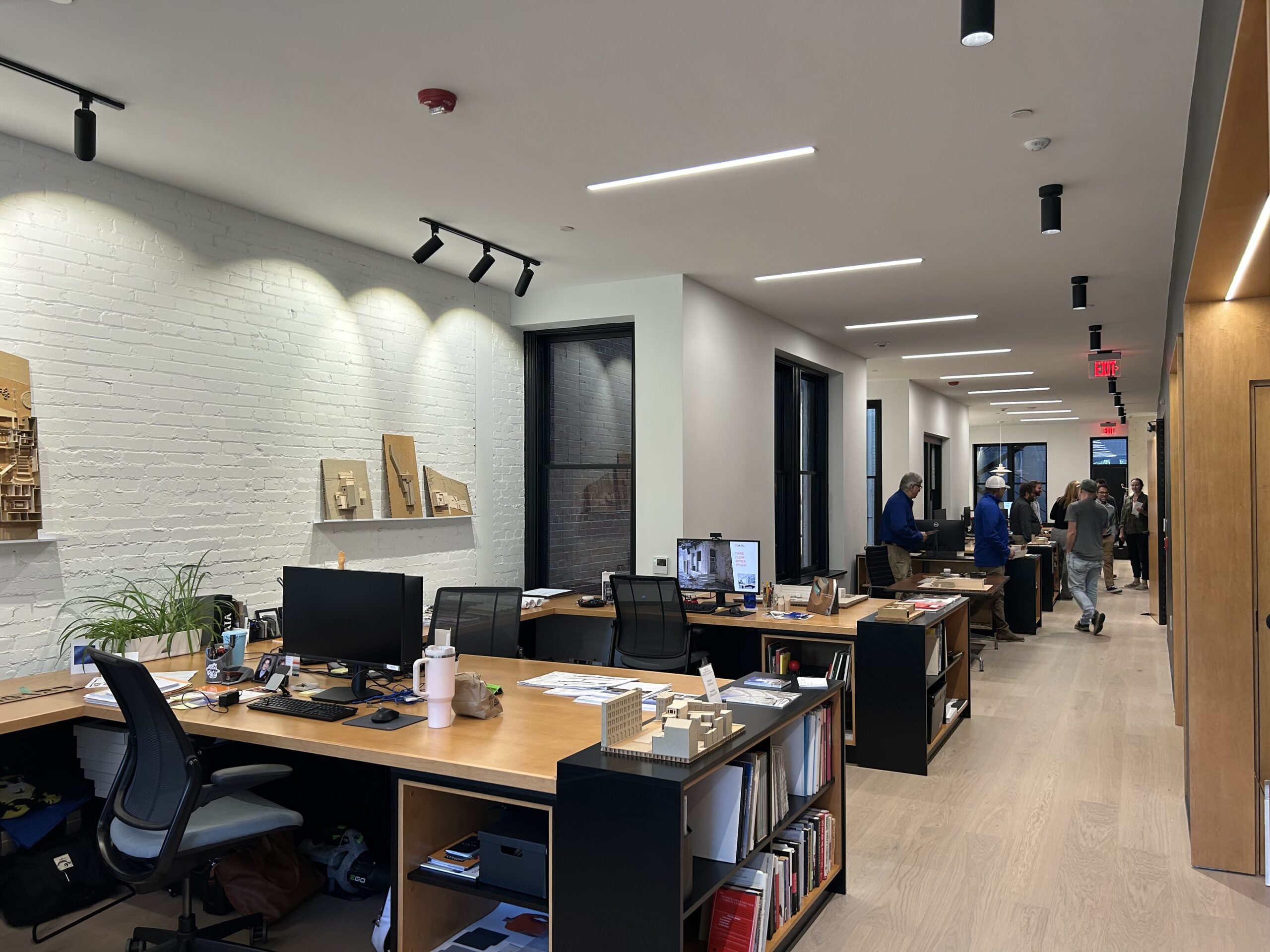
Now, the building features a modernist design, with white walls, exposed brick, rich black accent walls and natural wood cabinetry, desks and doors. The two-bedroom unit’s primary bedroom features a freestanding soaking tub, and both units and the office have views of the Capitol.

Dawson’s firm previously had office space in the downtown Commerce Tower, but outgrew it. The full team has already begun working in the new location.

And while it wasn’t easy—Dawson dealt with a difficult negotiation process when purchasing the building and had a contractor go bankrupt during construction—he was happy with the result.


Apartment in the Lowengard

“By revitalizing the blighted property and reactivating it for the community, this project preserves a missing piece of a key city block, provides much-needed additional studio space to support CDA’s growth, and contributes to the greater cause of revitalizing downtown Harrisburg,” Dawson said. “We are proud to do our part for Harrisburg as a long-time downtown business owner.”

Chris Dawson Architect’s office

The Lowengard is located at 210 N. 3rd St., Harrisburg. For more information about Chris Dawson Architect, visit their website.

If you like what we do, please support our work. Become a Friend of TheBurg!   

Continue Reading

Planning commission approves office-to-residential projects that would create over 100 new housing units in Harrisburg

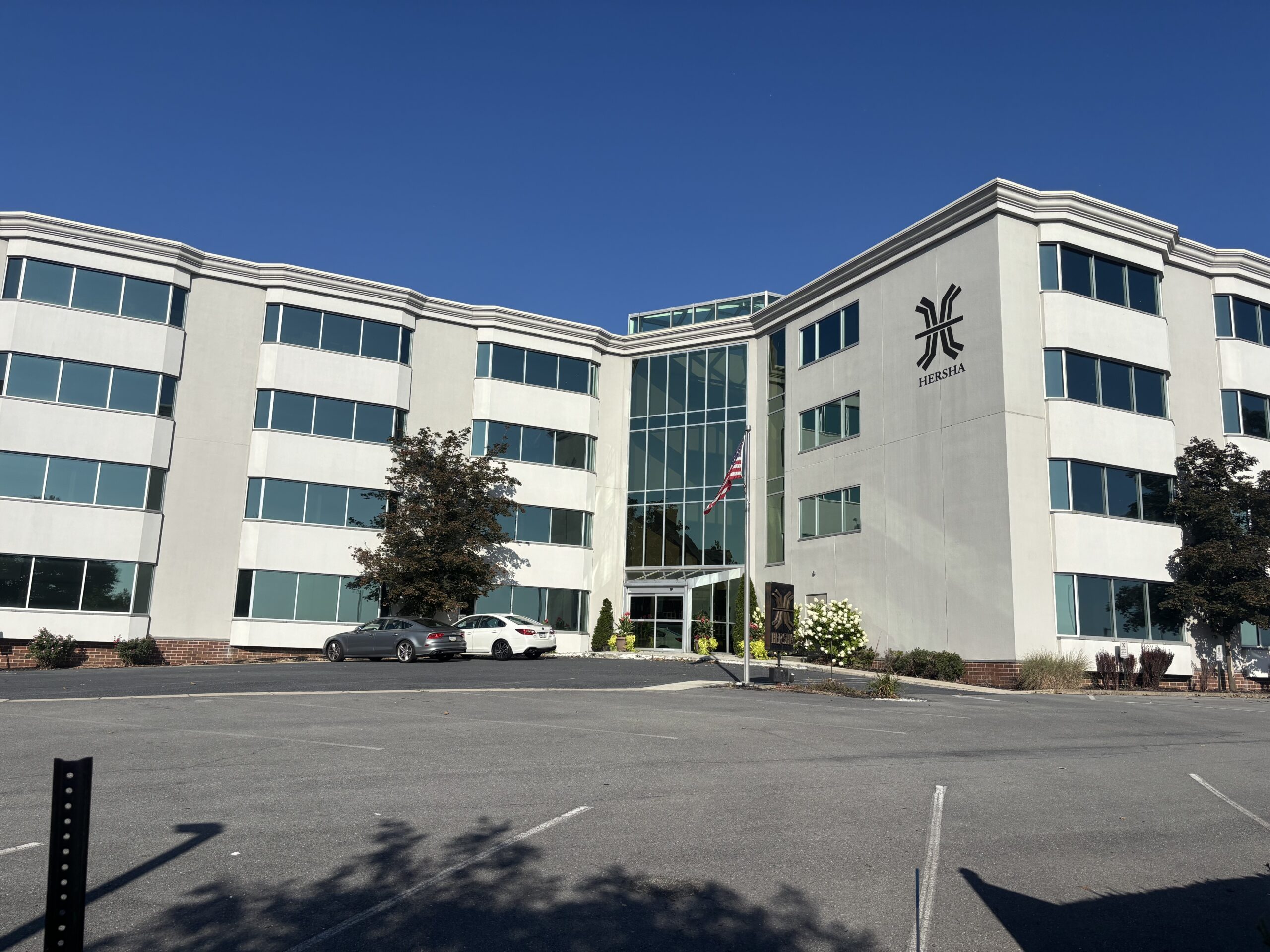
1909 N. Front St., the proposed site of an office-to-residential conversion.

Several new proposed projects would add around 150 apartment units to Harrisburg’s housing stock.

At a Harrisburg Planning Commission meeting on Wednesday, local developers presented proposals to repurpose former office buildings and a funeral home, as well as construct new housing.

Starting along the riverfront, Harrisburg-based WCI Partners proposed converting an office building at 1909 N. Front St. into 60 apartments. The building is currently occupied by Hersha Hospitality, but according to WCI, the company is downsizing and moving locations.

Under the proposal, WCI would create all one-bedroom units in the four-story, 58,832-square-foot building. There are also 71 off-street parking spaces.

The planning commission voted to recommend approval of the land development plan, as well as a special exception to allow a multifamily dwelling in the Riverfront zoning district.

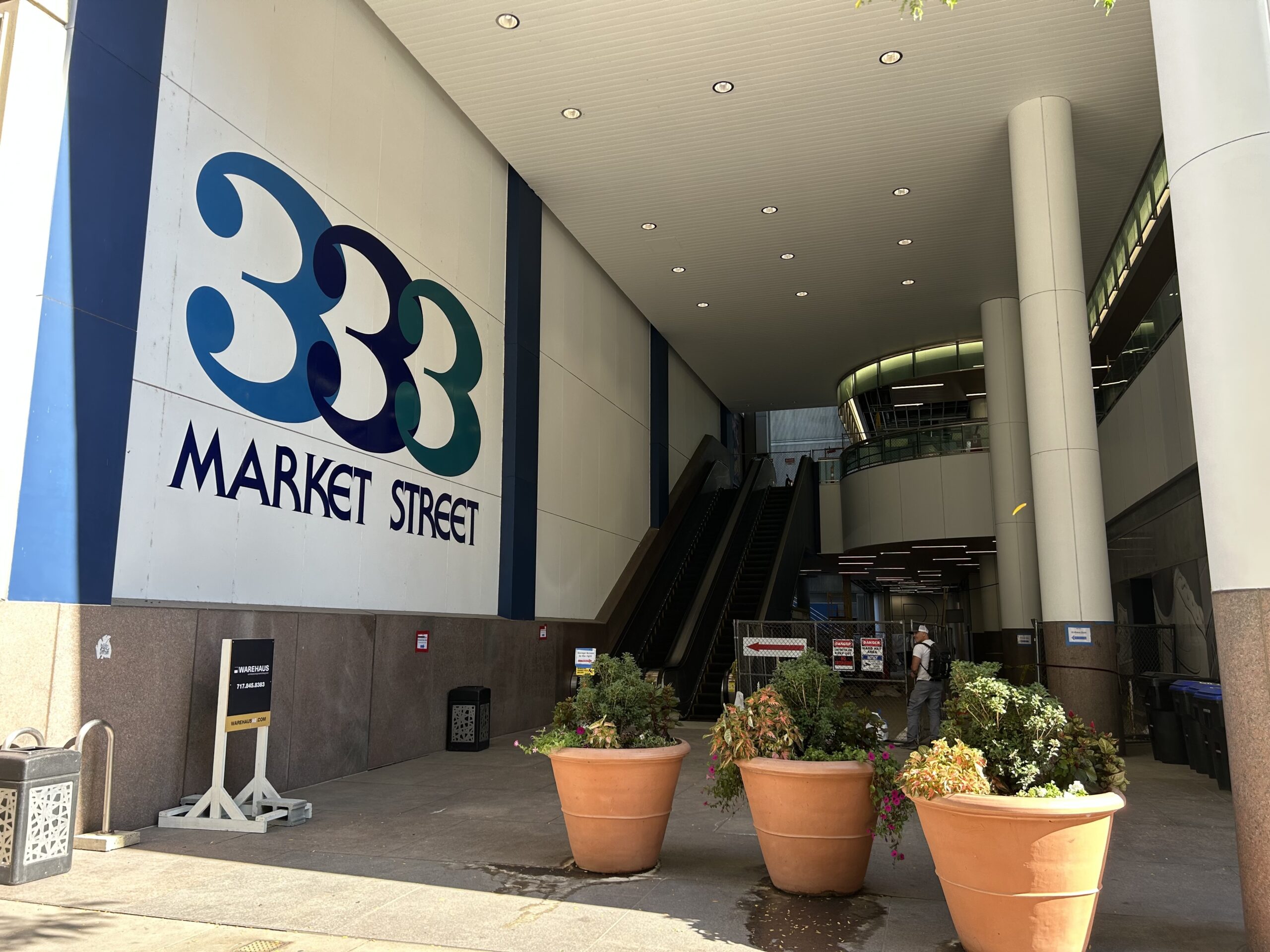
333 Market Street, the site of a proposed office-to-residential conversion.

In downtown Harrisburg, Harristown Development Corp. has proposed another office-to-residential conversion at 333 Market Street.

The 22-story building is the tallest in Harrisburg, according to the city, and, for years, has housed state government offices and commercial spaces. Currently, apparel store DTLR occupies ground level space on Market Street and a WGAL News 8 studio has a space at the corner of N. 4th Street and Blackberry Street.

The proposal includes renovating floors 11 through 19 of the building, currently vacant offices, into 81 apartments. Units would be one- and two-bedrooms ranging from 828 to 1,225 square feet.

The project would not include off-street parking, but the building is attached to the Chestnut Street Garage.

Approval for the project was granted by the commission.

On a smaller scale, developer Breneman Properties has proposed adding apartments to the building at 1332 N. 2nd St. The building currently includes five apartments and previously housed Neumyer Funeral Home on the first floor. Breneman would convert the former funeral space into eight additional apartments.

The planning commission recommended approval of a variance to allow the existing parking lot to be used commercially and spaces rented out, and a special exception to allow for more units than permitted by right, for the project.

Lastly, Handles Helping Hand Foundation has proposed consolidating five parcels at 1605 to 1613 Market St. and subdividing the land into four lots. The developer would then construct a three-story affordable townhome on each lot.

The project site is currently owned by the Harrisburg Redevelopment Authority. A small community garden used to operate onsite, but the lot has since become blighted.

The planning commission recommended approval of the land development plan, lot consolidation and subdivision. They also recommended approval of a variance and special exception for relief from lot width and off-street parking requirements.

All of the zoning issues mentioned above will now move to the Harrisburg Zoning Hearing Board for approval. The land development plans will head to City Council for final approval before the projects can start.

If you like what we do, please support our work. Become a Friend of TheBurg!   

Continue Reading

Harrisburg moves millions of dollars to support Broad Street Market rebuild, furthering construction

Broad Street Market brick building

Construction on the Broad Street Market’s brick building can keep pushing forward, as Harrisburg now has funding lined up for the project.

City Council on Tuesday unanimously approved reallocating $14.4 million in Harrisburg’s budget into its budget for the rebuilding of the fire-damaged market, which allows all contractors to begin work.

Council members voted in support, but many expressed concerns over the cost of the project and over what they said was a rushed approval timeline.

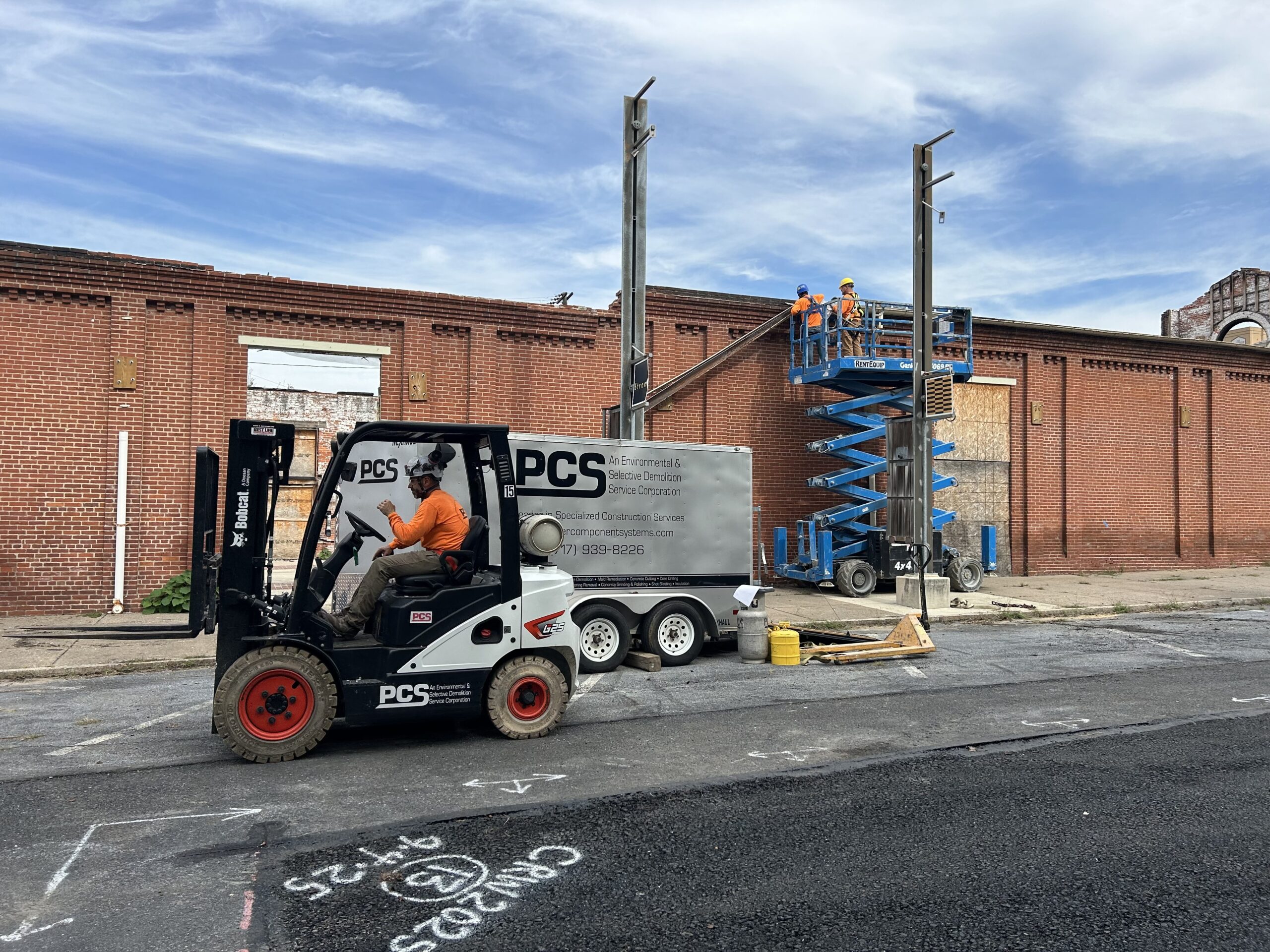
On Monday, contractor Power Component Systems (PCS) began selective demolition on the brick building, starting the 18- to 20-month rebuild, over two years after the fire. However, not all contractors could begin until the city had sufficient funds to pay for all of the work, which totals 11 bid packages.

After Tuesday’s vote to add $14.4 million into the general fund, the city now has about $19.1 million in its 2025 budget for the market. In total, officials estimate that the market rebuild will cost $23 million. The city has already spent about $3.3 million for selective demo, architectural and design services.

The money for the project will be shifted from other budget areas, like the state grants fund and capital projects fund, to the general fund. Also, $9.1 million will move from the city’s fund balance to go towards the market. The city’s current fund balance is about $19 million.

Officials explained that the money will be spent incrementally over the course of the project, and unspent funds by the end of 2025 will be rolled over into future budgets.

Harrisburg has already received $4.9 million in insurance funds, but hopes to receive more, which will come in the form of reimbursements. City Facilities Director Dave Baker previously said that he estimated that the city may get $12 million. $1 million of that is designated specifically for the tent structure.

While the money transfer was approved, council expressed concerns about the price tag.

“I’m very concerned about this project, this is a lot of money that’s being moved,” said council member Lamont Jones. “At the end of the day, this is a lot of money going out of the city.”

City Finance Manager Brian McCutcheon reminded council that all of the money for the market will not be leaving the city immediately, but over several years.

Council President Danielle Hill also brought up her desire to see local and minority-owned businesses involved in the rebuild.

City Solicitor Neil Grover said that city officials advocated to contractors the importance of including minority-owned subcontractors, but that the city couldn’t legally mandate it.

“It’s unfortunate that our Harrisburg-based minority and women-owned businesses won’t have a seat at the table,” Hill said.

Hill also shared passionate comments before voting, saying she was frustrated by the quick turnaround required of council for voting on the resolution. She said that she was voting “yes” “extremely reluctantly.” A few other council members shared similar sentiments.

“It’s not fair to us to constantly receive everything at the last minute,” she said. “It’s a lot of information to digest at the last minute. It seems to be a recurring theme with this administration. It’s not fair.”

Council member Ausha Green added that she would like better communication and transparency from the city about the market.

“We shouldn’t have to keep coming back, saying, can we get an update? Can we get a presentation?” Green said. “We need more communication with council and with the public.”

If you like what we do, please support our work. Become a Friend of TheBurg!   

Continue Reading

Broad Street Market rebuild has started, as crews begin construction process

Crews with PCS began selective demolition work on the brick building on Monday.

Construction has started on the Broad Street Market.

Over two years after a fire tore through the market’s brick building, workers on Monday started an estimated 18-month construction process, beginning with selective demolition.

Previously, crews were slated to begin work on Tuesday, but according to Dave Baker, city facilities director, demo contractor Power Component Systems (PCS) was ready to get to work at 7 a.m. Monday morning.

“With demo, you’ll see a big difference pretty quick,” Baker said.

PCS has begun taking down doors in the brick building to salvage for potential later use. They will also work on taking off windows and boards covering doors and windows.

“We are getting this building wide open,” said Stephen Wilt, project executive with Harrisburg-based Alexander Construction Co., the building manager for the project.

(From left) Dave Baker, city facilities director, Stephen Wilt, project executive with Alexander Construction Co., Debbie Reihart, city project manager, Darren Rech, safety director with Alexander

The demolition team will then work with the other 11 contractors set to come on site to coordinate additional work. Demo will also include taking off the entire roof of the building, while leaving some of the rafters and demolishing and rebricking small portions of the walls that are unstable.

Of the 11 bid packages for the market rebuild, 10 are lined up, and the city is interviewing for the 11th today, Baker said.

However, most of the contractors cannot begin work until City Council approves the funds to pay the contractors. City officials shared their proposal to shift around $14 million in Harrisburg’s budget to add it to the budget for the market. In total, the market rebuild will cost an estimated $23 million. The money reallocation is on the agenda for a council special legislative session on Tuesday evening.

Officials said that the city has to have the money up front to pay contractors, but hopes to get refunded as much as possible through insurance. Baker said that they’ve estimated getting around $12 million total in insurance, but aren’t certain yet exactly how much they’ll receive in the end.

Once contractors are approved, the community will see a “beehive of activity” in the next couple of weeks, Baker said.

Wilt explained that, next week, Alexander will gather together all the contractors to get everyone on the same page with the project schedule.

As for the price tag of the rebuild, Wilt and Baker both stated that they feel comfortable with the current cost, basing their estimates on data for historical projects.

Baker also noted that the city received Pennsylvania Historical and Museum Commission approval for the rebuild of the historic building and is incorporating recommendations from local and state historic organizations.

Baker and Wilt said that, once the rebuild is done, the brick building will look mostly as it did before the fire, but cleaner, brighter and more functional.

If you like what we do, please support our work. Become a Friend of TheBurg!   

Continue Reading

October Publisher’s Note

Each year, just after Labor Day, TheBurg celebrates a very special day.

In early September, we host our annual “Burg Bash” to honor our Friends of TheBurg, folks who generously help support our work through their annual membership.

It’s an evening of incredible food, drink, music and camaraderie, held at the stunning King Mansion, right on the riverfront.

But you know what I love the most about the event? The conversations.

For several hours, people gather in groups and talk about—what else—Harrisburg!

This year, I overheard discussions on everything from development to murals to the mayor’s race. It seems that concern for downtown has eked past the Broad Street Market as the No. 1 issue in the city this year, at least based on our guests.

Over the years, the Burg Bash has become something of a freeform salon for discussion of all-things Harrisburg, granted one with balloons, food stations and a brief speech by yours truly. The opinions, ideas and intrigues flow as freely as the Crosswinds wine. That’s what happens when you get 150 city nerds gathered in one place, all sharing a love (some of it tough) for Harrisburg.

I appreciated meeting everyone and enjoyed all the conversations. I only wish the evening would last longer. Each year, those three hours fly right by and, before I know it, it’s time to pack up and begin the planning process once more.

I hope to see everyone again next year. If you’d like to join us, please become a member of Friends of TheBurg, and you’ll receive an invitation a month or two ahead of time.

Speaking of good times, the weather is cooling down, and the leaves are beginning to turn. That means it’s time for our October issue, which focuses on “fall fun,” in addition to our usual assortment of community news, features, columns and events.

I’ve heard it said that October is the best month to be in Harrisburg, with pleasant weather, a colorful landscape and tons of things to do. I can’t argue with that!

Lawrance Binda
Publisher/Editor

If you like what we do, please support our work. Become a Friend of TheBurg!    

Continue Reading

October News Digest

Receiver Named for Governor’s Square

A court-appointed receiver soon will be able to begin work stabilizing a troubled Harrisburg housing development, following a key approval by City Council.

Last month, council unanimously approved a resolution allowing the city to enter into a professional services agreement with Harrisburg-based Midtown Asset Consulting, which will work to bring the beleaguered affordable housing community back into a financially and physically stable position.

“Thank you for your confidence, council,” said Justin Heinly, principal of Midtown Asset Consulting, following the vote. “I appreciate it.”

In late August, a Dauphin County court judge appointed Heinly receiver for the 222-unit complex at N. 5th and Maclay streets.

Uptown Partners, the owner of Governor’s Square, filed for bankruptcy in May 2023. For years, the city issued code citations and condemned properties, and residents complained of quality-of-life issues in units. City officials have previously shared that over half of the units have become vacant and the area has dealt with crime and safety issues.

After unsuccessful attempts to sell the property, and claiming not to have enough money to maintain it, Uptown Partners filed a motion to have a receiver appointed. Heinly said that city Solicitor Neil Grover approached him with the request to take on the project, and the city brought his name forward to the county judge. As receiver, Heinly will step in to control and oversee improvements at the property, while Uptown Partners remains the legal owner.

“It is an extraordinary thing for the city to ask for a receiver,” Grover told council. “But it became Mayor [Wanda] Williams’ determination, ‘What else can we do? These people need help.’”

In March, council approved allocating $250,000 as seed money to help the receiver get started with work at Governor’s Square. According to the resolution, the city will pay the receiver portions of that money monthly and will expect to be reimbursed as money becomes available through rent revenue.

In a previous council meeting, Heinly said that his plan for Governor’s Square would span 10 years and three phases. The first phase would include securing the property and spending six months evaluating the need and creating a restoration budget and plan. In phase two, the receiver would begin implementing the plan and working to get the property to financial stability, which could take two years. The final phase would focus on seeking grants and funding to make capital improvements.

Heinly’s first priority—visiting each occupied unit, making sure residents are safe, and relocating any tenants whose property is not livable.

“Someone needs to get in there and fully assess the situation,” Grover said. “No one who’s an outside entity has assessed it. Our codes people have been locked out.”

The ultimate goal, Grover said, is a sale to a qualified entity, after the property has been fully assessed and stabilized.


Home Sales Decline, Prices Stable

Harrisburg-area home sales dipped in August but prices were relatively stable, according to the latest report on previously owned houses.

For the three-county region, 549 homes sold in August compared to 651 in August 2024, while the median sales price was $300,000, up slightly from $297,000, said the Greater Harrisburg Association of Realtors (GHAR).

In Dauphin County, 242 houses sold in August, a drop from 309 in the year-ago period, as the median sales price edged up to $278,000 versus $270,000 a year ago, GHAR stated.

Cumberland County had 270 home sales compared to 300 for the prior August, with the median sales price rising to $335,000 from $327,250, according to GHAR.

In Perry County, 36 homes sold in August, a drop from 47, as the median sales price decreased to $255,000 versus $300,000 last year, GHAR said.

The pace of home sales picked up a bit, as “average days on market” dropped to 20 days in August versus 23 days in August 2024, GHAR stated.


So Noted

Agape Elixir Bar debuted last month in Harrisburg’s SoMa neighborhood at 23 S. 3rd St. The downtown bar features alcohol-free drinks and cocktails such as hemp-derived CBD drinks, kava, botanical elixirs and hydrogen water (21-plus).

Jay Krevsky, a long-time supporter of Harrisburg’s arts community, passed away in late August at the age of 92. Jay performed in numerous plays and musicals, especially for Theatre Harrisburg, which re-named the Jay and Nancy Krevsky Production Center for him and his wife. Jay also was an educator, serving as a teacher in the Susquehanna Township School District and a principal in the Harrisburg School District.

Justin Douglas last month announced his candidacy for the Democratic nomination for the 10th congressional district, which includes all of Dauphin and parts of Cumberland and York counties. Douglas, a Dauphin County commissioner, will face Janelle Stelson, who announced her candidacy in July. Stelson won the nomination last year before losing in the general election to the long-time incumbent, Republican Rep. Scott Perry.

Kristen Herman last month was named the new executive director of Downtown Daily Bread, a Harrisburg homeless shelter and kitchen. Herman most recently served as the director of prevention services at the Pennsylvania Coalition Against Domestic Violence, leading statewide initiatives for 10 years. The board of directors also promoted Amanda Berman to director of operations.

The Plant Witch opened in late August in downtown Harrisburg at 11 N. 3rd St. The store offers a selection of houseplants, plant care products, ethically sourced crystals, tarot decks, incense and other metaphysical items. Additionally, they plan to host events such as plant pot painting workshops and bingo nights.

Changing Hands

Alricks St., 640: C. & P. Walker to V. & Y. Patterson, $170,000

Argyle St., 10: 1406 Market Realty LLC to 10 Argyle LLC, $150,000

Balm St., 147: J. Shurns to I. Santiago, $125,000

Bellevue Rd., 2111: H. & A. Van Eeden to B. & J. Wade, $489,000

Boas St., 1714: Culcay Remodeling & Guagua LLC to A. Figuereo, $240,000

Boas St., 1831: JDP 2014 LLC to S. Adeseun, $175,900

Briggs St., 207: M. Vogel to Rosebud Capital LLC, $135,000

Briggs St., 1826: R. & D. Requa to L. Saldana, $105,000

Brookwood St., 2432: G and W Rentals LLC to C. Badillo, $162,500

Crescent St., 442: F. Cruz to Rumble Ponies LLC, $123,000

Crescent St., 464: J. Torres to L. Rodriguez, $165,000

Derry St., 1323 & 1626 State St.: Vernon St Apartments LLC to Numbee Realty LLC, $448,000

Derry St., 1408: Evil Empires LLC to L. Ortiz, $130,000

Derry St., 2015: D. Landis to Stein Equities LLC, $110,000

Derry St., 2017: D. Landis to Stein Equities LLC, $105,000

Duke St., 2441: V. & T. Raskot to Rosebud Capital LLC, $148,000

Edward St., 305: Q. & K. Rogers to Real Skincare LLC, $300,000

Evergreen St., 25: R. James to Golden Triangle Investment LLC, $84,000

Forster St., 1926: T. Chan to C. Suarez de Olmo, $150,000

Fox Ridge Ct., 303: M. & L. Sardone to A. Black, $173,000

Green St., 2210: Legacy Cash Offer LLC to JRHeller Com LLC, $90,000

Hale Ave., 391: Propertynet LLC to S. & M. Pillco, $102,000

Hamilton St., 234: K. Muncy to First Choice Home Buyers LLC, $127,577

Hamilton St., 235: G. Huggens to A. Randall, $225,000

Harris St., 443: Keystone Properties Solutions LLC to Val de Vie Estate Investment LLC, $269,000

Herr St., 262: R. Diamond & G. Smith to A. Yodfat, $274,900

Hillside Rd., 112: J. & M. Thompson to C. & A. Semple, $544,000

Holly St., 1809: D&F Realty Holdings LP to R. Felix, $67,565

Howard St., 1345: ST Howard LLC to La Vecine del Comunitario LLC, $95,000

Hunter St., 1623: M3 6 Realty LLC to J. Monegro, $84,000

Jefferson St., 2122: EEM Property Corp. to Equivest Property Co., $65,000

Kelker St., 209: D. Pittman to J. Wanner & A. Silverstein, $250,000

Kensington St., 2118: L. Zheng to 248 S. Quince St. LLC, $121,000

Market St., 1228: J. Bonilla & L. Velasco to 1228 Market St LLC, $258,000

Muench St., 436: TKO Rental LLC to L. Weir, $175,000

Mulberry St., 1947: T. & L. Johnson to N. Rosa, $179,900

Naudain St., 1617: Bridger Investments LLC to Sunrise River Investments LLC, $55,000

North St., 1846: A. Jones to Dobson Family Partnership, $53,599

North St., 1913: J. McNeeley to Blue Key Investments LLC, $110,000

N. 2nd St., 1906: C. Harris to Dobson Family Partnership, $90,000

N. 2nd St., 1917: R. Thomas to Dobson Family Partnership, $115,000

N. 2nd St., 2439: R. Smisl, S. Morrow & M. Sullivan to Integrity First Home Buyers Inc., $125,000

N. 2nd St., 2507: K. Aulenbach & A. Paradise to C. & A. Weaver, $309,999

N. 3rd St., 1910: D. Roa to Kalajula Properties LLC, $195,000

N. 3rd St., 2329: M. Mtere & F. Laoukili to Kindhaus LLC, $218,000

N. 3rd St., 3007: First Choice Home Buyers LLC to YR Holdings LLC, $135,000

N. 3rd St., 3029: Equitable Builds LLC to Golden Triangle Investment LLC, $119,000

N. 4th St., 2216: Sego Realty LLC to J. Frank, $190,000

N. 4th St., 2246: Normans Realty Service Inc. to Prime Realty Solutions 4U LLC, $92,000

N. 5th St., 2425: C. Wilson & R. Jackson to Zestar Estates Pennsylvania LLC, $129,900

N. 5th St., 3122: CJJC Properties LLC to C. Cotto, $205,600

N. 6th St., 2322: H. Dang to Monegro Property Investment LLC, $90,000

N. 6th St., 2333: D. Davis to D. Peachey, $123,700

N. 6th St., 3134: L., F. & K. Miller to 77 Estate LLC, $93,000

N. 16th St., 26: 3Stars Home Care Services LLC to Swan Road Realty LLC, $112,000

N. 16th St., 41: First Choice Home Buyers LLC to Green Island Realty LLC, $134,000

N. 18th St., 53: Avila Estate Investment LLC to F. Vasquez, $150,000

N. 19th St., 1011: A. Bouhach to A. & M. Harrell, $142,000

N. Front St., 1525, Unit 311: J. Eirkson to H. Elliott, $217,000

N. Front St., 1525, Unit 409: M. Anderson to S. & L. Weitzman, $275,000

N. Front St., 1525, Unit 604: D. Baker to W. Spinner & L. Kamenic, $279,900

N. Summit St., 116: M. Sacasari to L. Rodriguez, $135,000

Norwood St., 913½: US Bank Trust National Assoc. to Z&E Holdings LLC, $75,000

Oak St., 646: D. Montes to 646 Oak LLC, $80,000

Oxford St., 618: E. Chattah to BZDEL Global Investments LLC, $133,000

Park St., 1616: Q. Miles & Habitat for Humanity of Greater HBG Area to L. Brown, $68,000

Penn St., 1921: H. Elliott to D. Copenhefer, $222,000

Reel St., 2425: F. & P. Eras to M. Coronel, $100,000

Rudy Rd., 1827: S. & B. Duncan to J. Cornelius, $55,000

Rumson Dr., 2934: L. Perry to Beta One LLC, $91,000

Seneca St., 532: G. Chambers to S. Gayle, $185,000

S. 15th St., 314: F. Walker to Lumastay Properties LLC, $120,000

S. 15th St., 541: R. Jimenez to JRHeller Com LLC, $51,750

S. 15th St., 545: EJB Rentals LLC to D. Miller, $101,000

S. 16th St., 904A: B. Castro to A. Burgos, $186,000

S. 18th St., 169: Sky Resort Investments LLC to C. Mars, $175,000

S. 18th St., 1329: Integrity First Home Buyers LLC to Landscape Linker LLC, $160,000

S. 19th St., 1216: Z. Corey to Medina & Croussett Realty Ventures LLC, $100,000

State St., 1905: A. Lovo to E. Clemente, $60,000

Susquehanna St., 1843: Z. & A. Veres to A. Sackor, $215,000

Swatara St., 2006: A. Shah to N. Shah, $150,000

Swatara St., 2101: R. Gonzalez to C. Morales, $145,000

Sycamore St., 1509: W. Finley to N. Cumba, $208,000

Vernon St., 1407½: Vernon St LLC to La Medio Numero LLC, $70,000

Walnut St., 228: 1422 Route 179 Florida Realty LLC to Sphinx Global Inc., $1,000,000

Woodbine St., 321: V. McCallum to T. el Khou, $145,000

Zarker St., 1429: R. Rammouni to 1429 Zarker LLC, $80,000

Zarker St., 1819: J. Santiago to PACC Homes & Development LLC, $95,000

Zarker St., 1949: B. Oliver to Echo Propco I LLC, $81,000

Harrisburg property sales, August 2025, greater than $50,000. Source: Dauphin County. Data is assumed to be accurate.

If you like what we do, please support our work. Become a Friend of TheBurg!    

Continue Reading

Experiments in Housing: In south Harrisburg, several groups are trying innovative ways of addressing homelessness

Marsha Curry-Nixon and Tim White

Marsha Curry-Nixon had sat in on countless meetings about how to help Harrisburg’s largest homeless encampment, dubbed “tent city.”

City resource providers have long known that the camp, which has housed over 100 people in south Harrisburg near the PennDOT building at various times, would be closed. As part of a project to expand I-83, PennDOT shared that the encampment site would be impacted, and occupants would be required to move. Since then, city, county and state officials have met to come up with some sort of answer to the question: “Where would all these people go?”

Curry-Nixon, as the founder of Amiracle4sure, which assists people re-entering society after prison and helps the unhoused, was at the table for these meetings. Meeting by meeting went by without finding a solution, even as the move-out deadline loomed.

“We got to the end of the wire,” she said. “All they knew is we needed to find a place to move them to.”

However, discussions around how best to address homelessness had taken place way before the tent city eviction and, of course, are not exclusive to Harrisburg. There is no one-size-fits-all “cure” to the issue, as evidenced by the simple fact that people still sleep outside, in cars and on couches every night.

But nationally, and now locally, people and organizations have stepped forward with fresh, innovative ideas to try to make a dent.

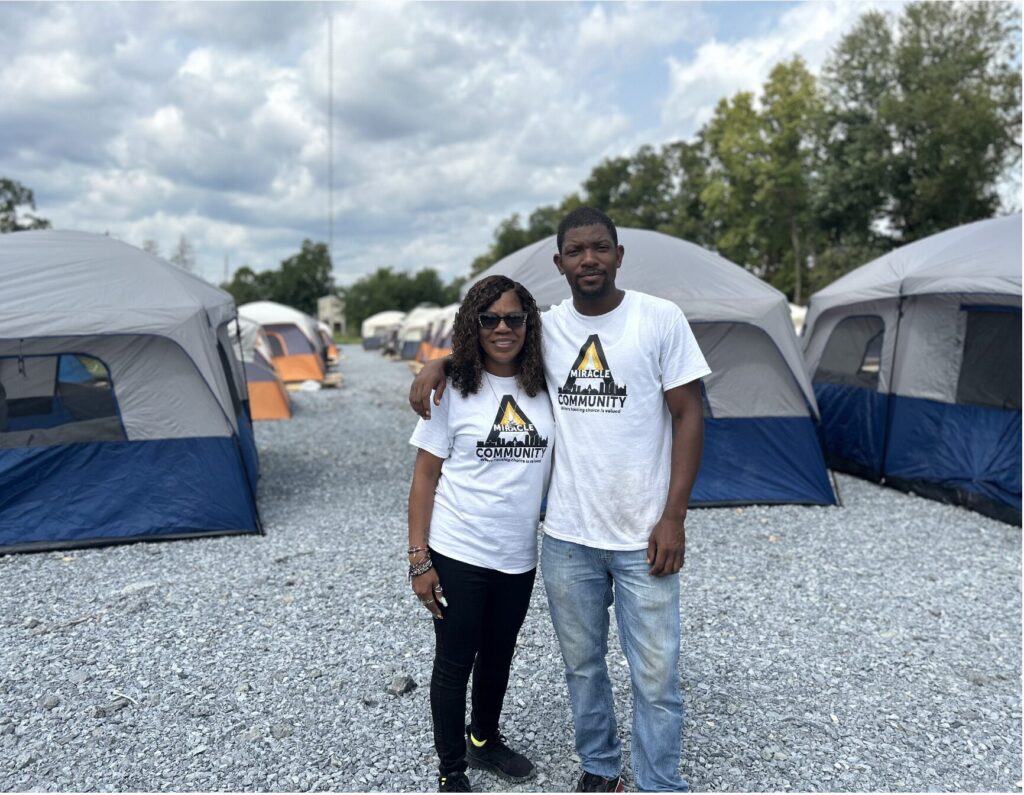
In the case of the Harrisburg tent city relocation, Curry-Nixon and her son, Tim White, who also works for Amiracle4sure, decided only a few months before PennDOT’s late September move-out date, to take on the task.

“Amiracle4sure has always addressed issues each time they came up. That’s what we do. We are the doers in this city,” White said. “This was just an extension.”

White drew inspiration from a planned, organized encampment in Los Angeles that he read about in an article. Tents were arranged on a plot of land in a grid-like fashion, with oversight and amenities like porta-potties for occupants.

Like that one, Amiracle4sure’s “Miracle Community,” now sits on a gravel lot off Cameron Street in Harrisburg.


Space of Belonging

On a warm September day, Curry-Nixon and White worked with volunteers to assemble tents to add to the 56 that were already full of former tent city occupants and other unhoused people from the area.

While the group of volunteers broke for lunch, the neighborhood of tents was largely quiet, despite there being over 150 residents. An older man sat on a lawn chair outside his tent, and one man politely approached Curry-Nixon to ask for a bottle of water. Walkways between tents were clear and clean. One person exited a portable shower on site, and clothes were hung to dry on a communal clothesline. Additionally, people have access to cooking stoves, electricity and other resources.

The scene was drastically different from that of tent city, which had a reputation for being jumbled and chaotic. Curry-Nixon attributed the difference to the power of taking ownership of your space.

“When you create a space of belonging, you become part of it,” she said. “There’s something about the dignity of not being concerned about where you’re going to lay your head at night and not being concerned about whether or not you’re going to wake up in the morning. That’s how you restore humanity. You meet people where they’re at.

White said that, so far, rules are respected and there have been no incidents, besides minor interpersonal spats. While they do have guidelines about keeping the area clean and safe, Curry-Nixon said that they don’t control what people do inside their tents, but they don’t allow prohibited activity in public, such as drunkenness.

“The residents are policing their own area,” White said. “They respect me; they respect my mom.”

Curry-Nixon and White said they treat each person with respect—keeping in mind that this is their residence—and invite input and discussion from occupants.

“We’re going to use the word humanizing,” Curry-Nixon said. “We have conversations with folks, like ‘this is our idea, what do you think about it?’ They have ideas. They need to be included. I tell them, ‘I don’t live here, y’all do.’”

Of course, the pair hopes that the more controlled encampment environment will be a steppingstone for people to obtain permanent housing. They also have plans to build housing on the site in the future.

A main challenge for the Miracle Community—finances. Amiracle4sure used a Dauphin County grant to purchase the land for the camp but is still seeking money for ongoing costs to sustain it.

“We’re still applying for all the grants and funding,” White said.

The community has yet to be tested by time and has concerns about winter approaching, but so far, White and Curry-Nixon believe it’s working.


Trying Tiny

Past the cleared tent city location and past PennDOT on S. Front Street, three projects to address homelessness are in the works. One was completed a year ago, one is under construction, and one has yet to break ground.

All these projects aim to provide housing to those without, and all of them are incorporating the same innovative tool—tiny houses.

The idea of building tiny homes to address homelessness is said to have originated in the early 2000s but seems to have taken off in the past decade or so.

Inspired by a tiny home community in Wisconsin, Veterans Outreach of Pennsylvania (VOPA) brought the first one to the Harrisburg area.

Bill Reed first heard about VOPA’s idea to build tiny houses for homeless veterans while working at the YWCA of Greater Harrisburg, where he assisted veterans for years.

VOPA co-founders Tom Zimmerman and Val Fletcher approached Reed with their plan, bringing along a veteran who was passionate about the idea.

“They talked about the tiny homes and how this veteran thought that tiny homes were a better fit for a lot of homeless veterans and talked about how things didn’t work in the area for him,” Reed said. “Well, he was talking about me, because I was the one with these other programs that weren’t working for him. I said to myself, ‘I feel like we’re only 85% there. It sounds like this group has an idea how to help that other 15%.’”

In May 2024, the team cut the ribbon on their tiny home community, Veterans Grove, which offers 15 snug, temporary houses, along with a community center.

Executive Director Jordan Purcell emphasized the importance of VOPA’s “therapeutic community” model, which uses peer-to-peer support and intensive engagement with the vets. Without that programming, neither Purcell nor Reed believe VOPA would have the same effect.

However, the tiny homes are really what make Veterans Grove unique.

Through his years of experience in the field, Reed has seen the common “housing first” model, which emphasizes securing shelter as the foundation and first step of addressing an unhoused person’s challenges, work for many, but not all. Some people don’t have success, he said, because they are isolated in individual housing and don’t stick it out long enough to get to next steps, such as addressing mental health or employment.

At Veterans Grove, the tiny homes give vets a safe, quiet place of their own that is small and manageable, not overwhelming. But the homes are arranged in a circle, creating a community that goes to meetings, has meals and socializes together.

“I think, without the tiny homes, many wouldn’t stay in the therapeutic model long enough for it to work,” Reed said. “It gives them that sense of control and space they need until they can grow in being comfortable around others.”

Reed has seen the program working.

“There were at least seven residents in this program that were in prior programs, that I’m very familiar with,” he said. “One who’s been here, I could tell you where his tent was. So, it works. It’s amazing.”

Purcell realizes that not every homeless vet is going to be ready or willing to try their program, but he and his team are regularly planting seeds, offering assistance for whenever they’re ready.

“It takes time,” Reed said.


Huge Difference

The VOPA team said that people have already expressed interest in copying their tiny home model elsewhere. Reed believes that the model could help other communities as well, if the holistic services are incorporated.

Actually, another group already has a plan to build a similar community next door.

A group of local friends has partnered with Missouri-based Eden Village to bring a tiny home community to any unhoused person, not just veterans, to a plot of land next to Veterans Grove.

“While out serving the community, we realized permanent housing was needed,” said Khary Lane, one of the board members.

The group, which was made up of members with real estate and housing connections, decided to do something about the issues they saw. They made a plan to construct 32 tiny homes on land donated by local philanthropist Peggy Grove, who also provided land to the other two construction projects.

Like VOPA, Eden Village of Harrisburg will work to provide wraparound services to its residents.

“The goal is to get the person a house and allow them to work on things that they might need to,” Lane said.

Eden Village is still in the fundraising and site prep phases but hopes to break ground sometime next year.

The final of the three south Harrisburg homeless community projects has been spearheaded by New York-based Tunnel to Towers, which broke ground in the spring. They plan to offer permanent housing in the form of 64-unit apartment building and 20 small “comfort homes” for unhoused veterans, similar to VOPA.

Eden Village board members are working closely with both Tunnel to Towers and VOPA and are excited about the number of people investing in the homeless community in Harrisburg.

“This could be the only place in the nation with three projects all side-by-side addressing homelessness,” said board member Wendell Hoover. “These three projects, they’re not going to solve [homelessness], but they’ll make a huge difference.”

At Veterans Grove, some participants have already felt that difference.

Two residents, who VOPA chose to keep anonymous for their privacy, shared that they struggled with loneliness, alcohol use and significant health issues. At Veterans Grove, they said that they feel safe, connected and “don’t have to worry,” one said.

“After leaving the service, I missed camaraderie,” one resident said. “You laugh together, cry together, celebrate accomplishments and feel the pain of your brothers and sisters like they are your own. Civilian life is the opposite of that. Here, we are surrounded by likeminded people. Everyone is pushing to complete a mission, helping and carrying each other the same as we would in battle.”

Their Choice

At press time, the deadline for occupants to leave Harrisburg’s tent city was pending. Service providers realize that not everyone will seek shelter at the Miracle Community or turn to VOPA or other local programs, although some already have. What will become of the city’s remaining unsheltered population remains to be seen.

Still, groups continue outreach and work to lower barriers to housing and build unconventional programs for those who haven’t found success securing housing yet.

For Marsha Curry-Nixon at the Miracle Community, that even includes helping those who choose to sleep outside, with the hope that they will eventually find a path towards permanent housing. It’s a process, she said.

“I will always honor what people value for themselves. It’s about meeting people where they’re at,” Curry-Nixon said. “I’m waiting for the day that someone says, ‘Thank you for creating this opportunity when I needed it. I’m so excited I’m moving into my apartment next month.’ That’s my vision, if that’s their choice.”

For more information about Amiracle4sure, visit www.amiracle4sure.com.

To find out more about Veterans Outreach of Pennsylvania, visit www.veteransoutreachofpa.org.

Learn more about Eden Village of Harrisburg at www.edenvillageusa.org/harrisburg-pa.

If you like what we do, please support our work. Become a Friend of TheBurg!   

Continue Reading

Downtown Dialogue: The conversation starts on reimagining, remaking Harrisburg’s center city

Illustration by Rich Hauck

A few months back, I participated in a focus group on downtown Harrisburg.

Harristown Development organized the study, conducted by the Washington, D.C.-based Urban Land Institute (ULI), as part of an effort to create a new strategic vision for the downtown.

For a day, ULI interviewed dozens of downtown “stakeholders” on what’s right with downtown, what’s wrong, and how problems could be addressed.

The first question went something like, “What challenges do you see for downtown Harrisburg?”

There were four of us in my group, and the person to my right, a real estate guy, spoke first. He responded that the answer was easy. Before the pandemic, tens of thousands of state workers commuted into Harrisburg daily and now, they don’t.

I piped up.

“Case closed,” I said. “We can all go home now.”

Of course, we didn’t go home. We stayed and continued chatting for the next hour, delving into subjects like parking, crime, small business and governmental leadership. Still, we kept looping back to the haunting absence of all those state workers.

For me, the subject of missing people was not a new one. In 2009, when I relocated to Harrisburg from D.C., I was taken aback by the empty streets. On my second day in the city, I took a long walk around downtown and Midtown and felt like the last man on Earth—sort of like a character from one of those old “Twilight Zone” episodes where everyone disappears (I think there were several like that).

In fact, a short time later, when I began this “City View” column, I addressed exactly this topic. The article was entitled, “Harrisburg Needs People.” Well, all these years later, Harrisburg still needs people, though the situation is somewhat changed.

Back then, I felt I could stroll safely down the middle of 3rd Street in Midtown. Not anymore. Today, there’s plenty of both car and foot traffic as Midtown’s commercial district has become increasingly vibrant. I’ve witnessed the dramatic change personally as, from my office desk, I stare out onto 3rd Street all day, every day.

In mid-August, PennLive held its own panel discussion about the state of downtown Harrisburg, and this same point was made—the city’s residential neighborhoods are doing comparatively well. Gloria Vazquez Merrick, the longtime head of the Latino Hispanic American Community Center, shared her assessment of an increasingly bustling Allison Hill.

“We have a lot of restaurants; we have businesses popping up,” she said. “It is vibrant; it’s robust. Then I see Midtown, and Midtown is vibrant, it’s robust. Then sandwiched between we have [downtown] Harrisburg, and it’s very disappointing.”

Indeed, it’s the central business district, essentially an office park starved of workers, that’s suffering most.

So, as we move forward, there should be a singular focus on getting people back into downtown, which long has been the city’s main economic and tax revenue driver. It won’t be easy.

At the PennLive forum, Marshall Snively, president of the nonprofit Lancaster City Alliance, outlined several reasons for his city’s success in revitalizing its now-lively downtown. Among these: community/business/government cooperation, a commitment by major businesses to stay in the city, and a long-term plan, funded by corporate leaders, that was developed and followed.

Harrisburg lacks all these. In fact, I found it ironic that PennLive, which itself left downtown for the suburbs a dozen years ago, hosted this forum. But to be fair, many companies preceded them, and many have followed. The commonwealth, even with its withering workforce, is one of the few major employers left.

Having said that—there is hope for downtown Harrisburg.

Recently, the Harrisburg Chamber & CREDC announced that they would pick up the ball, leading a Lancaster-like effort to formulate a long-term revitalization plan. I’m confident their efforts will result in a thoughtful blueprint, though success ultimately will depend on the dedication and cooperation of stakeholders like the state, the city and what’s left of the business community.

Fortunately, Harrisburg isn’t starting from scratch. As mentioned above, its neighborhoods are arguably healthier than they’ve been in decades, and its assets, such as the stunning state Capitol, the gorgeous waterfront and a growing arts scene, are real and significant. These were brought up both in the PennLive forum and the ULI focus group.

Moreover, Harristown, showing true foresight, already has seeded downtown with some 250 high-quality residential units, with more to come. That’s a solid start towards moving away from the old urban office park and creating a mixed downtown that includes residential, office, recreation, nightlife and tourism.

Like in Lancaster, downtown Harrisburg’s comeback will take many years, much effort and sustained investment. You can’t replace 30,000 missing people overnight, but I am pleased that we’ve finally started a real discussion on how to bring folks back to the historic heart of Pennsylvania’s capital city.

Lawrance Binda is publisher and editor of TheBurg.

If you like what we do, please support our work. Become a Friend of TheBurg!    

Continue Reading

Key to Success: Youth programs in focus as local Kiwanis Club marks 75 years


Kiwanis Club of Greater West Shore event

The Kiwanis Club of Greater West Shore celebrated its 75th anniversary this year by reflecting on its history of community service.

The club partners with a long list of local organizations, including library branches, the Salvation Army, the Central Pennsylvania Food Bank and many others, by donating funds, sponsoring events and providing volunteer support.

In fulfilling its mission to make lasting differences in the lives of children and communities, the Kiwanis Club’s largest contribution to the local area is undoubtedly its sponsorship of high school Key Clubs. With clubs at five local high schools—Cumberland Valley, Camp Hill, Cedar Cliff, Red Land and Trinity—the youth volunteer and leadership program boasts more than 1,000 members who gave more than 15,000 hours of community service last year.

Leah Yeh, a senior at Cumberland Valley, said the club is very popular at her school. With more than 700 interested members for this school year, it is the largest Key Club in Pennsylvania and the fourth largest in the United States.

“A lot of people enjoy it,” she said. “There are a variety of volunteer activities, and they can find something that they enjoy.”

In addition to providing opportunities for students to volunteer for community organizations and events, Key Clubs offer leadership opportunities through officer elections and district conferences.

Deeksha Rajesh, also a senior at Cumberland Valley, joined the Key Club when she was in ninth grade and said she “ended up loving it.”

“I found that I loved being involved in the community, and I wanted to continue doing that through the rest of high school,” she said. “It’s been super transformational for me.”

Deeksha became the club’s webmaster the following year and was the only sophomore on the officer slate. She has also served as the club’s co-president and is currently the district lieutenant governor, the liaison with 12 Key Clubs in the area.

Leah also joined the Cumberland Valley club during her freshman year, encouraged by her parents, who had both been involved in Circle K, the Kiwanis program for college students. She volunteered at a variety of events and held leadership positions in the club. But she said that attending the district conference with her classmate Deeksha was an eye-opening experience.

“I didn’t realize how big Key Club was,” she said. “I enjoyed meeting people from other schools…I became a better speaker and was more confident.”

Leah is currently the Cumberland Valley club’s co-president, alongside classmate Suki Chen.

However, the difference in numbers between the Key Clubs and the Kiwanis Club itself is startling. Despite its long history, the Kiwanis Club of Greater West Shore currently has only 18 members. Joette Derricks, the club’s membership and marketing chair, said the club is working diligently to recruit new members to ensure that the area Key Clubs have the support they need and to help the club grow and thrive for years to come.

Derricks is hoping members will be drawn to the Kiwanis Club through their children, much like she was through her daughter, who was a member of the Key Club at Red Land High School.

“I saw the value of what Key Club did for my daughter and how important it was for her,” she said. “She was able to build up her leadership skills and confidence, and it was a very positive thing for her to be involved with in high school.”

The Kiwanis Club has no meeting attendance requirements, Derricks said, making it accessible for people who cannot commit to a regular midday or evening meeting schedule.

“We know people are very busy,” she said. Were not just a group of adults sitting in a room.”

In recruiting new members, Derricks said the club is looking for people who can contribute new ideas and fresh perspectives, but, most importantly, those who have a passion for supporting young people and the local community.

“Anyone who’s interested in the community and helping the youth of today become the leaders of tomorrow would be a great fit,” she said. You have to be passionate about it. You have to believe in the value of the work. We want Kiwanis to be strong so that we can continue this mission.”

For more information on the Kiwanis Club of Greater West Shore and its affiliated Key Clubs, visit www.greaterwestshorekiwanis.org.

If you like what we do, please support our work. Become a Friend of TheBurg!  
Continue Reading

A Walk, a Purpose: Friends combine forces, log miles to battle breast cancer

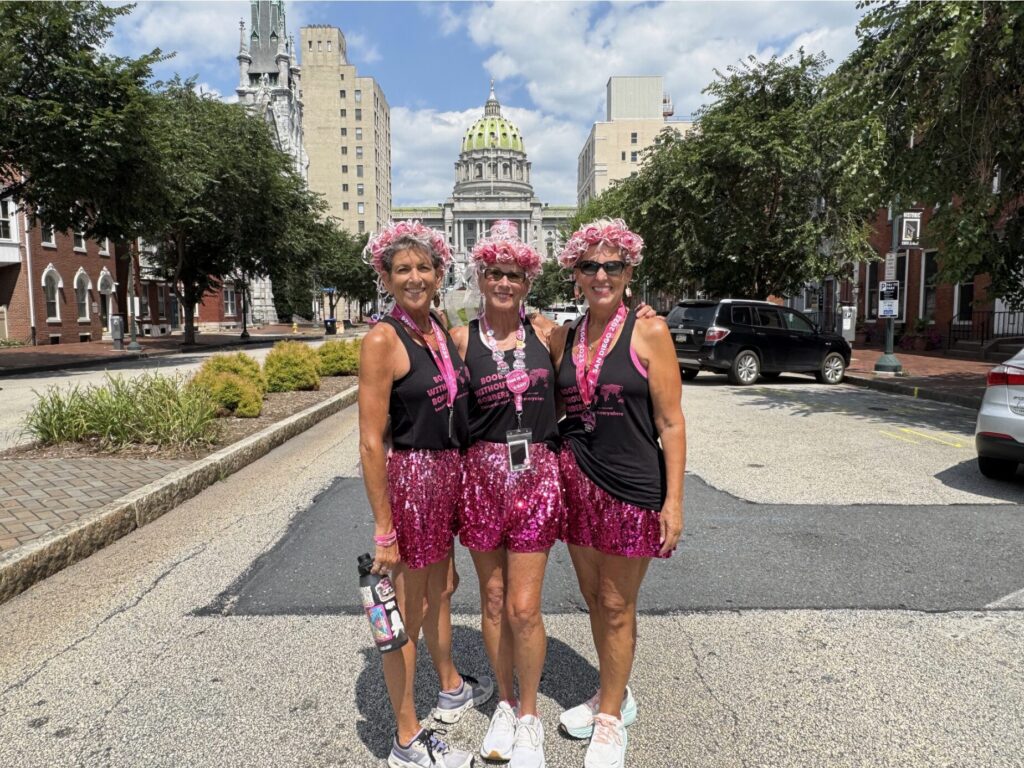
Donna Slusser, Marilyn Fuller-Smith, Jayne Blake after the Susan G. Komen 3-day 60-mile walk.

After 11 years, Marilyn Fuller-Smith told herself it was time to do something.

Fuller-Smith, 79, was diagnosed with breast cancer in 2000, but her strong spirit, combined with a lumpectomy and six weeks of grueling radiation treatments, made her a survivor.

“Everything was a blessing, but (treatment) was tough and exhausting,” she recalled.

As the years passed, Fuller-Smith, of Camp Hill, decided it was time to do more.

“Up to 2011, I did nothing to give back,” she said. “Then a girlfriend said to me, ‘Hey, I just signed up for 60 miles. Want to join me?’”

Her friend’s “60 miles” turned out to be a Susan G. Komen 3-Day Challenge, a 60-mile fundraiser walk dedicated to ending breast cancer and raising awareness of the disease. The long walk is completed over three days in certain cities across the United States at varying times throughout the year. Participants raise funds for the cause by attaining sponsoring donors.

Breast cancer is the second most common cancer among women in the country, according to the U.S. Centers for Disease Control and Prevention. It’s also the second leading cause of cancer death among U.S. women, topped only by lung cancer.

“We trained all summer for this,” Fuller-Smith said. “Throughout the walk, I heard heartrending stories from other people there. Then everyone’s families came at the end, and I saw my daughter sobbing. I was hooked. Then I did another one, and then another.”

In all, Fuller-Smith has completed 34 Komen walks, raising a total of about $115,000 for the cause, she said. To register for each event, walkers are required to raise at least $2,300 in sponsorship donations. Recently, Fuller-Smith has averaged “between $4,000 and $5,000” per walk, raising a total of $7,300 so far this year. In 2024, she received the Pink Ribbon Award for Excellence from the Pennsylvania Breast Cancer Coalition.

Joining Up

Fuller-Smith also formed a walking group, Boobs Without Borders, with her “besties,” Jayne Blake of Mechanicsburg and Donna Slusser of Dillsburg.

Blake, 65, said that she began doing five-mile Sunday morning walks with Fuller-Smith in 2017 “to lose weight.” Then, in 2018, Fuller-Smith asked her to participate in a day of a three-day, 60-mile Komen walk in Philadelphia.

“I used to run marathons, so this fit my skill set and gave me a purpose,” said Blake, whose husband and parents all have had cancer diagnoses.

Slusser, 65, met Fuller-Smith in 2015 through “mutual friends.” By 2020, she became interested enough in her friend’s Komen walks to ask, “Mind if I join you?”

“I wanted to do it for exercise and for raising funds,” said Slusser, whose relatives “on both sides of the family” have experienced breast cancer. Her mother underwent a mastectomy at 82, and a cousin and aunt also share diagnoses.

From there, the three friends formed the Boobs Without Borders walking group. Their listed mission “is to help end breast cancer in our lifetime by raising funds for research, education and community outreach programs through Susan G. Komen.”

In November, the women will join up next for the Susan G. Komen 3-Day 60-mile walk in San Diego.

Before then, to mark Breast Cancer Awareness Month, Boobs Without Borders will sponsor its first Power of Pink Art Auction on Oct. 5 at Buhrig’s Gathering Place in Mechanicsburg. Proceeds benefit the Susan G. Komen 3-Day. The event will feature works by more than 35 local artists, plus refreshments, a raffle and live music. Tickets are available for purchase for $20 at BoobsWithoutBorders.com.

Fuller-Smith’s advice to women fighting breast cancer?

“Accept every offer of help offered to you. Don’t feel uncomfortable accepting help,” she said. “You know you’d do it for them.”


The Power of Pink Art Auction takes place Oct. 5, 2 to 4 p.m., at Buhrig’s Gathering Place, 25 E. Main St., Mechanicsburg. For more information or to donate to Boobs Without Borders, visit
www.BoobsWithoutBorders.com.

If you like what we do, please support our work. Become a Friend of TheBurg!  
Continue Reading